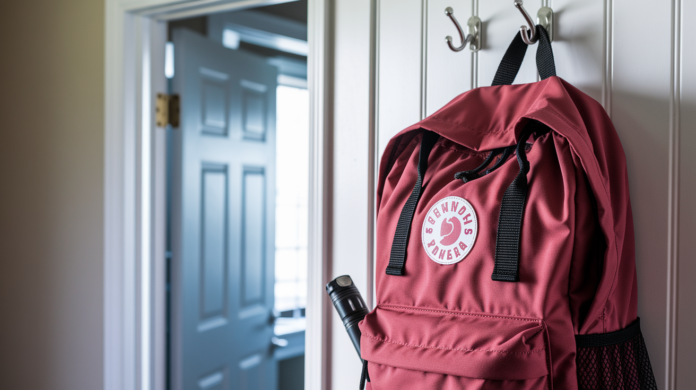

Most people tuck their emergency go bag in a closet and forget about it until they need it at 2 AM in the dark. That’s a problem. Because when floodwaters rise or a wildfire evacuation order hits, you won’t have time to dig through boxes or search three different closets. Your bag needs to be in a spot you can reach in under 30 seconds, even if the power is out and everyone is panicking. This guide breaks down the best storage locations for your go bag based on your home layout, exit routes, and the disasters most likely to wake you up at night.
Optimal Storage Locations: Pros and Cons for Each Space
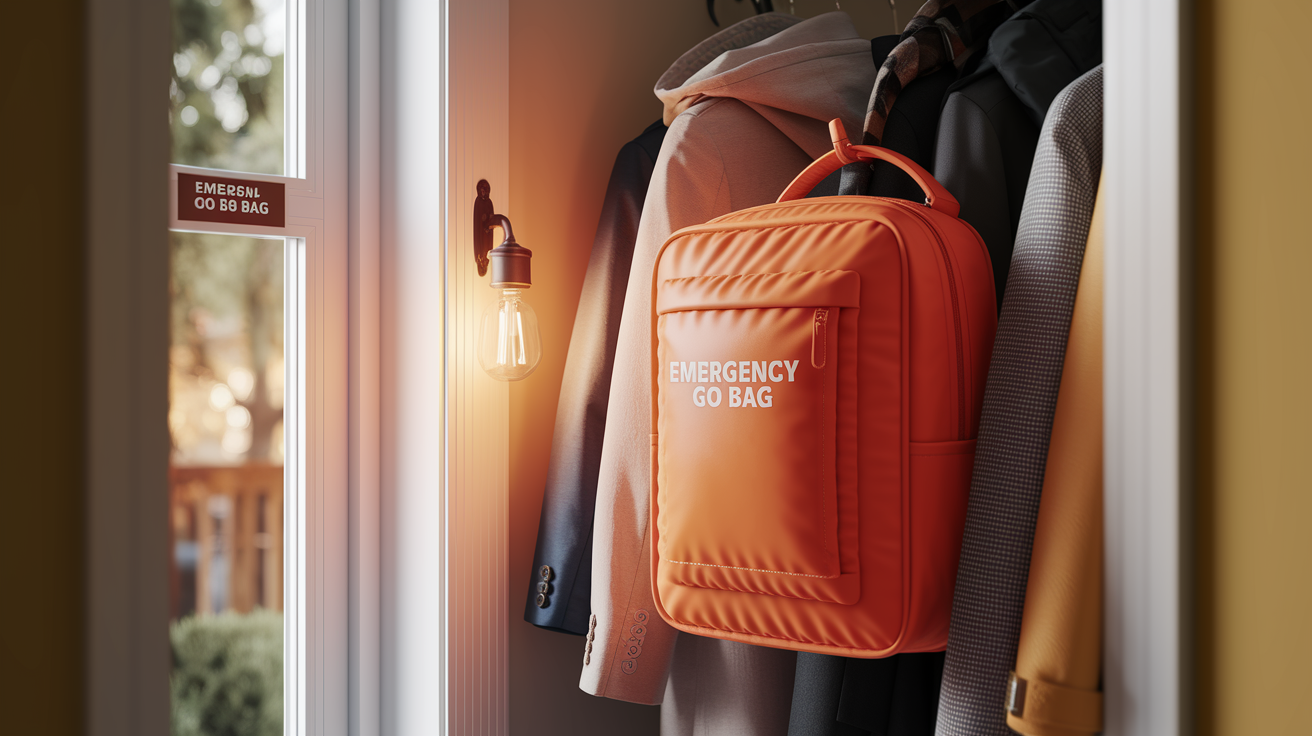
The right storage spot balances quick grab and go access during evacuations with protection from temperature swings and moisture. It also needs to be in a place where every household member knows exactly where to look without searching.
| Storage Location | Pros | Cons | Best For |
|---|---|---|---|
| Front entryway closet | Immediate exit access, visible to all household members, hung on backpack loop for quick grab | May lack climate control, limited space with seasonal coats | Primary residence exit, families with consistent front door evacuation route |
| Mudroom/back door area | Protected from outdoor elements, accessible from backyard exit, typically underutilized space | May not be on primary evacuation route, often farther from bedrooms | Homes with multiple exits, families using back door frequently |
| Garage near vehicle | Immediate vehicle loading, supports drive away evacuations, protects from indoor smoke/fire | Extreme temperature fluctuations, requires waterproof container, may be unreachable if garage door fails | Evacuation scenarios requiring vehicle transport, suburban homes |
| Master bedroom closet | Nighttime access, floor level shelf placement, climate controlled | Farther from exits, adds evacuation distance | Nighttime emergencies, secondary bag location, power outage scenarios |
| Hall closet on primary escape route | Positioned along natural exit path, central location all members pass | May contain other household items blocking access, less obvious than entryway | Multi story homes, families with established escape plans |
| Under bed in bedroom | Arm’s reach during sleep, pairs with sturdy shoes storage, accessible in darkness | Requires low profile container, dust exposure, not on exit route | Nighttime disasters, elderly or mobility limited household members |
Evacuation route alignment matters more than convenience when choosing your primary storage spot. A bag stored two steps from your most used exit beats perfect climate control in a basement you rarely visit.
The location should never change. You’re creating muscle memory so you can grab the bag in darkness, during panic, or when you’ve got five minutes to get out. Accessibility trumps almost everything else because a perfectly preserved bag you can’t reach fast is useless.
Store your bag to the side of other items, not buried behind winter boots or holiday decorations. Use a bright colored bag or attach a glow in dark tag that shows up when the power cuts out. Keep it at grabbing height, not on a top shelf where you need a step stool. Every household member should be able to walk to the exact spot blindfolded, and you should run practice drills where someone says “go get the emergency bag” and times how long it takes.
Vehicle and Backup Emergency Go Bag Storage Locations
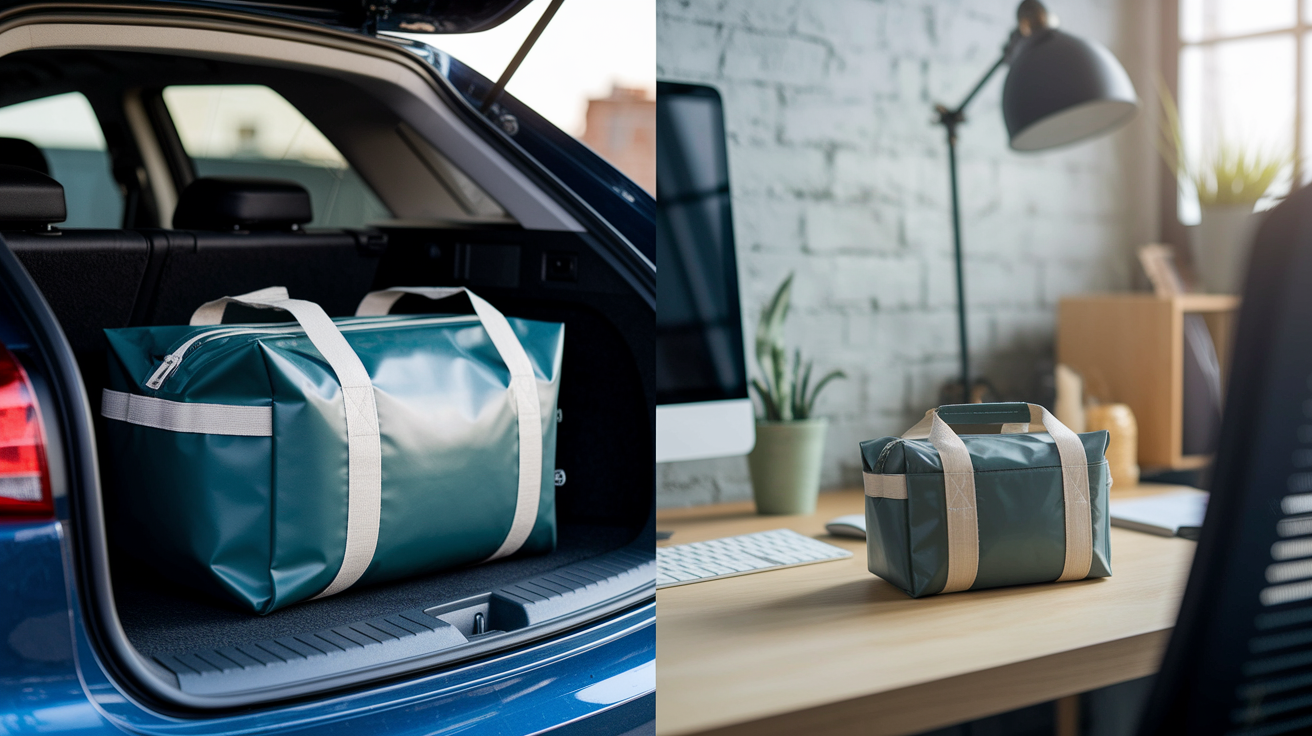
A single bag at home isn’t enough if disaster catches you at work or on the road. Comprehensive emergency preparedness means backup bags in vehicles and workplace locations.
| Storage Location | Rotation Frequency | Key Consideration |
|---|---|---|
| Car trunk | Every 3 months (more often in summer) | Use waterproof plastic container to reduce noise and protect from temperature extremes |
| Workplace desk area | Annually | Keep 3 day supply of food and water in backpack near desk or in locker |
| Secondary vehicle | Every 3 months | Maintain separate kit for each vehicle owned |
Storing an emergency kit in your vehicle saves critical time during evacuations and keeps supplies with you when you’re away from home. Use plastic bags or sealed containers to reduce rattling noise from cans and supplies while driving.
Summer heat inside parked cars can spoil food and water faster than indoor storage, so rotate vehicle supplies every three months or more often if you live in a hot climate. Position the bag in your trunk where you can grab it without unloading groceries or other cargo first.
People spend roughly one third of their lives at work, making workplace storage essential for complete preparedness. Keep a 3 day supply of food and water in a backpack or small container near your desk or in a workplace locker. Rotate the contents once a year to keep everything fresh. If your commute is long or you work far from home, that workplace bag might be the one you actually need during a disaster.
Bedroom Storage Solutions for Nighttime Emergency Access

Many disasters strike at night when everyone is asleep. Earthquakes, tornadoes, flash floods, and house fires don’t wait for daylight or convenient timing.
Storing a bag under your bed puts emergency supplies within arm’s reach during nighttime disasters when seconds count. Keep sturdy shoes and a warm jacket alongside the bag so you don’t waste time searching for them in the dark. This setup works especially well for earthquakes or tornados that wake you from sleep with no warning. A low profile duffel bag or backpack slides under most beds and stays out of sight but accessible.
Master closet storage offers an alternative if under bed space is limited. Use a floor level shelf, not one you need to reach up for when you’re groggy or the power is out.
Pair any bedroom storage with a flashlight or headlamp stored in the same spot, or attach glow in dark tags to the bag so you can find it when the house goes dark. Bedroom storage works well as a secondary location even if your primary bag sits near an exit, giving you options if one route gets blocked.
Climate and Environmental Factors for Go Bag Storage

Where you store matters as much as what you store because environmental conditions directly affect how long supplies stay usable.
Avoid these five environmental factors when choosing storage locations:
- Extreme heat fluctuations like garages in summer or attics year round
- High humidity areas including unventilated basements or bathroom closets
- Direct sunlight exposure through windows or glass doors
- Uninsulated attics where temperatures swing from freezing to over 100 degrees
- Damp basements or crawl spaces that promote mold growth
Temperature and humidity impact food shelf life significantly. Most canned foods last at least 18 months, with low acid items like canned meat, fruits, and vegetables staying safe for at least 2 years when stored in cool, stable temperatures. Dry products like boxed cereal, crackers, cookies, dried milk, and dried fruit should be used within 6 months, and extreme heat shortens that window even more.
Water stored in hot attics can develop off tastes, and plastic containers may leach chemicals when repeatedly heated and cooled.
Use waterproof containers even for indoor storage because roof leaks, burst pipes, or flooding can happen without warning. Airtight, pest resistant containers prevent mice, insects, and other pests from contaminating your supplies. Dust protection matters too since supplies might sit untouched for months. Choose storage containers with tight fitting lids and check them during inspections to make sure seals still work properly.
Home Layout Considerations: Apartments and Multi Story Houses
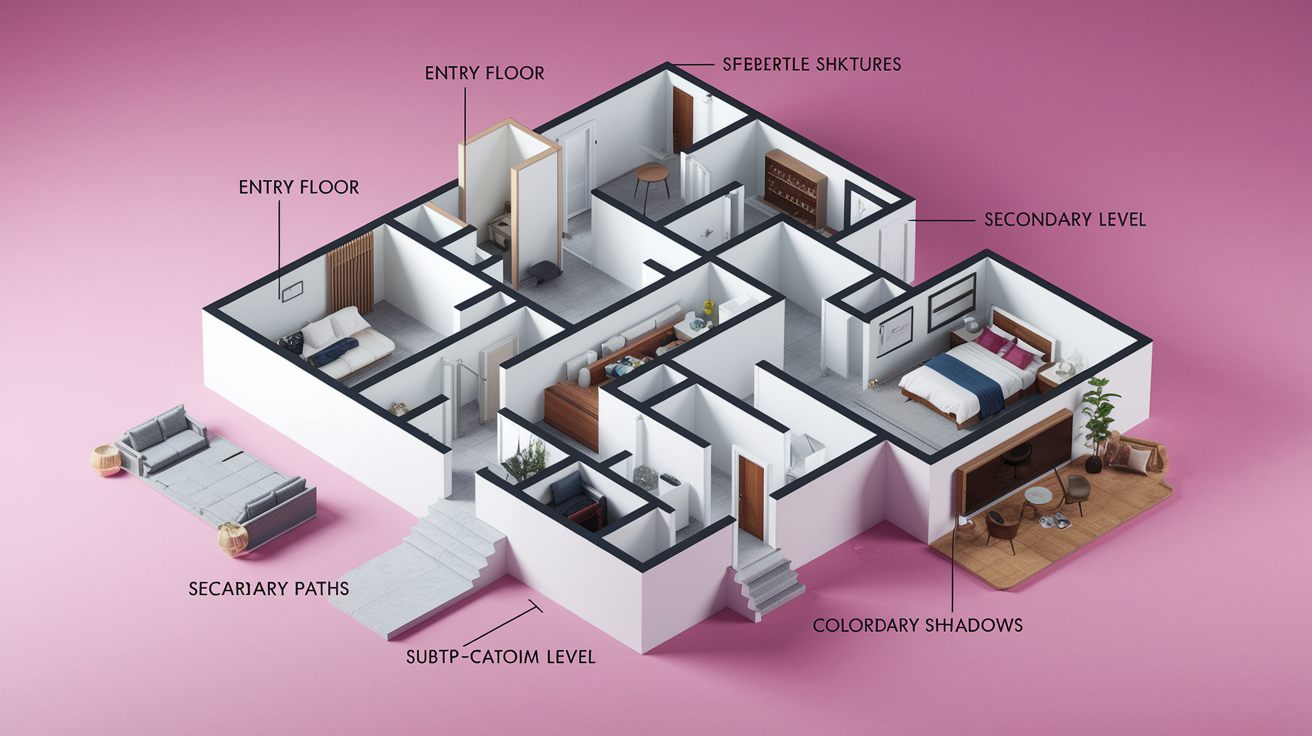
Your home layout fundamentally shapes where bags should go and how many you need.
Apartment and Small Space Storage Solutions
Apartment living presents unique storage challenges including limited closet space, no garage access, and rental restrictions on wall modifications. Vertical storage using removable wall hooks near the apartment entrance works for backpack style bags without damaging walls. Hall closets in apartments are often smaller than in houses, so store your bag to the side rather than stacking items on top of it.
Compact container selection matters more in tight spaces. A backpack takes up less room than a large duffel bag or plastic bin and can hang from a hook instead of occupying floor space.
Under furniture storage works well in studio apartments or one bedroom units where closet space is minimal. Apartments often have shorter evacuation distances than large houses, making bedroom storage more viable since you’re never more than 30 feet from an exit.
Multi Story Home Bag Placement Strategy
Multi story homes need a per floor storage strategy. Keep your primary bag on the exit floor near the door you’ll use most, then place a secondary bag upstairs so anyone sleeping on upper floors doesn’t have to navigate stairs during an emergency. This approach prevents trapped scenarios where fire, structural damage, or other hazards block stairway access.
Organize individual family member bags with labeled containers for each person, especially in larger households. Children’s bags should be accessible but age appropriate for weight. A six year old can’t carry a 40 pound pack down stairs in the dark.
Place children’s bags where adults can grab them quickly if needed, not in kids’ rooms where they might be forgotten during panic. Each sleeping floor should have bag access to ensure everyone can evacuate with supplies no matter which exit route they use.
Your floor plan should dictate how many bags you need and where they go. A sprawling ranch style home might need bags near the front door, back door, and garage. A narrow townhouse might only need one bag near the main entrance plus bedroom storage for nighttime access.
Common Emergency Go Bag Storage Mistakes to Avoid
Ninety percent of people living in the United States don’t have an emergency bag ready to grab. The other ten percent who do sometimes store them in ways that make them useless when minutes count.
Poor storage location can render even a well stocked bag ineffective during actual emergencies. A bag locked in a storage room when you can’t find the key wastes critical evacuation time. Bags stored in detached structures like sheds might be unreachable if outdoor conditions are already dangerous.
Six common storage mistakes that compromise emergency preparedness:
- Storing in locked areas without accessible keys. Keeps the bag secure from theft but useless when you need it in 30 seconds.
- Attic placement with extreme temperatures. Heat degrades food, water, and batteries faster than any other factor.
- Basement storage in flood prone areas. The bag meant to save you from flooding gets destroyed by the flood itself.
- Hiding bags too well so family can’t find them. Security through obscurity fails when your spouse or teenager needs the bag and you’re not home.
- Storing behind heavy items that block access. Holiday decorations, sports equipment, or stored furniture shouldn’t require moving before you can grab your bag.
- Keeping bags in detached structures that may become unreachable. A bag in the garage is useless if you can’t safely get to the garage.
The right balance between security and accessibility means storing bags where household members can find them instantly but casual visitors won’t stumble across them. A coat closet near the front door meets this standard. A locked basement storage cage does not.
Maintenance and Rotation Schedules for Stored Go Bags
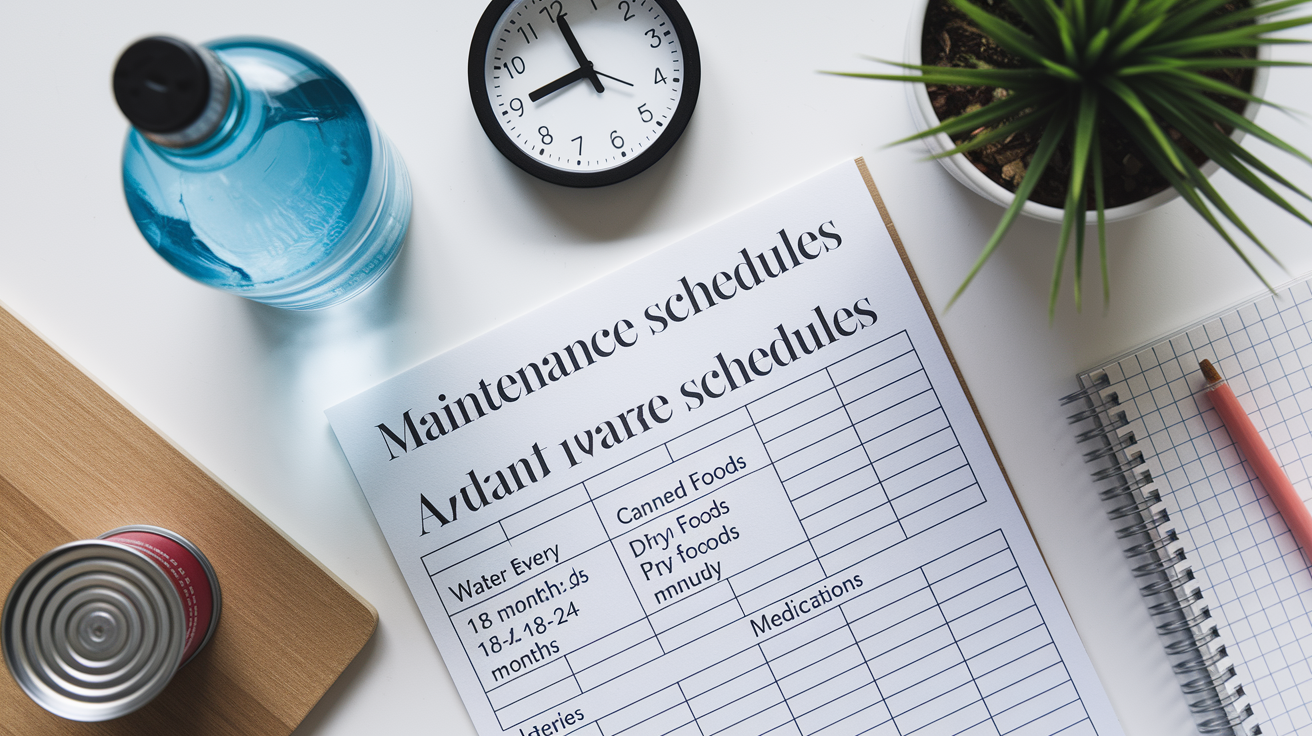
Storage location choice should make regular maintenance easy to remember and quick to complete.
| Supply Type | Rotation Frequency |
|---|---|
| Water | Every 6 months (commercially bottled annually if no expiration date marked) |
| Canned foods | Every 18 to 24 months |
| Dry foods | Every 6 months |
| Batteries | Annually or check every 6 months |
| Medications | Check expiration dates every 3 months |
Inspect home emergency supplies every 3 to 6 months, or at least one month before problematic seasons like hurricane season, tornado season, or winter storm season in your region. Seasonal inspection timing creates a routine that’s easy to remember.
Mark your calendar for the first weekend of March and September, then check and rotate everything on those dates every year.
Storage location affects how consistently you complete rotations. Bags stored in visible, accessible spots like coat closets get checked more often than bags hidden in basements or attics. You’re more likely to remember maintenance when you see the bag regularly while getting your jacket or shoes. For detailed guidance on what supplies need rotation and inspection, see our Emergency Kit Essentials Guide.
Update contents as family situations change. Growing children need larger clothing sizes, new medications get prescribed, dietary restrictions develop, and babies become toddlers who need different supplies. A bag that worked perfectly two years ago might be completely wrong for your household today.
Creating a Household Communication Plan for Go Bag Locations

Knowing where the bag is stored matters as much as having one in the first place.
Every household member should be able to answer “where is the emergency bag” without hesitation. Adults, teenagers, older children, and anyone who stays at your home regularly needs this information. Share storage locations during a calm moment, not during an actual emergency when stress levels make it hard to process new information.
Practice drill importance can’t be overstated. Run timed retrieval exercises where you announce “5 minute evacuation” and everyone grabs their assigned items including the go bag. Then try a 2 hour scenario where you pretend a hurricane is coming and practice loading the car. Finally, test a full day notice scenario where you go through the complete preparation process. These drills reveal which storage locations actually work and which ones sounded good on paper but fail in practice.
The “never move without telling everyone” rule maintains consistency. If you relocate the bag from the coat closet to the garage, send a text to every household member and mention it at dinner that night.
Write the new location on a sticky note and put it where the bag used to be for a week so anyone who goes to the old spot gets redirected. Consistency saves lives because muscle memory takes over during panic.
Special considerations matter for young children, elderly household members, and guests who may need to access the bag. Children under 10 should know where the bag is but might not be able to reach it or carry it, so make sure an adult can grab it quickly. Elderly household members with mobility limitations need to know about alternate storage locations if the primary bag is positioned somewhere they can’t access independently.
Guests staying more than a few days should get a quick tour showing where the emergency bag, flashlights, and fire extinguisher are located. For comprehensive family coordination strategies, check our Family Emergency Communication Planning guide.
Pet and Special Needs Considerations for Go Bag Storage
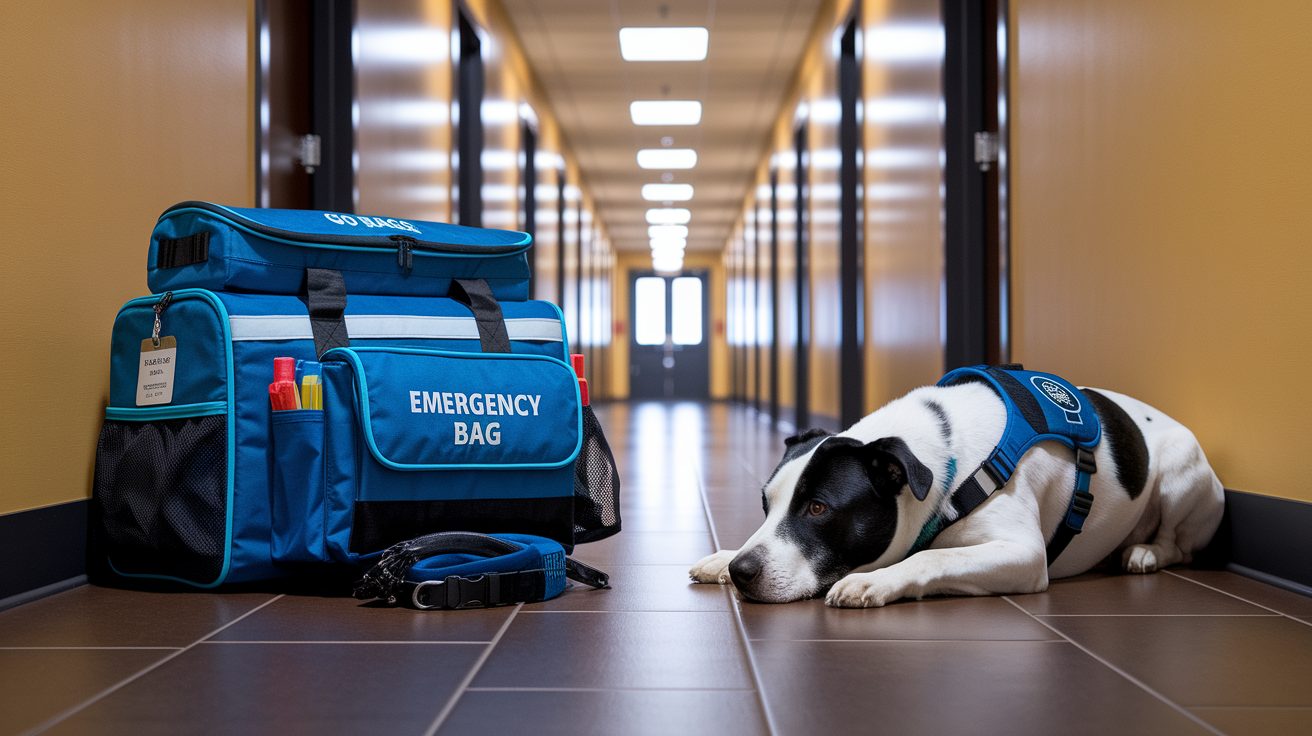
Pets count as family members who need supplies during evacuations. FEMA recommends storing enough food and water to last every family member or pet at least 72 hours.
Store pet supply bags right next to human bags for coordinated evacuation. A dedicated pet bag should include food, water, bowls, medications, vaccination records, a leash or carrier, and waste cleanup supplies. Pet food has expiration dates just like human food, so include it in your rotation schedule. Keep the pet bag in the same accessible location as your main bag because you won’t have time to search two different areas when you need to leave fast.
Medical supply storage for household members with chronic conditions requires balancing daily accessibility with emergency readiness. Keep current prescription medications in their normal spot for daily use, but store a 3 day backup supply in the emergency bag.
Sweep daily medications into the bag during evacuation without searching multiple rooms. Medical equipment like inhalers, EpiPens, glucose monitors, or oxygen supplies should have dedicated spots in the bag with clear labels.
Children’s bags need special placement based on weight and height limitations. A backpack that fits a 12 year old is too heavy for a 6 year old to carry. Store lighter children’s bags at heights they can reach independently so older kids can help during evacuations. Position bags for very young children where adults can grab them quickly since toddlers can’t manage their own emergency supplies.
Special needs affect which storage locations work best. Household members with mobility limitations benefit from ground level storage that doesn’t require bending, reaching, or navigating stairs. Wheelchair users need bags positioned where they can access them independently without assistance. Visual impairments require tactile markers or consistent placement so people can find bags by touch in familiar locations.
Final Words
Pick your spot. Test it with your family. Make sure everyone can grab your emergency go bag in under 30 seconds, even in the dark.
The difference between a bag that saves you and one that sits useless comes down to where you store it. Front closet beats a perfect climate-controlled garage if you can’t reach it when seconds count.
Walk your escape route this week. Put your bag where your feet naturally go during an evacuation. Then tell everyone in your household exactly where it lives and run a quick drill.
You’ve got the information. Now turn it into muscle memory.
FAQ
Where is the best place to keep an emergency bag in your house?
The best place to keep an emergency bag in your house is in a front entryway closet or near your primary exit door where you can grab it quickly during an evacuation. Store the bag to the side of other items, hung on a backpack loop if possible, so you can reach it fast without moving things out of the way.
Where to store an emergency go bag?
An emergency go bag should be stored along your primary evacuation route, such as a front entryway closet, mudroom near the back door, or garage close to your vehicle. Choose a consistent location with easy access that all household members know and can reach quickly, even in the dark or during power outages.
Where is the best place to keep an emergency kit?
The best place to keep an emergency kit is in a designated spot near your main exit that balances quick accessibility with environmental protection from extreme temperatures and moisture. Ideal locations include coat closets near entry doors, hall closets on escape routes, or under beds for nighttime access paired with sturdy shoes.
What to keep in an emergency bag at home?
An emergency bag at home should contain water, food, basic first aid supplies, tools like flashlights, clothing and bedding, special personal items including medications, and important documents in waterproof containers. Store enough supplies to last each family member and pet at least 72 hours, and rotate perishable items every 3-6 months.
Should I store my emergency bag in the garage?
Storing your emergency bag in the garage works well for evacuation scenarios requiring vehicle transport, especially in suburban homes where you will drive away. However, garage storage requires waterproof containers due to extreme temperature fluctuations, and the bag may become unreachable if the garage door mechanism fails during power outages.
How do I store emergency supplies in an apartment?
Store emergency supplies in an apartment using vertical wall hooks near the entrance for backpack-style bags, hall closets, or under-furniture storage to maximize limited space. Apartments often have shorter evacuation distances, making bedroom storage more viable, and you can use compact containers like backpacks instead of large bins that take up precious floor space.
Can I keep my emergency bag in the basement?
Keeping your emergency bag in the basement is not recommended, especially in flood-prone areas where water can trap you or ruin supplies. Basements also tend to have high humidity that damages food and equipment, and they add evacuation distance when you need to move quickly toward ground-level exits.
How often should I check my stored emergency bag?
You should check your stored emergency bag every 3-6 months or at least one month before problematic seasons like hurricane or tornado season. Replace water every six months, rotate canned foods every 18 months, and update contents as family situations change, including new medications or children’s growing needs.
Where should I store my car emergency kit?
Store your car emergency kit in the trunk using plastic containers to reduce noise from supplies and protect against extreme temperatures. Rotate food and water more frequently than home kits due to high summer heat, and maintain separate kits for each vehicle your family owns for comprehensive coverage.
Should each family member have their own emergency bag?
Each family member should have their own emergency bag or clearly labeled section within a family kit, organized by individual needs and stored where they can grab it quickly. Children’s bags should be placed at age-appropriate heights they can reach and carry, while ensuring the weight matches their physical capability during evacuations.
Is under the bed a good place for an emergency bag?
Under the bed is a good place for an emergency bag because it keeps supplies within arm’s reach during nighttime disasters and pairs well with sturdy shoes and jacket storage. This placement works especially well for elderly or mobility-limited household members, though it requires low-profile containers and works best as a secondary location if your primary bag is stored near an exit.
What storage locations should I avoid for emergency bags?
Avoid storing emergency bags in locked areas without accessible keys, uninsulated attics with extreme temperature swings, flood-prone basements, or locations hidden so well that family members cannot find them quickly. Also skip storing bags behind heavy items that block access or in detached structures that may become unreachable during disasters.