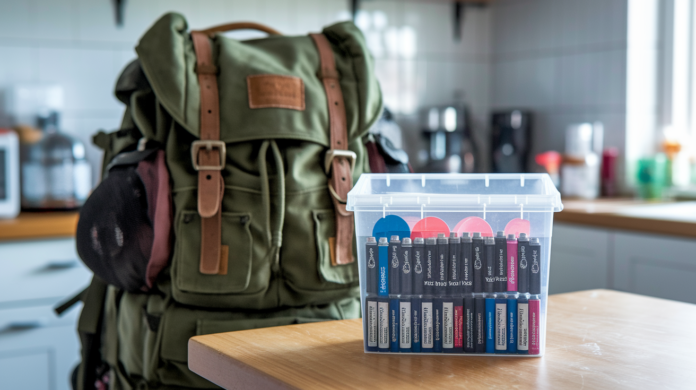

Your go bag sits in your closet right now with dead batteries. Not expired batteries. Not low batteries. Dead ones. Because most people pack cheap alkaline batteries that leak and die while waiting for an emergency that might never come. Then the flood warning hits at 2 a.m. and your flashlight clicks on to nothing.
Dead batteries during an actual emergency aren’t just inconvenient. They turn your expensive gear into useless weight. This guide breaks down exactly which battery types to pack, how many you need for 72 hours without power, and why lithium primaries beat alkalines every time for storage. You’ll also learn whether rechargeables make sense for your situation and how to standardize sizes so you’re not juggling six different battery types in the dark.
Essential Battery Types and Quantities for Your Go Bag

Your go bag needs AA and AAA batteries. That’s it for most people. These two sizes power nearly everything that matters in a flood emergency: flashlights, headlamps, weather radios, GPS units. They’re sold everywhere, they work in terrible conditions, and you can get them as rechargeables or long-storage disposables.
Here’s why lithium batteries beat alkaline every time for emergency kits. Lithium primaries work from -40°F to 140°F. Alkalines quit when it gets cold and leak when it gets hot. Lithium batteries won’t corrode your flashlight while sitting in a hot trunk for two years. Alkalines will.
For a 72-hour kit, start with 24 to 48 AA batteries and 12 to 24 AAA batteries. That covers continuous flashlight use, radio checks throughout the day, GPS navigation if you’re evacuating, and headlamp operation across three days. You won’t have chances to recharge during an actual flood emergency.
Beyond AA and AAA, only add specialty batteries if you actually need them. CR123A lithium cells for tactical lights. 9-volt batteries if your weather radio uses them. D cells for a big lantern. Don’t stockpile battery types you don’t have devices for.
The exact count depends on what gear you’re carrying and how you’ll use it, but slightly too many batteries beats slightly too few. Battery weight stays manageable compared to water and food anyway.
| Battery Type | Quantity | Primary Use |
|---|---|---|
| AA Lithium Primary | 24-48 | Flashlights, headlamps, radios, GPS units |
| AAA Lithium Primary | 12-24 | Compact flashlights, small radios, headlamps |
| CR123A Lithium | 4-8 | Tactical flashlights, high-output lights |
| 9-Volt Alkaline/Lithium | 2-4 | Smoke detectors, certain radios |
| D Cell Alkaline/Lithium | 4-8 | Large lanterns, extended-runtime devices |
| CR2032 Lithium Coin | 4-6 | Small electronics, backup lights, optics |
Weight matters if you’re packing multiple kits or might need to move on foot. Lithium primary batteries weigh about 40% less than alkaline batteries and perform better. Higher cost upfront, but worth it.
Rechargeable Versus Disposable Batteries: Performance, Cost, and Brand Recommendations

NiMH low self-discharge rechargeable batteries work best for emergency prep. They last for 2,000+ charge cycles and keep 75% to 85% of their charge after sitting unused for a full year. You get the reusability of rechargeables without the old problem of batteries draining themselves in storage.
Standard Eneloop NiMH batteries hold 2,100 mAh and deliver 2,100 charge cycles. They’ll serve you for years of regular use or sit ready in your go bag without constant attention.
The Eneloop Pro version holds 2,500 mAh, which sounds better. It’s not. That 19% capacity bump comes with a massive trade off: only 500 charge cycles instead of 2,100. The “Pro” battery dies permanently after 500 uses while the standard version keeps going for 2,100 cycles. For emergency kits where you need reliability over years, the standard Eneloop wins. Save the high-capacity versions for daily devices you’ll replace every few years anyway.
Rechargeables need maintenance. Cycle them once or twice per year to keep charge levels up and prevent the chemistry from degrading.
Lithium primary disposable batteries serve as your backup layer. They keep over 80% of their charge after 15 to 20 years compared to only 10 years for alkalines. Energizer Ultimate Lithium batteries in AA and AAA sizes handle extreme temperatures, weigh less than anything else, and won’t leak even after years in a hot car or freezing garage. Skip alkaline batteries completely for emergency prep. They leak, they fail when it gets hot or cold, and they lose charge faster during storage.
The cost math favors rechargeables heavily if you’ll actually use and rotate your batteries. NiMH batteries cost about $0.0027 per charge after 750 cycles. Alkaline batteries cost so much more per use that comparison charts don’t bother including them.
You need a quality smart charger to make this work. Cheap chargers damage NiMH batteries through overcharging or charging too fast, killing your cycle count. Budget $30 to $60 for a proper smart charger with the complex charging algorithm NiMH batteries require. It’s a one-time investment protecting your battery investment.
Lithium-ion rechargeable batteries offer less than half the capacity of lithium primaries and only 300 to 500 charge cycles versus 2,000+ for NiMH. They’re a poor choice for most emergency situations. They need careful storage management, specific charge levels, and don’t handle temperature extremes your go bag might face.
Budget alternatives exist if you want to test the rechargeable approach. Ikea’s Ladda batteries and Lidl’s Aerocell AA batteries perform adequately for household use and short-term emergency kits.
Break-even happens fast with rechargeables. Spend $24 on 8 Eneloop batteries plus $40 on a smart charger, and you’ve invested $64 total. Fill those same 8 battery slots with alkalines for $12 initially, but you’ll replace them every year or two in active use. After just 3 or 4 replacement cycles, the rechargeable investment pays for itself and keeps delivering value for potentially another decade.
| Battery Type | Capacity | Cycle Life | Storage Retention | Cost Per Use | Best For |
|---|---|---|---|---|---|
| Standard Eneloop NiMH | 2,100 mAh | 2,100 cycles | 75-85% after 1 year | $0.0027 | Primary emergency batteries with regular rotation |
| Eneloop Pro NiMH | 2,500 mAh | 500 cycles | 75% after 1 year | $0.012 | High-drain daily devices, not emergency storage |
| Energizer Ultimate Lithium Primary | 3,000 mAh | 1 use | 80% after 15-20 years | $2.00+ | Long-term storage, extreme temperatures, backup supply |
| Lithium-Ion Rechargeable | 1,200-1,500 mAh | 300-500 cycles | Requires 6-month cycling | $0.02+ | Not recommended for emergency use |
| Budget NiMH (Ladda, Aerocell) | 1,900-2,000 mAh | 1,000-1,500 cycles | 70-80% after 1 year | $0.0013 | Household devices, testing rechargeable approach |
Matching Batteries to Emergency Devices and Standardization Strategy
Standardizing on AA batteries makes everything simpler. This format has been around since 1910, and modern LED technology squeezes every bit of stored energy from them. All five main battery sizes (AA, AAA, AAAA, C, and D) share a standardized 1.5V output. Adapters can convert between sizes without voltage problems.
Fun fact: a 9-volt battery is actually six AAA cells wired together. You can carefully peel open the wrapper in emergencies to access them.
NiMH rechargeable batteries output 1.2V instead of the 1.5V from alkaline and lithium primaries. This might reduce flashlight brightness on high modes or affect specialized devices built to run at exactly 1.5V. The voltage difference rarely causes problems with modern LED flashlights and radios, but test your specific devices with NiMH batteries before depending on them. Most quality LED lights include voltage regulation that compensates for the 0.3V difference.
A tiered approach helps you allocate battery resources logically. Life-safety devices like headlamps and emergency signaling lights get first priority and the most reliable batteries. Communication devices including radios and GPS units fall into the second tier. Convenience items like reading lights come last.
Common emergency devices and their battery needs:
LED flashlights (AA/AAA): 2 to 4 batteries depending on model, runtime of 8 to 50+ hours on low mode
Headlamps (AA/AAA): 1 to 3 batteries, hands-free operation for 10 to 40 hours on low settings
AM/FM radios with earpieces (AA/AAA): 2 to 4 batteries, compact models with earpieces run longer and lighter than speaker models
Weather radios (AA/9V): 3 to 4 AA or 1 to 2 9V, critical for emergency alerts
GPS units (AA): 2 to 4 batteries, 16 to 30 hours of navigation depending on screen usage
LED lanterns (D cells or AA with adapters): 3 to 4 batteries, area lighting for 20 to 100+ hours
Two-way radios (AA/AAA): 3 to 6 batteries per unit, communication range of 1 to 35 miles depending on terrain
Medical devices (proprietary or AA alternatives): Variable, explore aftermarket battery packs using AA banks instead of expensive proprietary options
Firearm optics (CR2032): 1 to 2 lithium coin cells can run continuously for years on lower brightness
Compact emergency lights (AAA): 1 to 2 batteries, backup lighting that weighs almost nothing
Battery Adapter Strategy for Size Flexibility
Battery adapters let you carry fewer battery sizes while keeping compatibility with devices needing larger formats. These simple plastic sleeves cost a few dollars for a multi-pack and weigh almost nothing. Instead of carrying heavy D cells for a lantern, you pack AA batteries that also power your flashlight and radio, then use adapters to convert them to D size when needed.
The adapter approach works because all these sizes share the same 1.5V output. The only difference is capacity. A D cell holds more energy than an AA, but an AA in an adapter will still power the device, just for a shorter duration.
This strategy cuts battery variety in your go bag from potentially 5 or 6 different sizes down to just 2 or 3. You simplify inventory and reduce the chance you’ll grab the wrong size when you’re stressed. The weight savings add up. AA batteries weigh about 24 grams each while D cells weigh around 135 grams. You can carry 5 AA batteries plus adapters for less weight than 1 D cell.
Medical devices often use proprietary battery packs costing $40 to $100 to replace. Aftermarket alternatives sometimes offer AA-powered battery banks achieving the same voltage and capacity using standard cells.
Redundancy planning for critical functions means having backup power for your backup power. If your primary navigation depends on a GPS unit running on 4 AA batteries, carry 8 to 12 spare AA batteries and a backup compass needing no batteries at all. If your primary lighting comes from a headlamp using 3 AAA batteries, pack a small AA flashlight as well so a battery failure in one device doesn’t leave you in the dark.
Power budget calculations matter for scenarios beyond the standard 72-hour kit. A typical LED headlamp on low mode draws about 0.5 watts and runs for 30 hours on 3 AAA batteries. If you plan to use it 2 hours per night for 7 nights, that’s 14 hours of runtime needing roughly one set of batteries. You’d pack 2 sets (6 batteries total) to maintain a safety margin.
Specialized low-power devices like firearm optics with CR2032 coin cells can run continuously for years on lower brightness. Four to six spare CR2032 cells could provide decades of backup capability while weighing less than 15 grams total.
NiMH batteries can suffer voltage depletion from partial discharge cycles, but you can fix this with full discharge and recharge reconditioning cycles before storing them in your go bag.
Proper Storage Methods, Shelf Life, and Safety Protocols
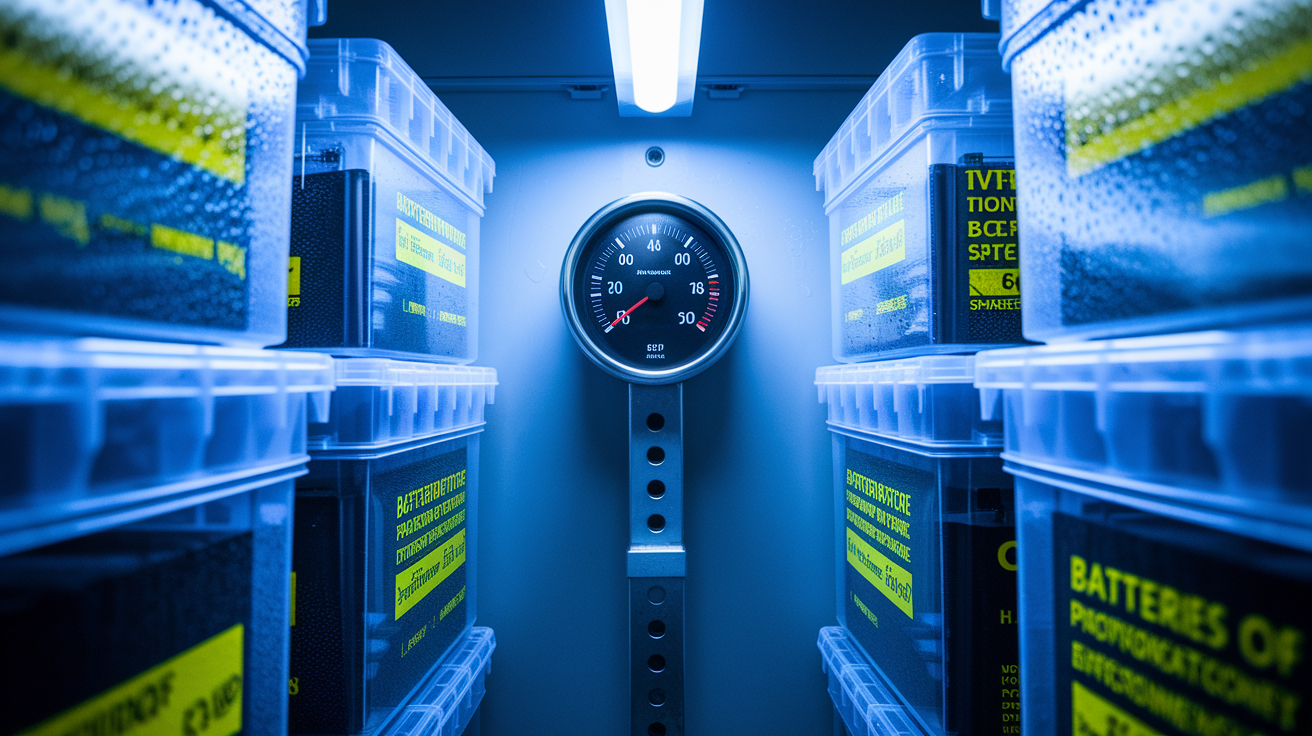
Store batteries cool and dry. Even a refrigerator works to increase lifespan and performance significantly beyond room temperature storage.
Different battery chemistries tolerate wildly different temperature ranges. This matters if your go bag sits in a car trunk or garage. Primary lithium batteries operate from -40°F to 140°F, handling everything from winter camping to desert heat without performance loss. This extreme temperature tolerance makes lithium primaries the only safe choice for vehicle emergency kits facing summer temperatures regularly exceeding 120°F inside parked cars.
NiMH rechargeable batteries work from -20°F to 120°F, which covers most scenarios but fails during extreme cold or if your kit sits in a hot vehicle during summer. Cold weather cuts all battery performance regardless of chemistry, but lithium batteries handle temperature stress better than any alternative.
Lithium-ion rechargeable batteries demand specific storage protocols to prevent chemistry failure. Store them at 40% to 60% charge with 6-month recharge cycles to maintain cell health. Keep storage temperatures between 30°F and 72°F, never above 140°F or they may explode.
Temperature dramatically affects lithium-ion self-discharge rates. A battery stored at 60% charge loses only 2% annually when kept at 32°F versus 25% annually at 77°F. This temperature sensitivity makes Li-ion batteries poorly suited for go bags stored in vehicles or garages. The requirement to maintain 40% to 60% charge and never drain below 20% adds complexity that conflicts with “store it and forget it” emergency preparedness.
Buy protected lithium-ion batteries with built-in circuitry preventing overcharging if you do choose them. This safety feature prevents fire issues while improving performance.
Alkaline batteries should be avoided completely for long-term storage in emergency kits due to high leak risk, especially in devices subject to temperature extremes. The corrosive potassium hydroxide leaking from failed alkaline batteries can destroy flashlights, radios, and other devices. A $3 battery turns into a $30 equipment replacement.
NiMH batteries are very unlikely to leak compared to alkaline or nicad batteries, making them dramatically safer for long-term storage inside valuable devices. Users successfully store AA and AAA NiMH batteries in car emergency lights for years through winter and summer extremes with only annual top-off charging required. The difference in leak risk between NiMH and alkaline batteries alone justifies avoiding alkalines even before considering performance or cost.
Moisture protection matters less for batteries than most people assume, but waterproof storage containers still make sense for organizing batteries and protecting the devices using them. Store batteries in simple zip-top bags or small watertight cases. This keeps them organized while preventing moisture exposure during storage or transport.
Keep a small piece of plastic or paper between battery contacts in stored devices with electronic switches to prevent parasitic drain. Many modern flashlights and devices draw tiny amounts of power even when “turned off,” which can drain batteries over months of storage.
Common storage and safety mistakes to avoid:
Storing alkaline batteries in devices long-term, risking leak damage to expensive equipment
Overcharging lithium-ion batteries by using cheap chargers without automatic shutoff
Fast charging batteries to save time, which significantly cuts overall battery lifespan
Storing batteries in temperature extremes beyond their rated range, causing capacity loss or failure
Draining lithium-ion batteries below 20%, which can cause permanent chemistry damage
Storing lithium-ion batteries fully charged in hot environments, losing serious capacity after one summer
Mixing old and new batteries in the same device, causing uneven discharge and potential leakage
Using poor-quality chargers lacking the complex charging algorithm NiMH batteries require
Specialty Batteries for Tactical and High-Performance Gear

CR123A and 18650 batteries serve niche roles in emergency kits when you’re using high-output tactical flashlights or performance gear demanding more power than standard AA batteries provide.
CR123A Battery Specifications and Uses
CR123A batteries run at 3V, double the voltage of standard AA batteries. They’re popular in high-output tactical lights, weapon-mounted illumination, and professional photography equipment. This format comes in both lithium primary disposables and lithium-ion rechargeable versions, but you need to verify compatibility before swapping between them.
Some rechargeable CR123A batteries output 3.6V instead of the 3.0V that primaries provide. This 20% voltage increase can damage lights designed for primary batteries. CR123A batteries measure the same diameter as 18650 batteries but half the length. They often cost $2 to $4 per battery compared to under $1 for quality AA lithium primaries.
Single CR123A lights are safer and more reliable than lights requiring two CR123A batteries in series, which increases voltage-related failure risks.
18650 Battery Considerations
18650 batteries (18mm diameter x 65mm length) offer the best raw performance currently available in cylindrical battery formats. They power everything from laptop battery packs to Tesla vehicles using over 7,000 18650 cells per car.
The format lacks standardization. Flat-top and button-top variants aren’t always interchangeable. Different continuous discharge ratings affect high-drain performance. Significant counterfeiting issues exist where fake batteries claim capacities they can’t deliver.
Quality 18650 batteries from known manufacturers like Samsung, LG, or Panasonic provide 2,500 to 3,500 mAh capacity and hundreds of charge cycles. But the complexity of identifying genuine batteries and matching the right variant to your device makes them challenging for general emergency use.
For most people building emergency go bags, specialty batteries add complexity without enough benefit to justify their inclusion. CR123A batteries make sense only if you already own tactical lights specifically requiring them and you’re unwilling to replace those lights with AA-powered alternatives.
The 18650 format offers impressive performance for enthusiasts willing to research compatibility and source genuine batteries. But standard AA batteries in a quality LED flashlight provide adequate brightness and runtime for emergency scenarios without the compatibility headaches.
When choosing between a 1,000-lumen tactical light requiring specialty batteries and a 300-lumen AA headlamp, remember that you rarely need maximum output in emergencies. Runtime, reliability, and battery standardization matter more than peak brightness.
Portable Power Banks and Alternative Charging Solutions
Portable power banks supplement traditional battery strategy by providing USB charging capability for phones, GPS units, and other devices that can’t use standard replaceable batteries. These rechargeable battery packs range from small models providing several hours of phone runtime (5,000 to 10,000 mAh capacity) to larger models capable of jump-starting a car while remaining roughly paperback-novel-sized (20,000+ mAh).
Power banks make sense for go bags because phones have become critical emergency tools for communication, navigation, flashlight functions, and information access. Modern smartphones drain batteries quickly under heavy use.
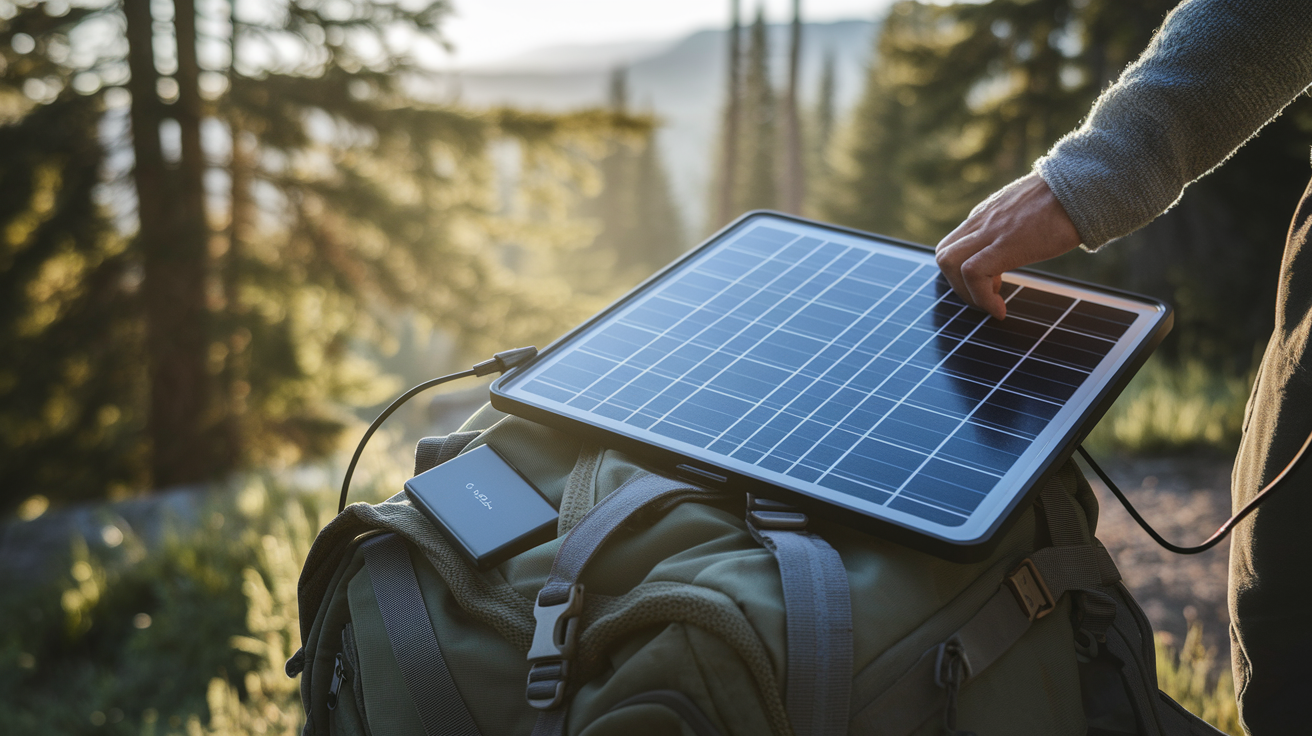
Solar charging options provide battery recharge capability when you’re away from grid power for extended periods. Fold-up solar chargers come in 5, 7, 10, 12, and 25-watt sizes. The smallest sizes work for recharging cell phones. The larger panels can charge laptops or run emergency radios directly.
Lightweight fold-out solar modules can clip to the outside of backpacks for continuous charging while walking, turning movement time into productive charging time. Some fold-out solar panels include integrated high-capacity battery packs, combining solar collection with power storage in one unit.
NiMH batteries handle partial charging well, making them great for solar panel charging on cloudy days with interrupted charging sessions. Unlike some chemistries preferring consistent charging input.
Practical features to look for in power banks and solar chargers:
Capacity rating of 10,000 to 20,000 mAh providing 2 to 4 full phone charges
Weight under 12 ounces for models you’ll actually carry in a go bag
Multiple USB port types including USB-A and USB-C for device compatibility
Weatherproof rating of IPX4 or better for rain and splash resistance
Pass-through charging allowing the power bank to charge devices while being charged itself
Solar panel portability with fold-up designs under 1 pound for panels under 10 watts
Power banks reduce the number of spare AA/AAA batteries needed for devices that can charge via USB. Instead of carrying 24 spare AA batteries for multiple devices, you might carry 12 AA batteries for non-USB devices plus a 15,000 mAh power bank handling all USB charging needs.
This reduces weight since lithium-ion power banks offer better energy density than AA batteries, though you lose the flexibility of swapping individual cells between devices. Pick up lithium-ion batteries with built-in micro-USB charging ports for redundancy since NiMH batteries require separate chargers that can be lost or damaged.
Battery Organization and Rotation Systems
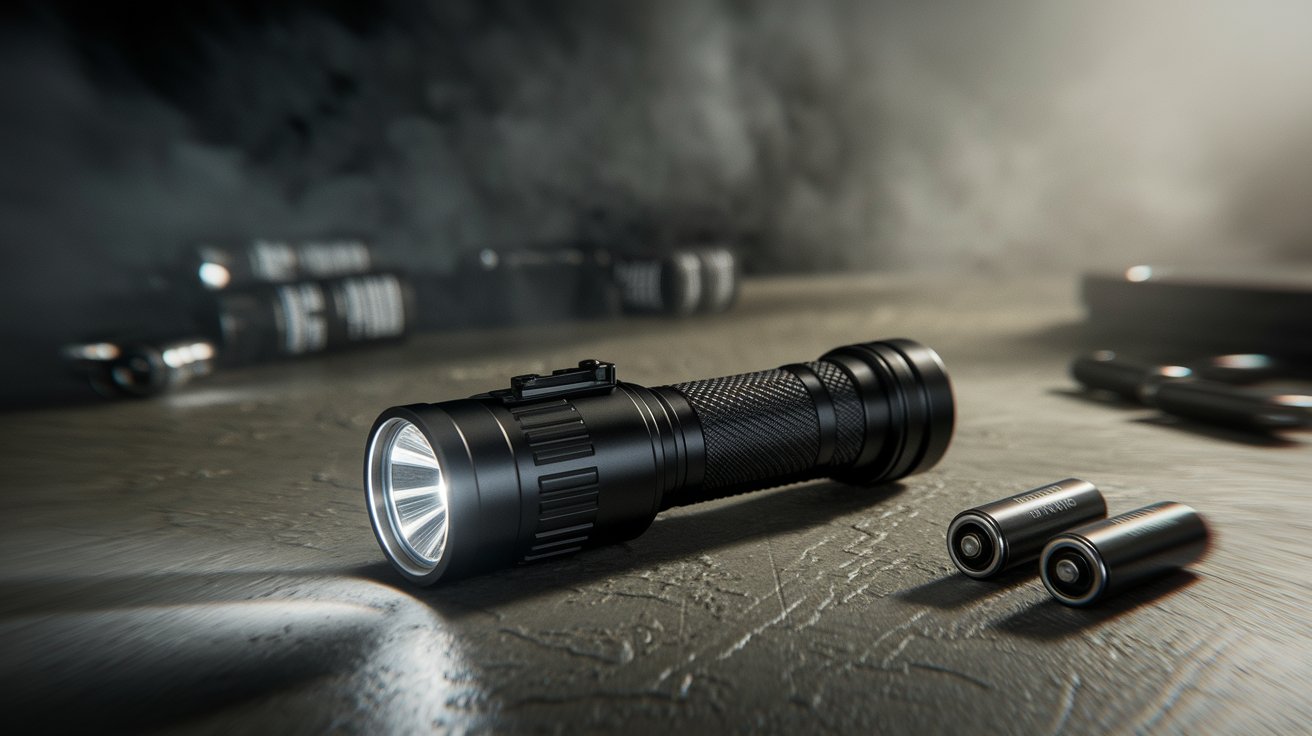
Build your NiMH battery supply at least 50% larger than your immediate needs to allow proper rotation while some batteries are recharging.
Create an annual top-off charging schedule for stored batteries, checking and recharging them every spring and fall to maintain readiness. Users successfully store AA and AAA NiMH batteries in car emergency kits for years through winter and summer extremes using this simple annual maintenance routine.
Set calendar reminders for these checks since it’s easy to forget stored batteries until you actually need them. During each check, test batteries under load in actual devices rather than just checking voltage with a meter. A battery might show correct voltage but fail to deliver current under real-world demands.
Organization systems using labeled containers or dedicated battery organizers prevent mixing fresh batteries with partially-depleted ones. Simple plastic boxes with dividers work well, or purpose-built battery storage cases showing charge status at a glance.
Label each section by battery type and charge status: “AA Fresh,” “AA Used,” “AAA Fresh,” “AAA Used.” This system lets you grab known-good batteries quickly during emergencies while setting aside partially-used batteries for non-critical applications.
Regular Eneloop batteries have less self-discharge than Eneloop Pro or Ladda equivalents for long-term storage applications, so label those differently if you’re mixing battery types.
Rotation strategies prevent batteries from sitting unused until they’re needed years later. Swap go bag batteries into household use every 6 to 12 months, replacing them with freshly-charged batteries while using the removed batteries in TV remotes, clocks, or other daily devices.
This rotation ensures your emergency batteries stay within their optimal charge cycle while getting actual use that verifies they still work properly. Track rotation dates on a simple inventory checklist showing when batteries were last tested and rotated, along with approximate cycle counts if you’re pushing batteries to their 2,000-cycle limits.
Seasonal update schedules tied to spring and fall time changes make battery rotation easy to remember. Check smoke detectors, rotate go bag batteries, and verify emergency kit contents all at once.
Weight and Space Optimization for Battery Packing
Battery weight-to-power ratio varies dramatically by chemistry and size, affecting your total pack weight more than most people realize. A single NiMH AA battery weighing 24 grams can theoretically power a 100-lumen flashlight for one hour nightly for 8.6 years, or realistically about 5 years with 2,100 charge cycles before the battery chemistry degrades.
Lithium primary AA batteries weigh only 15 grams while delivering 40% more capacity than alkalines and vastly better temperature performance. The weight difference between 48 lithium AA batteries (720 grams) versus 48 alkaline AA batteries (1,152 grams) equals 432 grams. Nearly one pound saved just by choosing lithium primaries.
Balance minimalism with adequate power reserves by calculating actual usage rather than guessing. For a 72-hour kit, estimate your realistic flashlight use (perhaps 3 hours total across three nights), radio listening time (maybe 1 hour for weather updates), and GPS navigation needs (2 hours of active use).
This might require 12 AA batteries total if your devices are efficient, not the 48 batteries some generic lists recommend. Oversized battery supplies “just in case” add pounds without meaningfully improving preparedness. Better to carry correct quantities of the right battery types than huge quantities of mediocre batteries.
Weight-saving strategies for battery packing:
-
Choose lithium primaries for disposable batteries, saving 40% weight versus alkalines with better performance
-
Eliminate redundant sizes by using battery adapters instead of carrying C and D cells separately
-
Prioritize high-capacity formats like AA over AAA when devices offer size options, since larger batteries deliver better energy-to-weight ratios
-
Remove packaging and store batteries in simple zip bags to eliminate cardboard and plastic waste adding bulk
-
Select compact devices designed for AA batteries rather than larger formats requiring heavier D cells
Final Words
Pack AA and AAA batteries as your foundation, with 24-48 AA and 12-24 AAA for a 72-hour kit.
Choose lithium primaries like Energizer Ultimate for long storage and temperature extremes, or go with NiMH low self-discharge batteries like standard Eneloop if you’ll rotate them annually.
Standardize on one battery family, grab some AA-to-D and AA-to-C adapters for flexibility, and you’re set.
Store everything cool and dry, skip alkaline batteries completely, and remember what batteries to include in go bag depends on your devices and how often you’ll refresh your supply.
You’ve got this. When water rises, you’ll have power when it counts.
FAQ
Q: What are 10 items in an emergency go bag?
A: The 10 essential items in an emergency go bag include water (1 gallon per person per day), non-perishable food, flashlight with batteries, battery-powered radio, first aid kit, medications, copies of important documents in waterproof bag, cash, phone charger, and change of clothes. Additional priority items include any prescription medications, pet supplies if needed, and hygiene items.
Q: Can I put AA batteries in checked baggage?
A: Yes, AA batteries can be placed in checked baggage for air travel. Alkaline, NiMH, and lithium primary batteries in standard consumer sizes like AA and AAA are allowed in checked bags. Keep them in original packaging or tape the terminals to prevent short circuits. Lithium-ion batteries over 100 watt-hours typically require airline approval.
Q: What is the 40 to 80 rule for batteries?
A: The 40 to 80 rule for batteries means storing lithium-ion batteries between 40% and 80% charge to maximize their lifespan. Fully charging to 100% or draining below 20% causes chemistry stress that reduces total cycle life. For long-term storage, maintain lithium-ion batteries at 40-60% charge with recharge sessions every six months.
Q: What are 10 items you need to survive?
A: The 10 items you need to survive an emergency include clean water, food, shelter materials, fire-starting tools, flashlight, first aid supplies, communication device like a radio, navigation tools, multi-tool or knife, and weather-appropriate clothing. Add batteries to power your flashlight and radio. For flood scenarios, include copies of important documents in waterproof storage.