

Most people think evacuation means getting in your car and driving away from danger. But what happens when the water rises faster than traffic moves, when roads flood before you can leave, or when you’re trapped with nowhere to go? Vertical evacuation flips the script: instead of running away, you go up. This guide breaks down exactly when climbing to higher floors saves more lives than trying to escape, which buildings will keep you safe above deadly water, and the step by step moves you need to make when minutes matter and the flood is already at your door.
What Vertical Evacuation Means in Flood Emergencies

Vertical evacuation is the strategy of moving upward to higher floors or levels within a building during flood events rather than evacuating horizontally away from the area. Instead of leaving your neighborhood or city, you go up. To the third floor of your apartment building, the roof of a school, or the top level of an office tower. The idea is simple: put floors between you and the rising water.
This approach differs from traditional horizontal evacuation where people flee the flood zone entirely, getting in cars and heading to higher ground miles away. Horizontal evacuation means leaving the threatened area, often along crowded highways, with everyone trying to escape at once. Vertical evacuation means staying put geographically but climbing above the danger. It’s the difference between running away and climbing up.
The basic concept uses multi-story structures as temporary safe refuge above rising water levels. You’re not trying to get out of town. You’re trying to get above the flood. A six-story building becomes a vertical safe zone where the top floors stay dry even when the street floods. The structure does the work of protecting you, as long as it’s built to withstand floodwater and you move high enough fast enough.
Vertical evacuation keeps people within the flood-affected area but positions them above dangerous water levels until rescue arrives or floodwaters recede. You might spend hours or even a couple days on an upper floor or rooftop, waiting for the water to drop or for boats and helicopters to reach you. It’s not a way to avoid the flood. It’s a way to survive it without drowning.
Comparing Vertical and Horizontal Evacuation Strategies

Evacuation strategy effectiveness depends heavily on flood type and warning time. A slow rising river flood that takes days to peak is different from a flash flood that turns a dry creek into a raging torrent in twenty minutes. What works for one can fail catastrophically for the other.
Research shows vertical evacuation often produces better outcomes in rapid onset scenarios. When time is limited, moving upward results in fewer casualties than trying to flee. The math is harsh but clear: people who try to outrun fast floods often get caught in their cars or on foot. People who climb to safety early tend to survive.
| Flood Type | Warning Time | Recommended Strategy | Key Considerations |
|---|---|---|---|
| Flash flooding | Minutes to hours | Vertical evacuation | Water rises too fast for safe horizontal evacuation; roads become impassable quickly |
| Coastal storm surge | Hours to one day | Horizontal evacuation preferred, vertical if trapped | Storm surge can reach 20+ feet; horizontal evacuation safer if time allows |
| Hurricane flooding | One to three days | Horizontal evacuation | Advance warning allows safe horizontal evacuation; wind and rain complicate vertical rescue |
| River flooding | Days to weeks | Horizontal evacuation | Slow rise provides time to leave; floodwaters may remain high for extended periods |
| Dam or levee failure | Minutes to hours (if sudden) | Vertical evacuation | Catastrophic water release overwhelms evacuation routes; immediate upward movement critical |
| Tsunami | Minutes after earthquake | Vertical evacuation in coastal zone | No time for horizontal evacuation near coast; move to high ground or upper floors immediately |
Timing factors determine which strategy keeps you alive. Flash floods, dam failures, and levee breaches develop too quickly for safe horizontal evacuation. By the time you realize you need to leave, the roads are already underwater or blocked by stalled cars and debris. Vertical evacuation reduces casualties in time limited situations because you can make the decision later and still act fast enough. Five minutes to climb stairs beats thirty minutes stuck in traffic on a flooding highway.
Evacuation routes sometimes become more dangerous than sheltering in place. A road that looks passable might have a washed out section hidden under muddy water. Your car can float and flip in as little as two feet of moving water. At night, you can’t see the hazards. Decision making under uncertainty is part of the reality. You often don’t know if the flood will be three feet or ten feet, or if it’ll arrive in one hour or four. Vertical evacuation handles that uncertainty better because you can wait longer to decide and still execute the plan safely.
Critical situations when vertical evacuation becomes the recommended strategy over attempting to leave:
Water is already rising rapidly and roads are flooding or blocked. Evacuation routes are cut off by high water, debris, or traffic jams. Nighttime conditions limit visibility and make travel extremely hazardous. You don’t have reliable transportation or enough fuel to reach safe areas. Vulnerable family members (elderly, disabled, very young) can’t travel safely in the time available. Uncertainty about flood timing and severity makes it unclear whether horizontal evacuation can be completed before water blocks your path.
Identifying and Selecting Safe Buildings for Vertical Flood Refuge

Building selection directly determines whether vertical evacuation saves your life or puts you in greater danger. The structure you choose has to do one job: keep you above deadly water long enough to survive. Not every tall building can do that.
Not all multi-story structures are suitable for flood refuge. A three-story wood frame apartment building might collapse under the force of fast moving floodwater. A concrete office tower anchored deep into bedrock will stand firm. The difference matters when your life depends on it.
Commercial and Institutional Buildings
Office towers, schools, hospitals, and government buildings often work well for vertical evacuation because they’re built with reinforced construction and multiple floors well above expected flood levels. A ten-story concrete office building can keep you safe on the eighth floor even if the first three floors flood completely. Schools and hospitals typically have structural standards that make them more flood resistant than residential buildings. Government buildings often serve as designated emergency shelters and have backup power, stairwell access, and flat roofs suitable for helicopter rescue.
Residential Multi-Story Structures
Apartment buildings and condominiums can serve as vertical evacuation sites for residents and neighbors. If you live in a multi-story apartment building, your third or fourth floor might be the safest place within blocks. Concrete or steel framed buildings perform better than wood framed structures when floodwater hits. Neighbors on lower floors should know they can knock on your door and climb higher if water starts rising. Buildings with interior stairwells provide safer access than exterior fire escapes, which can become slippery and dangerous during floods.
Purpose-Built Vertical Evacuation Structures
Specially engineered buildings designed specifically for emergency refuge represent the gold standard. These structures have reinforced construction, rooftop access, and disaster supply caches stocked for survival. The Gladys Valley Marine Studies Building in Newport, Oregon is a purpose-built example. It provides rooftop refuge at 47 feet high and was designed to survive magnitude 9.0+ earthquakes and tsunami events. The building can support over 920 people for up to two days with pre-positioned water, food, first aid supplies, and communication equipment stored on the roof.
Community planning requires identifying and designating suitable vertical evacuation structures in flood prone areas before disaster strikes. Emergency management agencies should assess which buildings can safely serve as refuge sites, install directional signage pointing people toward these locations, and ensure public awareness through maps, drills, and education campaigns. When seconds count, you can’t afford to guess which building will hold.
Pre-identifying suitable buildings in flood zones through community level planning and coordination with emergency management agencies means people already know where to go when warnings sound. Designated structures should be clearly marked with weatherproof signs visible from main streets and evacuation routes. Communities in tsunami zones, flash flood areas, and coastal storm surge regions benefit most from formal vertical evacuation building programs.
Step-by-Step Procedures for Executing Vertical Evacuation During Flooding
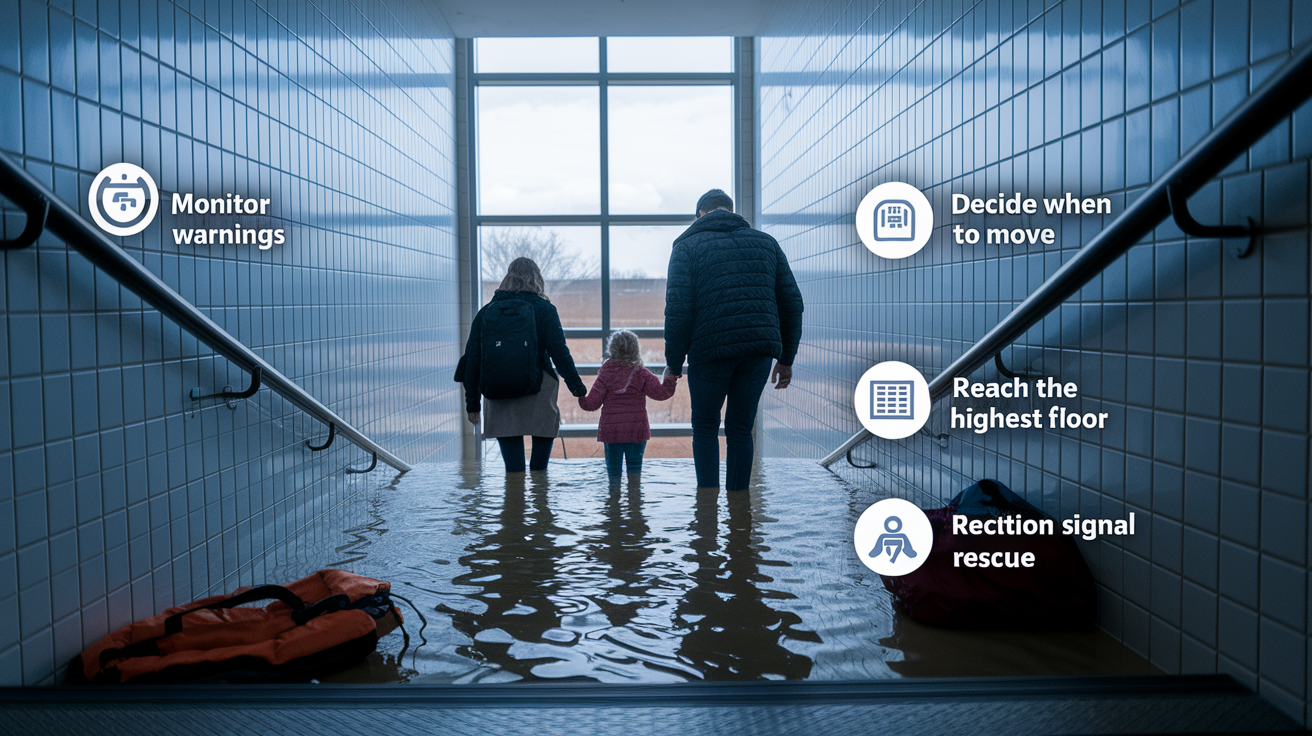
Having a clear action plan before floods occur means you move fast and smart when water starts rising, not panicking and making dangerous choices under pressure.
Monitor flood warnings through weather apps, emergency alerts, local news, and NOAA weather radio so you know when conditions are deteriorating.
Decide when to move upward based on official evacuation orders, visible water rise, or worsening forecast conditions. Don’t wait until water is at your doorstep.
Gather pre-prepared emergency supplies immediately. Focus on waterproof containers with water (one gallon per person per day), non-perishable food, first aid kit, battery powered radio, flashlights, extra batteries, important documents in zip-top bags, medications, phone chargers, and signaling equipment like whistles and bright cloth. Reference emergency kit planning and grab-and-go bag essentials for detailed packing guidance.
Select the highest accessible floor in your building or move to a designated vertical evacuation structure if you’re in a single-story home.
Use stairs exclusively during active flooding. Never use elevators unless you’re in a purpose-built evacuation structure with emergency elevators designed for flood events and equipped with backup power.
Bring all family members, pets in carriers, and assist vulnerable individuals including elderly neighbors, people with mobility challenges, and anyone who might need help climbing stairs.
Secure access to the rooftop if possible, since rooftops provide maximum elevation and visibility for rescue operations.
Position yourself for rescue visibility near windows, on rooftops, or in areas where helicopters and boats can see you.
Signal rescuers using multiple methods simultaneously. Tie a bright colored sheet or towel to a rooftop antenna, use a flashlight or mirror to reflect sunlight, blow a whistle in repeated patterns, and wave bright fabric when you see or hear aircraft or boats.
Conserve phone battery by turning off unnecessary apps and using texts instead of calls when possible. But attempt communication with 911 or family when you have service to report your location and number of people needing rescue.
Stay calm, move deliberately, and avoid rushed decisions that increase risk like wading through moving water to reach a taller building across the street. Use multiple signaling methods simultaneously to ensure rescue personnel can locate you during search operations. Whistle blasts carry farther than shouting, bright fabric shows up better than waving your arms, and flashlight signals work at night when visual searches are difficult.
Vertical Evacuation Safety Considerations and Hazards to Avoid

Elevator use during flooding creates deadly entrapment risks because power failures stop the car between floors and rising water can flood elevator shafts, trapping you in a metal box filling with water. Elevators also have electrical components in the shaft that pose electrocution hazards when submerged. The exception is specially designed emergency elevators with backup generators found in purpose-built evacuation structures like the Gladys Valley Marine Studies Building, which has an ADA-approved emergency elevator that operates on backup power and can transport up to 200 people during the critical window between an earthquake and tsunami arrival. Unless you’re certain the building has this type of system, always use stairs.
Structural concerns determine whether a building can serve as safe refuge. Buildings designed to withstand flood forces resist water pressure, debris impact, and buoyancy forces that can lift and shift structures off their foundations. Purpose-built evacuation buildings have features like deep anchor systems, reinforced foundations, and nonstructural walls designed to wash out under wave force without compromising the upper assembly area’s integrity. Before climbing to an upper floor, look for visible structural damage like major cracks in walls, tilted door frames, or separation between walls and floors. These signs mean the building may not hold. Older buildings without modern flood resistant design pose higher collapse risks than newer construction built to stricter codes.
Electrical hazards multiply when rising water contacts power systems and appliances. Water conducts electricity, turning flooded rooms into electrocution zones. Breaker panels, outlets, and any plugged-in devices become dangerous when submerged. If you smell burning, see sparks, or notice lights flickering as water rises, the electrical system is failing and shock risk is high. Shut off power at the main breaker if you can do so safely before water reaches electrical components.
Critical hazards to avoid during vertical evacuation:
Using elevators during active flooding unless they’re designated emergency evacuation elevators with backup power in purpose-built structures. Touching electrical panels, outlets, or appliances once water has reached floor level. Wading through moving water to reach another building. Two feet of moving water can sweep you off your feet. Underestimating water depth. It only takes six inches of fast moving water to knock you down. Entering structurally compromised buildings with visible major cracks, tilting, or foundation separation. Drinking or using floodwater without purification. It’s contaminated with sewage, chemicals, and bacteria. Remaining on lower floors too long waiting to see how bad it gets. Water can rise faster than you expect.
Official Evacuation Orders and Authority Guidelines for Vertical Evacuation
Local emergency management agencies and authorities issue evacuation orders through municipal emergency management offices, county emergency operations centers, regional security agencies, and sometimes state level disaster coordination offices depending on the flood’s scope and severity. These agencies monitor river gauges, weather forecasts, dam conditions, and levee integrity to determine when populations need to move.
Mandatory evacuation orders mean officials have determined staying in place poses immediate life-threatening risk and you’re legally directed to leave or seek higher refuge. Voluntary evacuation orders mean conditions are deteriorating and officials recommend leaving but haven’t made it mandatory. Yet. With vertical evacuation strategies, mandatory orders might direct you to designated vertical evacuation structures rather than telling you to leave the area entirely. Local authorities can defer evacuation decisions longer when vertical evacuation options exist because moving upward takes less time than horizontal evacuation, allowing them to gather more information about the flood’s actual severity before committing resources and disrupting communities.
FEMA guidelines recognize vertical evacuation as a legitimate disaster response strategy when horizontal evacuation isn’t feasible due to time constraints, blocked routes, or vulnerable populations who can’t travel safely. Official protocols include identifying suitable vertical evacuation structures in advance, marking them clearly, ensuring 24/7 public access, and incorporating vertical evacuation into community emergency plans. FEMA encourages purpose-built vertical evacuation structures in tsunami zones and flash flood areas where rapid onset events make traditional evacuation impossible. The agency also provides technical guidance on building design standards, capacity planning, and supply caching for vertical refuge sites.
Monitor official warnings through multiple channels because relying on a single source can fail. Sign up for emergency alert systems through your local government’s website or app, keep a battery powered NOAA weather radio tuned to your area’s frequency, follow local emergency management social media accounts, and pay attention to news broadcasts during severe weather. When authorities issue evacuation guidance, they’ll specify whether you should evacuate horizontally to a different area or vertically to a designated structure.
Vulnerable Populations and Special Assistance Needs in Vertical Evacuation
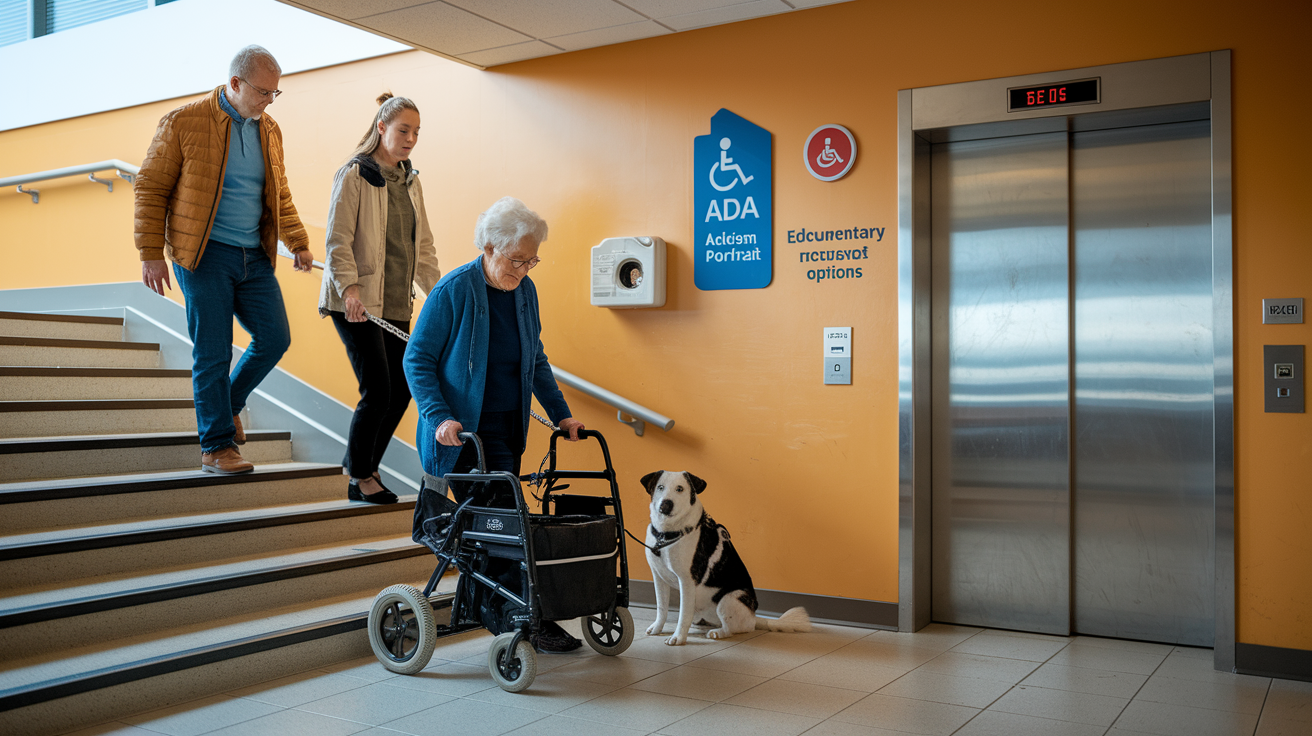
Vulnerable populations face heightened challenges during vertical evacuation because stairs, time pressure, and physical demands create barriers that healthy adults don’t experience.
Elderly and Mobility-Impaired Individuals
Physical limitations make stair climbing difficult or impossible for many elderly people and individuals with mobility impairments. Medical equipment like walkers, wheelchairs, and portable oxygen concentrators add weight and logistical complexity. These individuals need assistance from neighbors, family members, or first responders to reach upper floors safely. In purpose-built evacuation structures, ADA-approved emergency elevators running on backup power provide critical accessibility. For example, an emergency elevator can transport people with mobility challenges who can’t use stairs during the narrow window between warning and flood arrival. Pre-planning means identifying who in your building needs help and assigning capable neighbors to assist them.
Children and Infants
Keeping families together during vertical evacuation prevents the trauma and danger of separation in chaotic conditions. Young children need to be carried or closely supervised on stairs to prevent falls. Infants require carriers that keep your hands free for stability and carrying supplies. Child-specific supplies include diapers, formula, comfort items like stuffed animals to reduce fear, and extra clothing since children get cold faster when wet. Explain the plan to older children in calm language beforehand so they know what to expect and can move quickly without freezing in fear.
Pets and Service Animals
Planning for pet evacuation includes carriers for cats and small dogs, leashes for larger dogs, and basic supplies like food, water, medications, and waste bags. Keep carriers easily accessible and practice getting pets into them quickly since stress makes animals resist. Bring service animals with you always. They’re trained to stay calm and provide essential support to their handlers. Keep pets on leashes or in carriers throughout the evacuation to prevent them from bolting in fear, which can lead to drowning or you risking your life searching for them.
Medical and Cognitive Conditions
Medication access becomes critical during extended vertical evacuation when you might be stranded for hours or days. Pack a waterproof bag with prescription medications, medical device batteries, glucose monitors, insulin, inhalers, and anything else required for ongoing health conditions. Portable oxygen equipment users need backup tanks or battery powered concentrators. Individuals with cognitive impairments like dementia may become confused, resist evacuation, or wander away from safe areas. Caregivers should use calm verbal guidance, physical touch for reassurance, and ID bracelets with contact information in case of separation.
Pre-plan with neighbors and community members to ensure no vulnerable person is left behind during vertical evacuation. Create a neighborhood assistance network where people check on elderly residents, families with young children, and anyone with mobility challenges. Write down who needs help, where they live, and who’s responsible for assisting them so the plan doesn’t rely on memory during a crisis.
Community Flood Preparedness Training and Public Education Programs
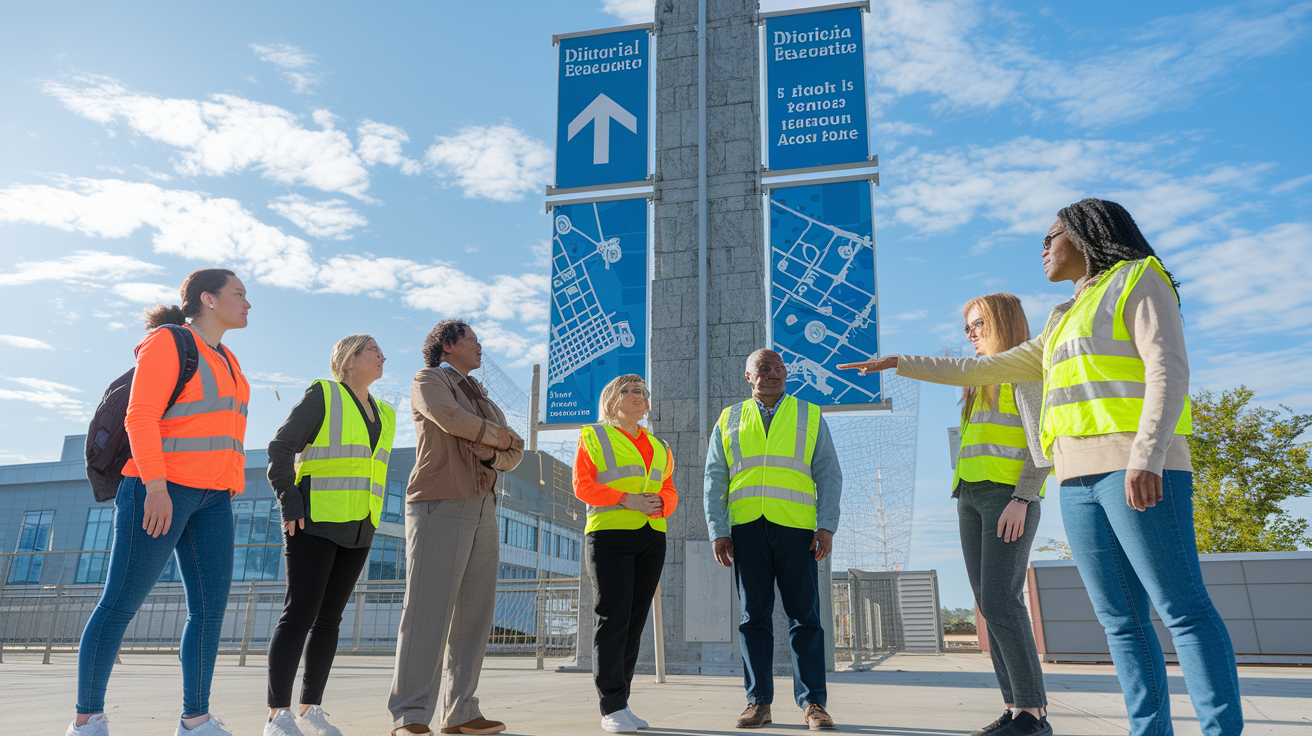
Evacuation signage, public awareness campaigns, and regular flood drills prepare residents by turning theoretical plans into practiced actions that people can execute under stress. Directional signs pointing toward designated vertical evacuation structures should be visible from main roads and marked with universal symbols and multiple languages in diverse communities. Signs should specify building addresses, maximum capacity, and distance. Public awareness campaigns using social media, community meetings, school presentations, and mailed brochures inform residents which buildings are designated refuges, what triggers vertical evacuation decisions, and what supplies to keep ready.
24/7 public access to designated vertical evacuation structures means exterior doors or ramps stay unlocked at all times so people can enter during emergencies without waiting for someone to open the building. The Gladys Valley Marine Studies Building, for example, provides public access to its exterior rooftop ramp 24 hours per day, 7 days per week specifically for emergency evacuation purposes. Community familiarity with locations and access points comes from regular visibility. People should walk past these buildings, know where the emergency entrances are, and understand the route to the roof or highest floor. Conducting annual walk-throughs and open houses at designated vertical evacuation sites builds this familiarity.
Comprehensive evacuation plan requirements and standards create accountability beyond vague claims that “arrangements are satisfactory.” As research from the Netherlands has shown, many places have no requirements on evacuation plan results despite official claims that systems work fine. Communities need specific, measurable standards: designated structures inspected annually for structural integrity, capacity calculations based on peak population density, supply caches inspected and rotated quarterly, and documented drills with participation tracking. Plans should specify who coordinates multi-agency responses since flood emergencies involve municipalities, emergency services, security regions, water authorities, and government agencies working together. Or failing to work together when roles aren’t clear.
Essential community preparation actions:
Conduct public evacuation drills at least annually with realistic scenarios including nighttime and weather complicated conditions so residents practice the actual challenges they’ll face. Install directional signage to vertical evacuation sites at major intersections, public buildings, and along evacuation routes with reflective materials visible at night. Provide public education on when and how to evacuate vertically through schools, community centers, employers, and door-to-door outreach in high-risk flood zones. Ensure 24/7 accessibility to designated structures by eliminating locks on emergency access points and maintaining clear pathways to upper floors and rooftops. Coordinate with emergency management agencies to define agency roles, share information systems, and practice multi-agency response through tabletop exercises and full-scale drills.
Final Words
Vertical evacuation during flood explained comes down to this: know your safe buildings before water rises, move up instead of out when time runs short, and stay visible for rescue.
Choose multi-story structures with solid construction. Avoid elevators unless they’re specially designed for emergencies. Bring your emergency kit, help vulnerable neighbors, and get to the highest floor you can reach safely.
Practice your plan now. Identify your vertical evacuation building today. Mark it on your phone. Walk the route with your family.
When floodwater moves fast and evacuation routes close, moving upward can save your life.
FAQ
What does vertical evacuation mean in flood emergencies?
Vertical evacuation means moving upward to higher floors within a building during flooding rather than traveling away from the flood zone. This strategy uses multi-story structures like office towers, schools, or apartment buildings as temporary safe refuge above rising water levels until rescue arrives or floodwaters recede.
What is the difference between vertical and horizontal evacuation?
The difference between vertical and horizontal evacuation is that vertical evacuation involves moving upward to higher floors within the flood area while horizontal evacuation means leaving the threatened zone entirely. Vertical evacuation keeps you in place but above dangerous water levels, whereas horizontal evacuation requires traveling away from the flood region.
Do you evacuate vertically during all flood types?
You evacuate vertically when floods develop too quickly for safe horizontal evacuation, such as flash floods, dam failures, or when evacuation routes become impassable. Vertical evacuation works best during rapid onset flooding where time is limited and moving upward produces fewer casualties than attempting to leave the area.
When is vertical evacuation recommended over horizontal evacuation?
Vertical evacuation is recommended when water rises rapidly, evacuation routes are blocked, nighttime flooding limits visibility, you lack adequate transportation, vulnerable populations cannot travel safely, or flood timing remains uncertain. In these situations, sheltering on upper floors becomes safer than attempting to flee the area.
Which buildings are safe for vertical flood evacuation?
Safe buildings for vertical flood evacuation include reinforced office towers, schools, hospitals, apartment buildings, and purpose-built structures designed specifically for emergency refuge. The building must have multiple floors well above expected flood levels, strong structural integrity to withstand flood forces and debris impact, and preferably rooftop access.
How high should you go during vertical evacuation?
You should go to the highest accessible floor during vertical evacuation, preferably with rooftop access if available. Move well above expected water levels based on local flood zone maps and current warnings. Purpose-built vertical evacuation structures like the Gladys Valley Marine Studies Building provide refuge at 47 feet high for major flood events.
Can you use elevators during vertical evacuation?
You cannot use elevators during active flooding except for specially designed emergency elevators with backup power in purpose-built evacuation structures. Standard elevators risk power failure, water infiltration, and entrapment. Always use stairs unless the building has ADA-approved emergency elevators specifically designated for flood evacuation.
What supplies should you bring during vertical evacuation?
You should bring waterproof containers with water, food, first aid supplies, communication devices, important documents, and signaling equipment during vertical evacuation. Reference your pre-prepared emergency kit and grab essential items quickly. Include medications, phone chargers, flashlights, whistles, and brightly colored cloth for signaling rescuers.
How do you signal for help during vertical evacuation?
You signal for help by moving to the rooftop or highest visible location and using multiple methods simultaneously including brightly colored cloth, flashlights, whistles, mirrors, and phone communication when service is available. Position yourself where rescue personnel can easily spot you during search operations and conserve phone batteries between attempts.
Are there special considerations for elderly people during vertical evacuation?
Special considerations for elderly people include physical limitations requiring assistance, medical equipment needs like oxygen, and access to ADA-approved emergency elevators in purpose-built structures. Pre-plan with neighbors to ensure elderly individuals receive help moving upward safely and bring necessary medications and medical devices.
Should you bring pets during vertical evacuation?
You should bring pets during vertical evacuation using carriers when possible and bringing pet supplies including food, water, and medications. Keep animals calm during stressful situations and include service animals in your evacuation plan. Never leave pets behind on lower floors where they face drowning risk.
Who issues official vertical evacuation orders?
Local emergency management agencies and municipal authorities issue official vertical evacuation orders during flood emergencies. Multiple agencies coordinate including emergency services, water authorities, and national government through centralized expert committees. Monitor warnings through emergency alert systems, weather radio, and local authority announcements.
What is the difference between mandatory and voluntary evacuation orders?
The difference between mandatory and voluntary evacuation orders is that mandatory orders legally require you to leave or seek refuge while voluntary orders strongly recommend evacuation but allow personal choice. Both types apply to vertical evacuation strategies, with mandatory orders typically issued when life-threatening flooding is imminent.
How do communities prepare residents for vertical evacuation?
Communities prepare residents through public drills, directional signage to designated vertical evacuation sites, education campaigns on when and how to evacuate vertically, and ensuring 24/7 accessibility to refuge structures. Effective preparation requires coordination with emergency management agencies and regular community training beyond basic awareness.
Do vertical evacuation buildings need special design features?
Vertical evacuation buildings need reinforced construction to withstand flood forces, multiple floors well above expected water levels, rooftop access through exterior ramps or interior stairwells, and sometimes emergency elevators with backup power. Purpose-built structures include disaster supply caches, assembly areas with rescue visibility, and nonstructural walls designed to wash out without compromising safety.