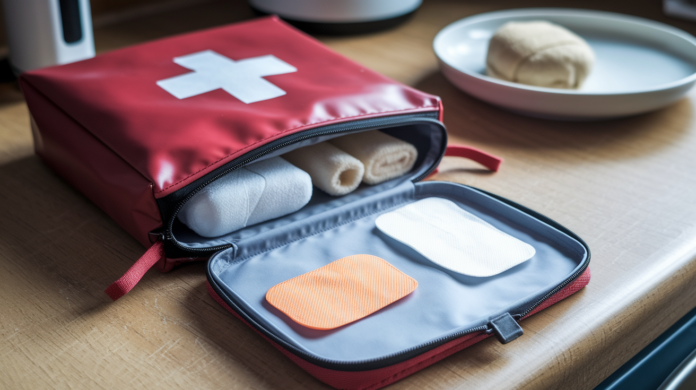

When floodwater rises, your regular medicine cabinet won’t cut it. If you can’t reach your first aid supplies in 60 seconds or they’re already soaked, they’re useless. Most people keep Band-Aids and aspirin in a bathroom drawer, but flood emergencies need waterproof storage, contamination resistant wound care, and medications that survive moisture and heat when the power goes out. This guide breaks down exactly what to pack, how to store it so it stays dry, and which items prevent the infections that send people to overwhelmed emergency rooms after floods recede.
Complete Checklist of First Aid Supplies for Flood Situations
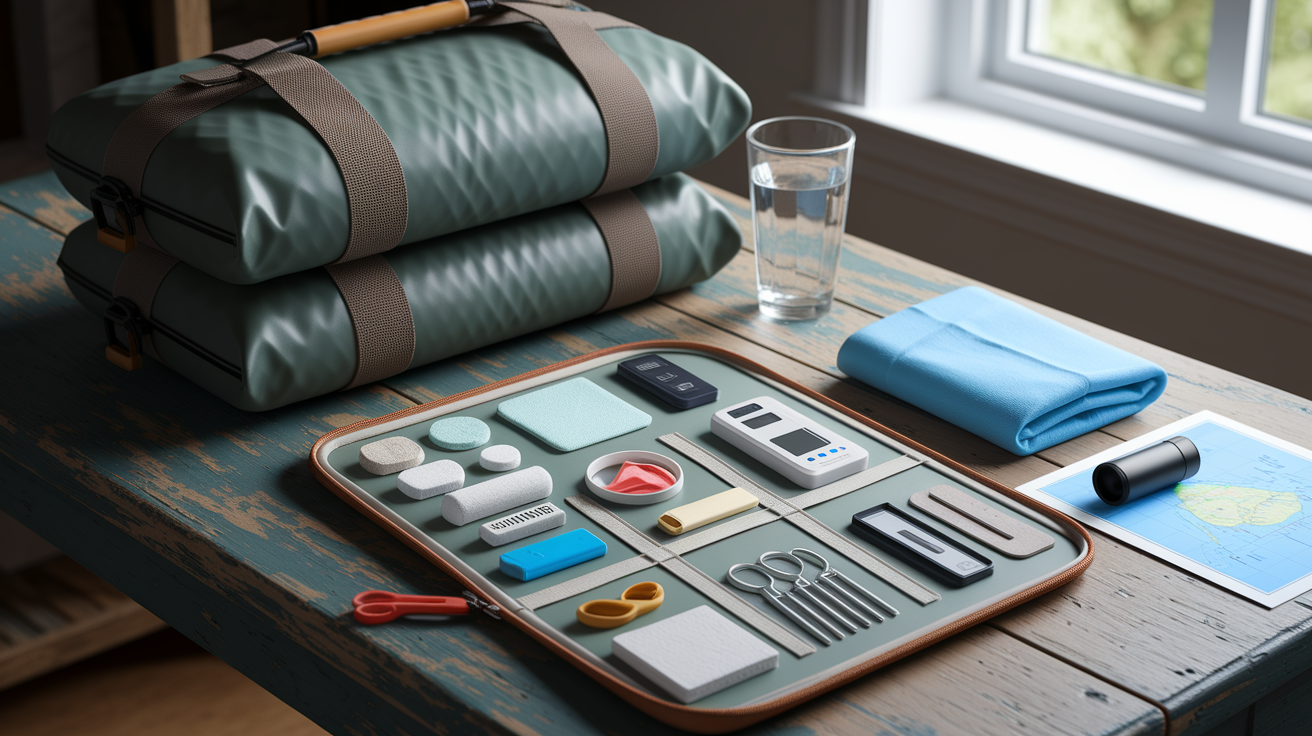
You need one gallon of water per person per day (three days minimum), sterile gauze pads in 4×4 inch size (10 packs), adhesive bandages in assorted sizes (20 count), medical tape (2 rolls), antiseptic wipes (20 packets), antibiotic ointment (2 tubes), disposable gloves (4 pairs), tweezers (stainless steel), scissors (trauma shears), digital thermometer, CPR mask with one way valve, pain relievers like acetaminophen and ibuprofen (50 tablets each), prescription medications (7 day supply), emergency blankets (2 per person), water purification tablets (50 count), hand sanitizer at 60 to 90% alcohol (two 8 oz bottles), elastic bandages (3 rolls), triangle bandages (2 count), instant cold packs (4 units), tourniquet (1 commercial grade), hemostatic dressings (2 packets), cotton swabs (50 count), safety pins (12 assorted sizes), LED flashlight with extra batteries, and antihistamines (24 tablets).
Store everything in waterproof containers where you can grab them fast when water’s rising.
Waterproof Storage Requirements
Dry bags with roll top closure work best. Get 60 to 100 liter capacity for main storage. Hard shell waterproof cases with O ring seals keep medications and electronics safe. Vacuum sealed bags protect individual items from moisture and contamination. Floating storage containers stay accessible even if water enters your home.
Double bag critical supplies using heavy duty freezer bags, then place those inside the main waterproof container. Put wound care items in one sealed bag, medications in another, tools in a third. This way you can find what you need without exposing everything to water.
Store your kit on high shelves, upper floors, or in your vehicle trunk. If floods happen at night, you need to reach supplies in the dark without wading through water. Keep a duplicate smaller kit in your car in case you’re away from home when evacuation orders come.
Label each waterproof bag clearly with permanent marker. Write the contents and date on waterproof tape attached to the outside. In an emergency, you shouldn’t have to open five bags to find bandages.
Wound Care and Infection Prevention Items for Flood Related Injuries
Floodwater carries sewage, chemicals, and sharp debris. Cuts and punctures from submerged objects become infected quickly because contaminated water enters the wound immediately.
Walking through debris fields after water recedes causes lacerations from broken glass, metal edges, and splintered wood. Small cuts turn serious when bacteria from floodwater multiply in the wound.
Essential Wound Cleaning Supplies
Pack wound irrigation solution (8 oz bottle) for flushing debris from cuts. Sterile saline solution (2 bottles) rinses wounds without causing tissue damage. Antimicrobial towelettes clean skin around injuries before bandaging.
For contaminated wounds, irrigate with clean water first, then use saline. Wipe from the center of the wound outward to avoid pushing bacteria into the cut. Use a fresh wipe for each pass.
Advanced Wound Dressings and Closure
You’ll want sterile gauze pads in multiple sizes (20 pads total) for covering wounds of different dimensions. Hemostatic dressings (2 packets) stop severe bleeding when direct pressure alone isn’t enough. Elastic bandages (3 rolls) secure dressings and provide compression for bleeding control. Medical tape keeps bandages in place even when wet. Triangle bandages work as slings, tourniquets, or large wound covers when standard bandages run out.
Layer your dressing by placing sterile gauze directly on the wound, wrapping with elastic bandage for pressure, and securing with medical tape. Change dressings twice daily or immediately if they become wet or contaminated with floodwater.
If you or a family member hasn’t had a tetanus shot in the past five years, any wound that breaks the skin during a flood requires medical attention within 48 hours. Puncture wounds, deep cuts, and injuries contaminated with soil or flood debris need professional evaluation even if they look clean after home treatment. Redness spreading from a wound, red streaks on skin, fever above 100.4°F, or pus drainage means infection has started and you need antibiotics you can’t get from a first aid kit.
Critical Medications and Pharmaceutical Supplies for Flood Emergencies
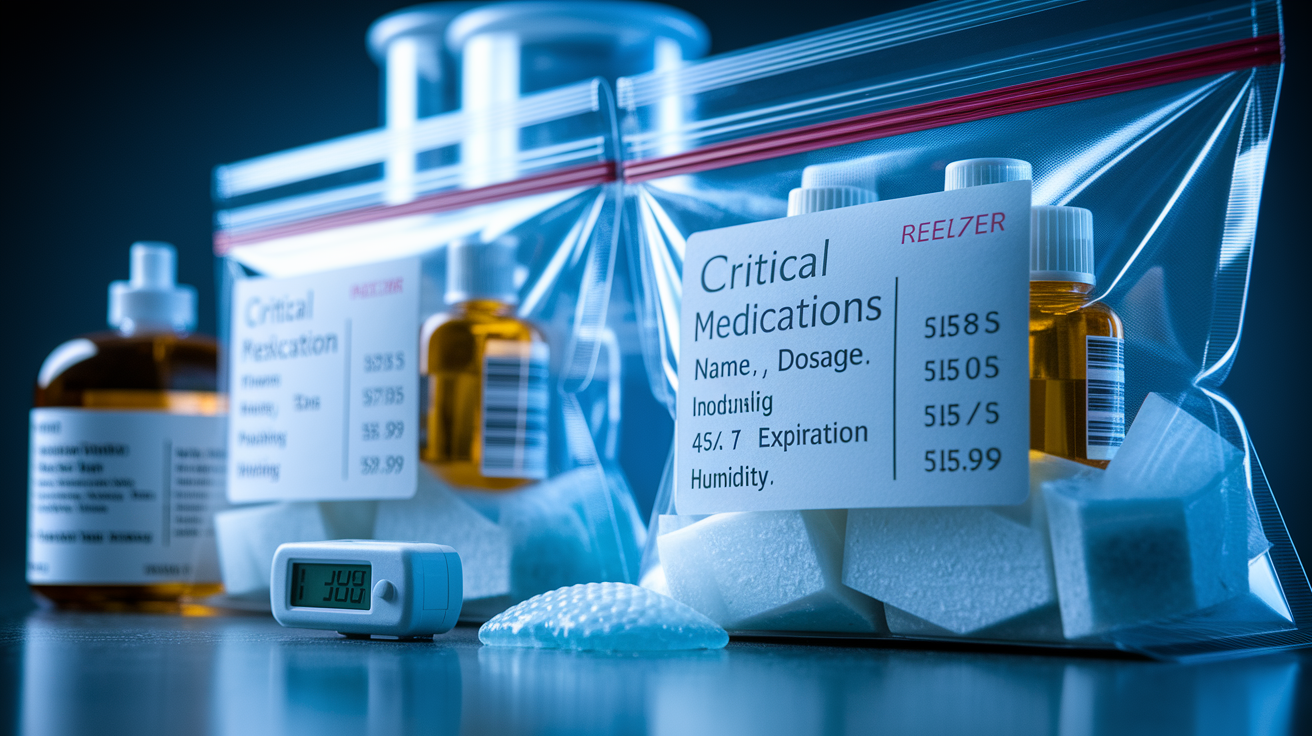
Floodwater damages medication bottles and pills lose effectiveness when exposed to moisture. Heat and humidity during power outages degrade medications faster than normal storage conditions.
Seal each medication type in individual freezer bags before placing them in your main waterproof kit. Write the medication name, dosage, and expiration date on the outside of each bag with permanent marker.
| Medication Category | Specific Items | Minimum Quantity | Special Notes |
|---|---|---|---|
| Pain Relievers | Acetaminophen, Ibuprofen | 50 tablets each | Keep in original bottles with dosing info |
| Antihistamines | Diphenhydramine | 24 tablets | Treats allergic reactions and insect bites |
| Anti Diarrheal | Loperamide | 12 tablets | Essential when clean water is limited |
| Nausea Relief | Bismuth subsalicylate | 20 tablets | Helps prevent dehydration from vomiting |
| Prescription Medications | All daily prescriptions | 7 day supply minimum | Include written list of names and dosages |
| Diabetic Supplies | Insulin, testing strips, syringes | 10 day supply | Store insulin in insulated bag with ice pack |
| Asthma Inhalers | Rescue inhaler | 2 backup inhalers | Check expiration dates every 3 months |
| Epinephrine Auto Injectors | EpiPen or equivalent | 2 unexpired units | Replace immediately after use |
| Cardiac Medications | Blood pressure, heart rhythm drugs | 7 day supply | Can’t skip doses during evacuation |
| Antibiotic Ointment | Triple antibiotic cream | 2 tubes | Apply to cuts before bandaging |
Check medication expiration dates every three months and replace anything within six months of expiring. Pharmacies often can’t refill prescriptions early, so request vacation overrides from your doctor specifically for emergency supplies. Keep a printed list of all medications, dosages, and prescribing doctors in a waterproof sleeve attached to your medication bag. If you evacuate to a shelter or unfamiliar hospital, this list ensures you get correct treatment even if you can’t remember details under stress.
Sanitation and Hygiene Products to Prevent Waterborne Illness
Floodwater contains sewage bacteria, chemicals, and animal waste that cause severe gastrointestinal illness. Touching contaminated surfaces and then eating or touching your face transfers pathogens that lead to vomiting and diarrhea.
Pack these sanitation supplies with specific quantities:
Hand sanitizer at 60 to 90% alcohol concentration (two 8 oz bottles), antimicrobial towelettes (50 count), water purification tablets (50 tablets, treats 50 quarts), EPA registered chlorine bleach (1 quart, unscented), antibacterial soap (2 bars), wet cleaning cloths (30 count), waste disposal bags (20 heavy duty bags), toilet paper (4 rolls in waterproof bag), feminine hygiene products (1 month supply), diapers if applicable (3 day supply, stored in dry location).
Keep clean supplies separate from items that have touched floodwater. Use one waterproof bag for unused clean items and a second bag for anything that might be contaminated. Never reach into your clean supply bag without washing hands first.
Wash hands with soap and clean water for 20 seconds after touching any surface that floodwater reached. If clean water isn’t available, use hand sanitizer and rub until hands are completely dry. Before eating, preparing food, treating wounds, or touching your face, sanitize hands even if they look clean. Mix one cup of bleach per five gallons of water to disinfect surfaces and tools that contacted floodwater. Let the bleach solution sit on surfaces for at least one minute before wiping. For drinking water, add 8 drops of unscented bleach per gallon of clear water, 16 drops per gallon of cloudy water, then wait 30 minutes before drinking. Water purification tablets follow package directions but typically require 30 minutes to four hours depending on water temperature and contamination level.
Essential Tools and Equipment for Emergency Medical Response
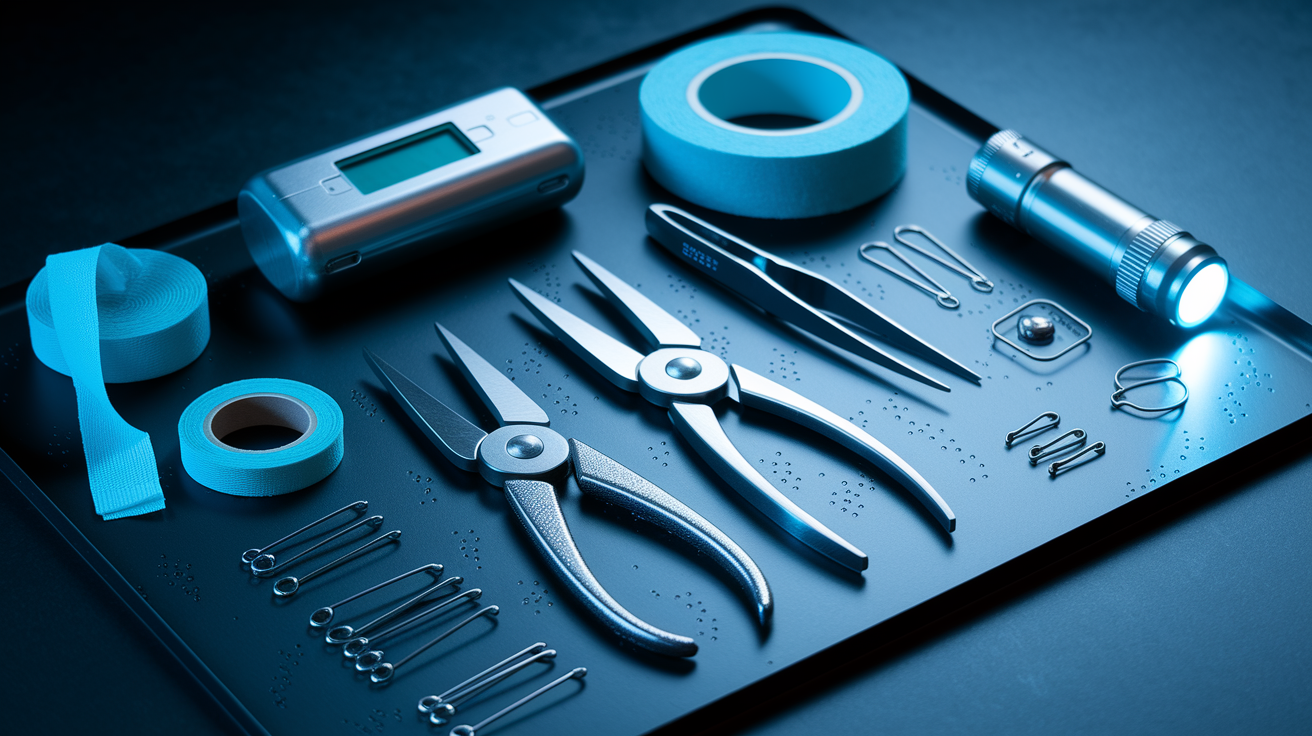
Metal tools rust quickly in flood conditions and plastic handles become slippery when wet. Choose stainless steel instruments and rubberized grips that work in humid environments.
Pack these 12 tools in your first aid kit:
Stainless steel tweezers for removing splinters and debris from wounds. Trauma shears for cutting wet clothing away from injuries. Digital thermometer with waterproof case for monitoring fever. Medical tape (2 rolls hypoallergenic) that adheres to damp skin. CPR mask with one way valve for safe rescue breathing. Instant cold packs (4 units) for reducing swelling and treating heat exhaustion. Tourniquet (1 commercial grade) for life threatening bleeding. Elastic bandages (3 rolls in 2 inch, 3 inch, 4 inch widths) for sprains and securing dressings. Safety pins (12 assorted sizes) for securing bandages and creating slings. LED flashlight with extra batteries for examining wounds in the dark. Cotton swabs (50 count) for applying ointments and cleaning small wounds. Tongue depressors (10 count) for finger splints and checking throats.
Store metal tools in a sealed plastic container with silica gel packets to prevent rust during storage. After each use in wet conditions, dry tools completely and wipe metal surfaces with rubbing alcohol before returning them to storage.
Temperature Management Equipment
Include mylar emergency blankets (2 to 3 per person) that reflect body heat back to prevent hypothermia. Instant heat packs (4 units) warm hands and core body areas when someone shows shivering or confusion from cold exposure. Burn gel packets (4 individual packets) cool burn injuries from hot water heaters, cooking accidents, or electrical injuries during cleanup.
Oral rehydration salts (10 packets) and electrolyte replacement tablets (20 tablets) prevent dangerous dehydration when clean drinking water is limited or someone has diarrhea and vomiting. A compact emergency sleeping bag provides insulation if you’re stuck in a cold vehicle overnight. Space efficient thermal wraps cover a person’s body while taking up less room than traditional blankets.
Hypothermia symptoms include shivering, confusion, slurred speech, and drowsiness even in temperatures as warm as 50°F to 60°F when clothing is wet. Wrap the person in dry layers, use mylar blankets, and apply heat packs to armpits, groin, and neck. Heat exhaustion shows up as heavy sweating, rapid pulse, dizziness, and nausea in hot conditions without air conditioning. Move to shade, remove excess clothing, apply cold packs to neck and armpits, and give electrolyte drinks.
Coat metal tools lightly with mineral oil every six months to prevent corrosion in humid storage. Check battery powered devices monthly and replace batteries that show any white powdery buildup from leaking. Store batteries separately from devices in a sealed bag with moisture absorber packets. Digital thermometers often fail when the battery compartment gets wet, so wrap the entire device in a small zip bag before placing it in your kit.
Child, Infant, and Elderly Specific First Aid Kit Additions
Adult medication dosages are dangerous for children, and standard supplies don’t address infant feeding needs or elderly mobility limitations.
Infant and Toddler Medical Supplies
Pack infant pain reliever and fever reducer in liquid form with dosing syringe marked in milliliters. Check with your pediatrician for correct dosing by weight before an emergency happens. Diaper rash cream (2 tubes) prevents painful skin breakdown when you can’t change diapers as frequently as normal. Teething gel soothes babies who are fussy during stressful situations.
Infant electrolyte solution (4 packets) treats dehydration from vomiting or diarrhea, which happens quickly in babies. A nasal aspirator clears congestion so infants can breathe and eat. Baby safe antiseptic wipes are gentler than adult versions on delicate skin.
Store infant formula in sealed containers separate from your main food supply. Pack premeasured formula portions in individual bags so you can prepare bottles without exposing your entire supply to contamination.
Elderly and Chronic Condition Requirements
Include hearing aid batteries (2 sets) because replacement batteries are impossible to find during evacuations. Extra prescription eyeglasses let elderly family members function if their primary glasses are lost or damaged. Mobility aid backup parts, like cane tips, prevent falls when walking through debris.
Compression stockings help prevent blood clots during long periods of sitting in shelters or vehicles. A blood pressure cuff monitors hypertension, which worsens under stress. Glucose monitoring supplies (test strips, lancets, testing meter) are essential for diabetics who need to adjust insulin based on changing diet and activity during emergencies.
Create a seven day medication organizer prefilled with correct dosages for each elderly family member. This prevents confusion about which pills were taken when routines are disrupted.
Store a waterproof medical history card for each child and elderly person in your kit. Write current medications, dosages, allergies, chronic conditions, and emergency contact for their doctor. Include height and weight for children because medication dosing depends on these measurements. Add insurance information and pharmacy phone numbers. During evacuations to unfamiliar hospitals or shelters, this card ensures your family member gets appropriate care even if you’re separated or too stressed to remember details.
Supporting Emergency Supplies for Medical Readiness
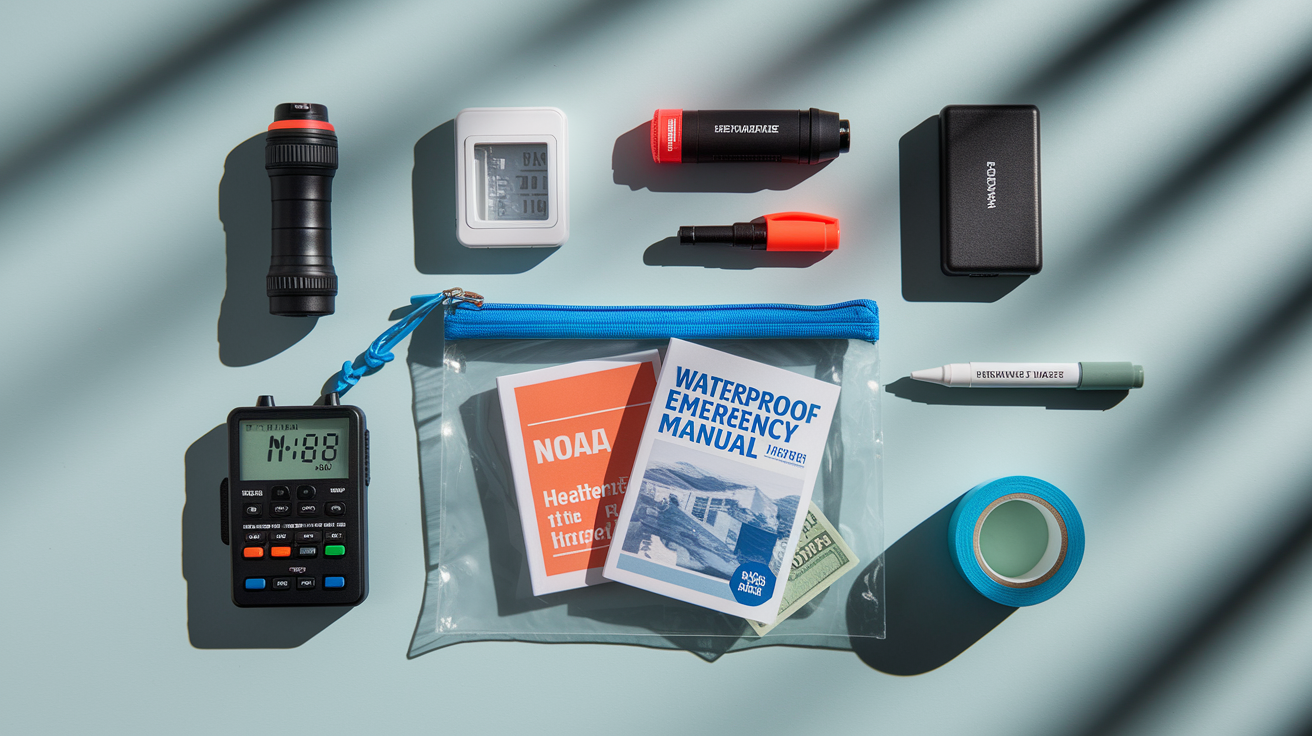
First aid supplies work only when you can see injuries, communicate with emergency services, and access backup resources during extended disasters.
Pack these nine supporting items:
Waterproof document holder containing insurance cards, medical history cards for each family member, and emergency contact list with out of state relatives who can coordinate if local phones are down. LED headlamp for hands free medical care when treating wounds in the dark or during power outages. Emergency whistle for signaling if someone is injured and you need help from neighbors or rescue teams. Backup power bank (fully charged) for keeping your phone working to call 911 or look up medical information. NOAA weather radio (battery powered or hand crank) for evacuation updates and emergency instructions. Waterproof emergency manual with first aid instructions because you won’t remember all procedures under stress. Permanent marker for labeling bandages with time applied and documenting symptoms on someone’s arm when paper isn’t available. Duct tape for securing bandages that refuse to stick in humid conditions and creating improvised splints for broken bones. Small cash reserve ($50 to $100 in bills under $20) for purchasing emergency medications or supplies from the only open pharmacy during evacuation.
Your phone battery dies at the worst moment, usually when you need to call for help or look up whether a symptom is serious. Keep the power bank sealed in a waterproof bag and test it monthly to verify it holds a charge.
Create a family communication plan that designates one person as the medical supply coordinator who knows where every first aid item is stored. This person should also know each family member’s medications, allergies, and medical conditions. If that person is injured or separated, a backup coordinator needs the same knowledge. Write this information down and store copies with both coordinators and in your waterproof document holder.
Proper Maintenance and Rotation Schedule for Flood Emergency Medical Kits
Emergency kits stored in garages or closets for years fail during actual disasters when medications have expired, batteries have corroded, and sterile packaging has deteriorated.
| Maintenance Task | Frequency | Specific Actions |
|---|---|---|
| Medication expiration check | Every 3 months | Rotate prescription medications, replace expired OTC drugs, update dosages if doctor changed prescriptions |
| Battery testing | Every 6 months | Test flashlights and thermometers, replace weak batteries, check for corrosion in battery compartments |
| Sterile supply inspection | Every 6 months | Check packaging integrity on gauze and bandages, replace any items with tears or moisture damage |
| Waterproof container assessment | Annually | Test seals by submerging bags in water, replace damaged bags, verify zippers and roll tops close completely |
| Documentation updates | Annually | Update medical history cards, emergency contacts, insurance information, medication lists |
| Complete inventory audit | Annually | Cross reference against checklist, replenish used items, add new supplies for changing family needs |
| Seasonal clothing adjustment | Biannually | Swap clothing for weather changes, replace outgrown children’s clothes, update sizes |
| Family needs reassessment | Annually | Adjust for new prescriptions, changing ages of children, elderly care requirements, new allergies |
Set phone reminders for the first day of each quarter (January 1, April 1, July 1, October 1) to check medications. This simple system prevents you from forgetting until you need supplies during an actual emergency. On the same day you change smoke detector batteries (typically daylight saving time changes), inspect your kit batteries and waterproof containers.
Print a simple checklist and attach it to the outside of your main kit with clear packing tape. Each time you inspect the kit, mark the date and your initials next to completed tasks. This record shows when items were last checked and prevents duplicate work by other family members. Store your pre flood preparation checklist near your first aid kit so you can review both during seasonal inspections and update storage locations if you rearrange your home.
Final Words
Your first aid kit items for flood emergency don’t help if they’re ruined by water or you can’t find them when seconds count.
Pack everything in waterproof containers. Store them high. Check expiration dates every few months.
Label your bags clearly so anyone in your family can grab the right supplies fast.
And remember, the best first aid kit is the one you’ve already packed, tested, and placed where you can reach it before the water does.
You’ve got this.
FAQ
What items should be included in a flood emergency first aid kit?
A flood emergency first aid kit should include sterile gauze pads (10 packs), adhesive bandages (20 count), antibiotic ointment (2 tubes), antiseptic wipes (20 packets), disposable gloves (4 pairs), pain relievers (50 tablets), medical tape, tweezers, scissors, a thermometer, and a 7-day supply of prescription medications, all stored in waterproof containers.
What supplies do flood victims need most after a disaster?
Flood victims need most clean water, non-perishable food, hand sanitizer with 60-90% alcohol, wound care supplies like sterile gauze and antibiotic ointment, prescription medications, waterproof boots, heavy-duty gloves, flashlights with batteries, and sanitation items including waste bags and cleaning cloths to prevent waterborne illness and infection.
What are the essential items in a basic emergency first aid kit?
A basic emergency first aid kit includes adhesive bandages in assorted sizes, sterile gauze pads, medical tape, antiseptic wipes, antibiotic ointment, tweezers, scissors, disposable gloves, a CPR mask, pain relievers, antihistamines, a thermometer, elastic bandages, and an emergency blanket for treating common injuries and medical situations.
How can I get emergency preparedness supplies from FEMA?
FEMA provides disaster assistance after flood events through their application process at DisasterAssistance.gov or by calling their helpline, but they do not distribute free pre-assembled first aid kits. You need to purchase and assemble your own emergency supplies before flooding occurs. FEMA offers checklists and guidance for building emergency kits on their website.
How should first aid supplies be stored to protect them from floodwater?
First aid supplies should be stored in waterproof dry bags with roll-top closures (60-100 liter capacity) or hard-shell cases with O-ring seals, placed on high shelves or upper floors. Use double-bagging with heavy-duty freezer bags for individual items, consider vacuum-sealed packaging, and choose floating storage containers when possible.
What wound care items are critical for flood-related injuries?
Critical wound care items for flood-related injuries include sterile saline solution for irrigation (2 bottles), hemostatic dressings (2 packets), sterile gauze pads in multiple sizes (20 pads), elastic bandages (3 rolls), antimicrobial towelettes, triangle bandages for severe bleeding, and tetanus vaccination awareness documentation since contaminated floodwater increases infection risk.
How much prescription medication should be kept in a flood emergency kit?
Keep a 7-day supply of all prescription medications in your flood emergency kit, stored in waterproof packaging with medication lists, dosage instructions, and pharmacy contact information. Rotate medications every 3 months to prevent expiration, and include backup supplies for critical conditions like diabetes, asthma, and heart disease.
What sanitation products prevent illness after flood contamination?
Essential sanitation products include hand sanitizer with 60-90% alcohol concentration (two 8 oz bottles), antimicrobial towelettes (50 count), water purification tablets (50 tablets), EPA-registered chlorine bleach (1 quart), antibacterial soap (2 bars), and wet cleaning cloths (30 count) to prevent waterborne illness from contaminated floodwater exposure.
What special first aid items do infants and elderly family members need?
Infants need infant pain reliever with dosing syringe, diaper rash cream (2 tubes), nasal aspirator, and infant electrolyte solution (4 packets). Elderly family members need hearing aid batteries (2 sets), extra prescription eyeglasses, blood pressure cuff, glucose monitoring supplies, compression stockings, and a 7-day medication organizer.
How often should flood emergency first aid kits be inspected and updated?
Check medication expiration dates every 3 months and rotate prescription drugs. Test batteries in flashlights and thermometers every 6 months. Inspect sterile supply packaging every 6 months. Conduct a complete inventory audit annually, update medical documentation, reassess family needs, test waterproof container seals, and adjust for seasonal clothing changes.
What medical tools work best in wet flood conditions?
Stainless steel tweezers resist rust, trauma shears cut through wet clothing, digital thermometers with waterproof cases function reliably, LED headlamps provide hands-free lighting, and mylar emergency blankets (2-3 per person) maintain effectiveness when damp. Store tools in waterproof cases and choose rust-resistant materials for all metal instruments.
What emergency supplies support effective first aid during floods?
Supporting supplies include a waterproof document holder for insurance cards and medical history, LED headlamp for hands-free care, emergency whistle for signaling, backup power bank for phone charging, NOAA weather radio, waterproof first aid manual, permanent marker for labeling, duct tape for securing bandages, and small cash reserve.