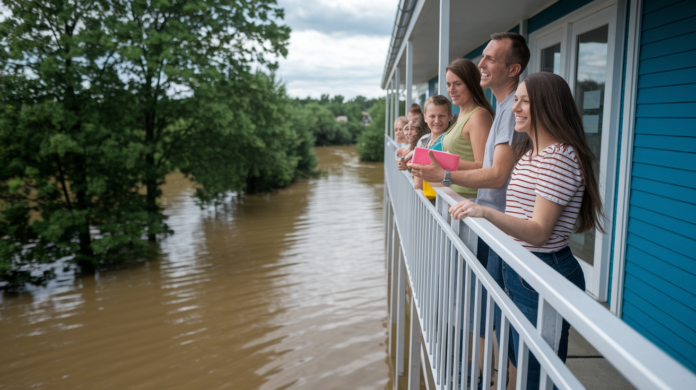

Most people think they’ll know when to leave during a flood, but when water’s at your door and you’ve got 60 seconds to decide, that confidence disappears. The difference between staying and evacuating isn’t about bravery or protecting your stuff. It comes down to three measurable factors: official warnings, how fast the water’s moving, and whether you can still get out safely. This guide gives you a simple decision framework so you’ll know exactly what to do when every minute counts.
Making the Critical Decision: When to Evacuate vs. Shelter During Flooding

Should you stay or evacuate in a flood? This decision can mean the difference between life and death, and you’ve often got just minutes to choose correctly. Your decision comes down to three things: what local authorities are telling you, how the water’s behaving around your home, and specific danger thresholds that make staying impossible.
| Alert Type | What It Means | Your Action |
|---|---|---|
| Flood Watch | Conditions are favorable for flooding to develop | Prepare evacuation supplies and monitor updates from emergency services |
| Flood Warning | Flooding is occurring or will occur soon | Evacuate immediately if advised by authorities |
| Flash Flood Warning | Life-threatening flooding is happening now | Seek higher ground on foot immediately, do not wait |
| Mandatory Evacuation Order | Legally enforceable requirement to leave your home | Leave now, emergency services may not reach you if you stay |
EVACUATE IMMEDIATELY if:
Mandatory evacuation orders have been issued. A Flash Flood Warning’s been announced for your area. Water’s reaching or approaching your first floor. Six inches or more of moving water is present anywhere on your property (swift water at this depth can sweep adults off their feet). You see structural damage like cracks in walls, tilting floors, or hear unusual sounds. Flash flooding warnings are in effect and conditions are worsening. Safe evacuation routes are becoming impassable or water levels are rising on roads. You must drive through any depth of water on roads (12 inches of water floats most vehicles, 2 feet sweeps away cars including SUVs). An official Flood Warning’s been issued with specific evacuation advice. Floodwaters are rising rapidly with visible current.
SHELTER IN PLACE (upper floors only) if:
Flash flooding’s already blocked all safe exit routes and you can’t leave. No official evacuation order exists for your specific location. You’ve got a structurally sound two-story home with attic access and the ability to escape through the roof. Floodwaters aren’t rising rapidly and appear stable. You see standing water only with no swift current visible. Roads are confirmed impassable, making vehicle evacuation more deadly than sheltering. You already have emergency supplies positioned on the upper floor.
When in doubt, always defer to local authorities who’ve got the bigger picture of flood conditions across your region. Evacuation timing is critical. Waiting too long eliminates safe options and can trap you in rising water. Most flood deaths occur in vehicles when people attempt to drive through water, which is why “Turn Around Don’t Drown” has become essential flood safety guidance. Less than two feet of moving water can sweep away most cars. Once your vehicle’s caught in current, you’ve got seconds to escape before it fills with water.
Evacuation Preparation: What to Do Before Leaving
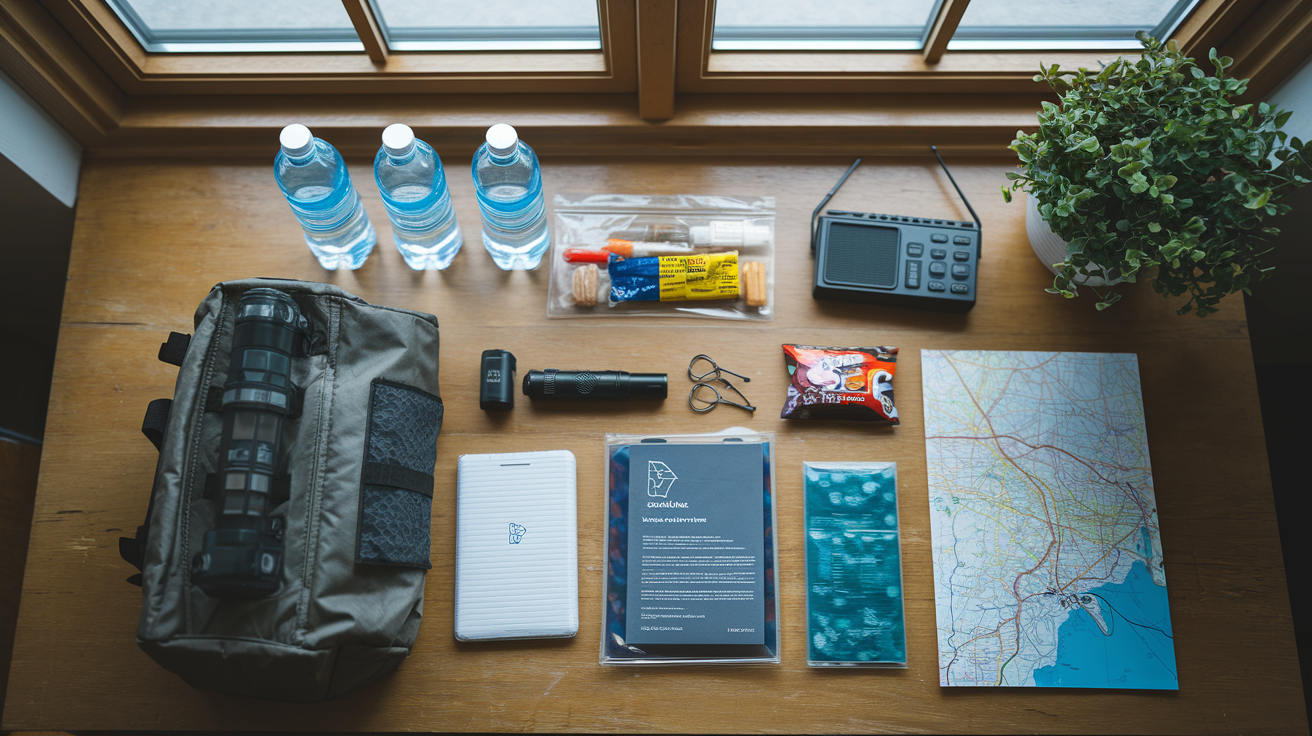
When evacuation’s ordered, every minute counts. You’ll be making rapid decisions while stressed, so knowing your priorities ahead of time keeps you focused on what actually saves lives instead of what feels important in the moment.
Priority actions in order:
Grab your pre-packed go bag with emergency supplies. Secure important documents (insurance policies, identification, medical records, ideally already stored in a waterproof container). Take all medications and prescriptions with you. Shut off utilities if time permits (turn gas valve to off position, flip main electrical panel breaker). Bring in or secure outdoor furniture that could become projectiles in high winds. Move valuables to upper floors if you’ve got a few extra minutes. Take quick photos of your home and belongings for insurance documentation. Grab your cell phone with chargers and a battery-powered radio.
Your emergency kit should already be packed and ready near your exit door. It needs a three-day supply of water, one gallon per person per day, along with non-perishable food that doesn’t require cooking. Add a first aid kit, flashlight, extra batteries, and copies of documents sealed in a waterproof container or zip-top bag. Keep extra cash in small bills since ATMs may not work and card systems often fail during disasters. Include a battery-powered or hand-crank radio so you can get updates even when your phone dies.
Personal safety supersedes property protection, always. If you don’t have time to complete these steps because water’s rising fast or roads are closing, leave immediately. You can replace furniture and photo albums. You can’t replace your life or the lives of people depending on you to make the safe choice.
Sheltering in Place: Upper Floor and Vertical Evacuation Safety

Vertical evacuation (moving to upper floors when you can’t leave horizontally) is only viable in structurally sound, multi-story buildings when horizontal evacuation routes are already cut off. If you’re considering this option, emergency supplies must already be positioned upstairs. You won’t have time to carry supplies up a staircase while water’s pouring through your first floor.
Requirements for Safe Upper-Floor Sheltering
Your building must be two or more stories with a solid structure. The structure must show no visible damage like cracks, sagging, or tilting. You must have attic access with tools already positioned to break through the roof if necessary (ax, saw, hammer). Emergency supplies must already be on the upper floor. You must have charged communication devices to call for rescue. You need a way to signal rescuers from upper windows or the roof (bright cloth, flashlight).
Critical Mistakes to Avoid
Never shelter in an attic without roof escape ability. People drown in sealed attics when water rises and they’ve got no way out. Never stay on the first floor when water’s rising, even if it seems slow. Never assume the water’s peaked or stopped rising. Never enter floodwater to retrieve belongings from lower floors. Never attempt to walk through moving water (only walk where water’s not moving, and use a stick to check that the ground is firm ahead).
Maintain communication with emergency services and let them know your location, how many people are with you, and any medical conditions they should know about. Signal for help from upper windows or the roof using bright fabric, a flashlight, or anything visible from a distance. Wait for professional water rescue operations rather than attempting self-rescue through moving water. Swift water rescue requires specialized training and equipment. Six inches of moving water can sweep an adult off their feet, and the current’s stronger than it looks from above.
Special Considerations: Evacuating Vulnerable Individuals and Pets

Vulnerable populations need earlier evacuation timing and special preparation because they require more time, assistance, or specialized equipment to leave safely. If someone in your household needs extra help, you can’t wait until the last minute to evacuate.
Additional planning for household members who need assistance:
Elderly individuals may need more time and physical assistance to evacuate, plus mobility aids like walkers or wheelchairs. Mobility-impaired persons require accessible evacuation routes and transportation that accommodates wheelchairs or medical equipment. Medical equipment users must plan for power outage scenarios and how to transport oxygen concentrators, CPAP machines, or dialysis equipment. Individuals with cognitive impairments need simplified instructions, close supervision, and familiar comfort items to reduce anxiety. Infants and young children require specialized supplies like formula, diapers, wipes, and extra clothing. Pets need carriers, leashes, food, water, medications, vaccination records, and identification tags. Designated emergency shelters may not accept animals. Plan ahead for pet-friendly shelters or arrange alternate housing with family or friends outside the flood zone.
Create a family communication plan before flood season with an out-of-town contact person everyone can check in with. Local phone networks often fail during disasters, but long-distance calls sometimes still work. Agree on meeting points outside your neighborhood in case you get separated during evacuation.
Register vulnerable household members with local emergency services before flood season begins. Many communities maintain special needs registries so first responders can prioritize assistance during mandatory evacuations. This registration can mean the difference between getting help in time or being overlooked when resources are stretched thin.
Recognizing Structural Damage and Building Safety Risks

Rising water compromises structural integrity in ways that aren’t always visible from inside your home. Foundation settling, wall stress, and water pressure can weaken a building long before you see obvious cracks. By the time damage is visible, the structure may already be near failure.
Red flags requiring immediate evacuation:
Visible cracks in foundation or walls, especially new cracks or ones that are widening. Doors or windows that suddenly jam or won’t close properly. Unusual sounds like cracking, groaning, popping, or shifting from walls or floors. Tilting or sagging floors, or floors that feel soft or springy. Water entering through walls, not just through doors or ground-level openings. Smell of gas or sewage inside the home. Sparking, smoking, or buzzing electrical equipment or outlets.
Standing water can be energized by submerged electrical outlets, creating an electrocution risk you can’t see. Never touch electrical equipment while wet or standing in water. Downed power lines can electrify puddles and standing water up to 35 feet away. Report any downed lines to local police or fire department and don’t step in puddles or standing water near them. Even if a line looks dead, assume it’s live until utility workers confirm otherwise.
Any smell of gas or hissing sound requires immediate evacuation without touching light switches, thermostats, or anything that could create a spark. Natural gas and propane are heavier than air and collect in low spots, including basements flooded with water. Leave the building immediately and call the fire department from outside the structure, at least 100 feet away. Don’t re-enter until emergency services clear the building.
Understanding Flood Zones and Location-Specific Risks

Different flood scenarios create different risk profiles and evacuation windows. Flash flooding in a mountain canyon requires immediate action while river flooding may give you days of warning, but both can be deadly if you misjudge the timeline.
| Flood Type | Development Speed | Primary Risk | Evacuation Timing |
|---|---|---|---|
| Flash Flooding | Minutes, often with no visible rain | Swift water, debris flows | Immediate evacuation required, no delay |
| River Flooding | Hours to days with gradual rise | Predictable water rise, widespread inundation | Evacuate during warnings while roads are clear |
| Coastal Storm Surge | Hours with hurricane warning | Rapid inundation, saltwater damage | Evacuate before landfall, not during storm |
| Urban Flooding | Rapid, overwhelmed drainage systems | Contaminated water, vehicle traps | Seek high ground immediately, avoid low areas |
| Dam or Levee Failure | Sudden, catastrophic volume | Wall of water, total destruction | Evacuate immediately if you live downstream |
Coastal residents face storm surge which can rise 10 feet or more in just a few hours, pushing ocean water miles inland and submerging entire neighborhoods. Evacuation must happen before the storm makes landfall because roads flood and become impassable during the event itself. Inland areas may have more warning time with river flooding, but they face contaminated water from agricultural runoff, industrial chemicals, and sewage systems that overflow and mix with floodwater.
Know your specific flood zone designation, whether you’re in a high-risk zone, moderate-risk zone, or minimal-risk zone, because it affects insurance requirements and tells you how urgently you need to act when warnings are issued. Even minimal-risk zones can flood during extreme rainfall or dam failures.
Post-Flood Return: When It’s Safe to Go Home After Evacuation

Returning home too early can be as dangerous as staying during the flood itself. Contaminated water, unstable structures, downed power lines, and gas leaks create hazards that persist long after water recedes.
Prerequisites before returning home:
Local authorities have issued an all-clear for your specific neighborhood. Floodwaters have fully receded from your property and streets. Roads to your home are confirmed passable and stable, not undermined by erosion. You’re returning during daylight hours only (never return at night when hazards are invisible). Emergency services are operational in your area in case you need help. You have appropriate safety gear including rubber boots, heavy gloves, and eye protection.
Do an initial exterior assessment from a safe distance before you step onto your property. Look for foundation cracks, sagging rooflines, or walls that appear to lean or bulge. Check for debris piles against the structure that could be hiding damage. Scan for downed power lines within 35 feet of your home. Smell for gas odor. If you see or smell any of these, don’t enter and contact local authorities or utility companies to inspect first.
Once inside, assume all water’s contaminated with sewage, chemicals, and bacteria. Don’t use it for washing dishes, brushing teeth, food preparation, hand washing, making ice, or preparing baby formula until authorities confirm water safety through official testing. Never touch electrical equipment or outlets until a professional electrician inspects your system. Water inside walls can keep circuits energized even when the visible water’s gone. Document all damage with photos before you start cleanup for insurance claims. Open windows for ventilation but don’t turn on power, heating, or cooling systems until they’ve been professionally inspected.
Service damaged septic tanks, cesspools, pits, and leaching systems as soon as possible after flooding because they’re serious health hazards that can contaminate your property and your neighbors’ wells. The combination of floodwater and sewage creates conditions for disease outbreaks that can affect entire communities if not addressed quickly.
Final Words
The choice of whether you should stay or evacuate in a flood comes down to three things: what officials tell you, what the water is doing, and whether you have a safe way out.
When a Mandatory Evacuation Order is issued or a Flash Flood Warning goes out, that decision is made for you. Leave.
If you’re watching six inches of moving water creep toward your door, you’re already in danger. Most flood deaths happen because people wait too long or try to drive through water.
Know your signals. Pack your go bag before you need it. And when in doubt, always choose the safer option: leave early.
You’ll protect what matters most—your family.
FAQ
Should you evacuate during a flood?
You should evacuate during a flood when authorities issue mandatory evacuation orders, when a Flash Flood Warning is announced, or when water reaches six inches deep with visible current. Most flood deaths happen to people who stay when they should leave.
What is the 90 second evacuation rule?
The 90 second evacuation rule refers to the time you have to exit a structure during certain emergencies, but in floods, evacuation timing depends on water behavior and official warnings, not a fixed countdown. Flash floods can trap you in minutes, so leave immediately when conditions deteriorate.
Should I evacuate or stay during flooding?
You should evacuate if authorities order it, if a Flash Flood Warning is issued, if water is moving at six inches or deeper, or if you see structural damage. Shelter in place only if you have a two story home with attic access and all evacuation routes are already blocked.
What happens if you don’t evacuate when it’s mandatory in Florida?
If you don’t evacuate during a mandatory evacuation order in Florida, emergency services may not be able to reach you during the flood, and you could face legal consequences. Mandatory orders mean conditions are life threatening and staying puts first responders at risk if they must rescue you.
How do I know if my home is safe for sheltering during a flood?
Your home is safe for sheltering during a flood only if it is a structurally sound two story building with attic access and roof escape ability, with no visible cracks or damage, and only if standing water is present without swift current. Never shelter on the first floor when water is rising.
What should I grab first when evacuating for a flood?
When evacuating for a flood, grab your pre packed go bag first, then medications, important documents in waterproof containers, cell phone with chargers, and cash. If you don’t have time to gather these items, leave immediately because personal safety comes before property.
Can I stay in my attic during a flood?
You can stay in your attic during a flood only if you have tools to break through the roof for escape and all ground level evacuation routes are already cut off. People drown in sealed attics when water rises, so roof access is critical for survival.
When should elderly family members evacuate during flooding?
Elderly family members should evacuate earlier than others during flooding because they need more time and assistance to move safely. Register vulnerable household members with local emergency services before flood season so first responders can prioritize help during mandatory evacuations.
How do I evacuate with pets during a flood?
To evacuate with pets during a flood, prepare carriers, food, medications, and identification tags ahead of time, and know which shelters accept animals because many emergency shelters do not. Plan alternative pet friendly locations before flooding starts so you don’t delay your own evacuation.
What are signs my house is structurally unsafe during flooding?
Your house is structurally unsafe during flooding if you see visible cracks in walls or foundation, doors suddenly jamming, floors tilting or sagging, or hear unusual cracking or groaning sounds. Water entering through walls, gas smells, or sparking electrical equipment all require immediate evacuation.
How deep does floodwater need to be to sweep away a car?
Floodwater only needs to be 12 inches deep to float most vehicles and less than two feet of moving water can sweep away cars including SUVs. Never drive through any depth of water on roads because you cannot see washed out pavement underneath.
When can I return home after a mandatory flood evacuation?
You can return home after a mandatory flood evacuation only when local authorities issue an all clear, floodwaters have fully receded, roads are confirmed passable, and it is daylight hours. Never return at night and wear rubber boots and gloves for initial inspection.
Is floodwater safe to touch or walk through?
Floodwater is not safe to touch or walk through because it contains sewage, chemicals, and debris that cause infections and illness. If you must walk in floodwater, only walk where water is not moving and use a stick to check ground firmness ahead.
What is the difference between a Flood Watch and Flood Warning?
A Flood Watch means conditions are favorable for flooding and you should prepare evacuation supplies and monitor updates. A Flood Warning means flooding is occurring or will occur soon and you should evacuate immediately if authorities advise it.
Do I need to turn off utilities before evacuating?
You should turn off utilities at main switches before evacuating only if you have time, including the gas valve and electrical panel. If you don’t have time to complete these steps, leave immediately because delays can trap you in rising water.