

You’re packing for what you think will be a quick two day evacuation, but three weeks later you’re still at your sister’s house wearing the same jeans. Most people grab a change of clothes and assume they’ll be home fast. They won’t. Floods don’t follow neat timelines. Roads stay closed. Homes need weeks to dry out. Insurance inspections drag. This checklist gives you what you actually need to stay comfortable, clean, and functional when your evacuation stretches past the weekend and you can’t get back home for essentials.
Water and Food Supplies for 72-Hour Flood Evacuation

FEMA’s benchmark is 72 hours. You’re packing enough to keep everyone fed and hydrated for three days without outside help. Water’s the big one: one gallon per person per day. That’s three gallons per person total, covering drinking, hygiene basics, and food prep. Get bottled water in containers that won’t puncture when you stack them in your trunk.
Food’s got three rules. No refrigeration. Minimal cooking (or none). High calories to keep energy up when stress is wearing you down. Pick things that can sit in a hot car without going bad and that you can eat straight from the package if there’s no stove. Protein bars, canned stuff, dried fruit, peanut butter, crackers, shelf stable milk. If you’ve got infants, formula’s critical because stores get cleared out or shut down during evacuations.
| Supply Category | Specific Items | Minimum Quantity Per Person |
|---|---|---|
| Water | Bottled water in sealed containers | 3 gallons (one gallon per day for three days) |
| Protein Sources | Canned tuna, chicken, beans, peanut butter, protein bars | 6 to 9 servings total |
| Carbohydrates | Crackers, granola bars, cereal, instant oatmeal, rice cakes | 9 to 12 servings total |
| Fruits/Vegetables | Canned fruits, applesauce cups, dried fruits, vegetable juice boxes | 6 to 9 servings total |
| Special Dietary Needs | Baby formula, infant food, dietary restriction items, meal replacement drinks | 72 hour supply specific to individual needs |
| Preparation Tools | Manual can opener, plastic utensils, paper plates, napkins | One can opener per household, enough disposables for three days |
Pack it all in plastic crates or duffel bags you can grab in one trip. They need to fit in your vehicle without blocking your view or taking up passenger seats. Keep them near your exit door or in the garage so you’re not wasting time searching when orders come through. That manual can opener goes in the same bag as the cans. Electric openers don’t help at a shelter with no power, and forgetting that one tool makes your canned goods worthless.
Prescription Medications and Medical Supplies for Evacuation
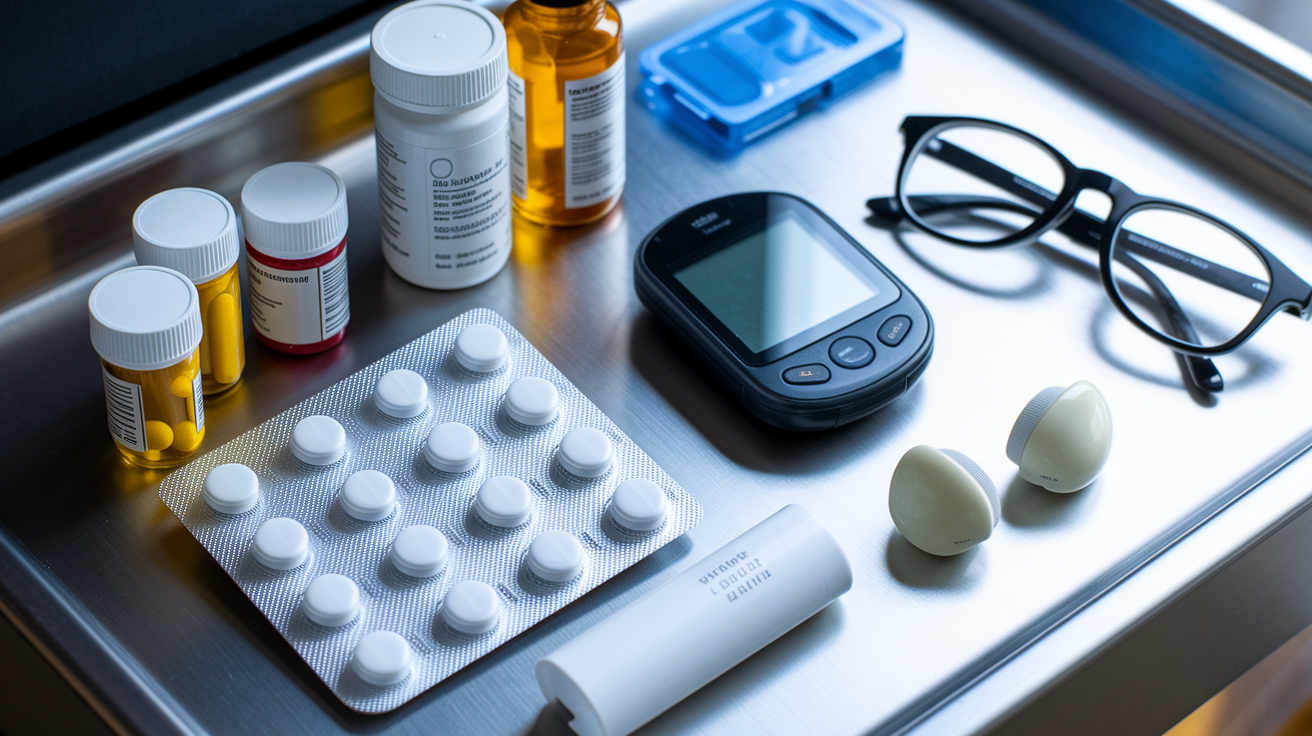
Pack seven days of prescriptions, not just three. Pharmacies near shelters get overwhelmed fast. Refills become difficult or impossible when your records are stuck in a flooded zone. If you’re taking daily meds for diabetes, heart issues, blood pressure, or mental health, those seven days could mean the difference between managing your condition and ending up in an ER that’s already swamped with flood injuries.
Prescription medications: Seven day supply in original labeled bottles with dosing instructions visible
Over the counter stuff: Pain relievers (ibuprofen, acetaminophen), antihistamines, anti diarrhea medicine, antacids, cold and flu medicine
First aid supplies: Adhesive bandages in multiple sizes, gauze pads and rolls, medical tape, antiseptic wipes, antibiotic ointment, tweezers, scissors
Vision aids: Prescription eyeglasses (current prescription), contact lenses with enough solution for seven days, backup glasses if you’ve got them
Hearing assistance: Hearing aids with at least two weeks of extra batteries in original packaging, cleaning tools, backup hearing aids if available
Mobility devices: Canes, walkers, wheelchair accessories, plus any specialized cushions or supports you use daily
Medical equipment power needs: Extra batteries for glucose monitors, CPAP machines, nebulizers, oxygen equipment, or other battery powered medical devices
Medical documentation: Written list of all medications with dosages, medical conditions, allergies, doctor contact info, pharmacy details
Specialized treatments: Insulin with cooling packs if refrigeration’s needed, EpiPens, inhalers, or other emergency intervention supplies
Copies of prescriptions: Paper or photo copies of current prescriptions in case you need emergency refills at an unfamiliar pharmacy
Medical equipment that needs electricity creates problems during evacuations when outages last days or weeks. If you’re using a CPAP machine, oxygen concentrator, or any plug in medical device, pack enough charged batteries to get through at least two nights. Identify which evacuation shelters have medical support staff and backup generators. Hearing aid batteries are easy to forget until yours die at 2 a.m. in a crowded shelter, so pack extras in a labeled zip bag you can find in the dark.
Essential Documents to Secure During Flood Evacuation

Documents become your proof of identity, property ownership, and insurance coverage when you’re trying to access emergency services, file claims, or prove who you are after everything else is underwater. Without them, you’re facing weeks of delays when you’re trying to get temporary housing assistance, replace a driver’s license, access bank accounts, or start the insurance claim process that funds your recovery.
Personal identification: Driver’s license or state ID, passports for all family members, birth certificates (original or certified copies), social security cards
Medical and health records: Health insurance cards (primary and supplementary), Medicare or Medicaid cards, vaccination records for all family members, list of current medications and dosages, medical power of attorney, living will or advance directives
Financial papers: Bank account information with routing and account numbers, credit and debit cards, checkbook, retirement account statements, investment account info, government benefits documents (Social Security, disability, veterans benefits), recent tax returns (last two years)
Property ownership documents: Home deed or mortgage paperwork, property tax records, vehicle titles and registration, lease or rental agreements
Insurance policies: Homeowner’s or renter’s insurance policy with declarations page, flood insurance policy (separate from standard homeowner’s coverage), auto insurance, life insurance, health insurance policy details with customer service numbers
Legal documents: Marriage certificates, divorce decrees, custody agreements, wills and trusts, power of attorney designations
Emergency contacts: Written list with names, phone numbers, addresses of family members, out of town contacts, doctors, local emergency services
Store these in a waterproof container that’s designed to float and that you can grab in under a minute. Heavy duty zip seal bags work short term, but a waterproof document pouch or small dry box offers better security if you end up wading through water or your evacuation bags get soaked during transport. Make digital copies of everything by photographing each document clearly and uploading images to cloud storage like Google Drive, Dropbox, or iCloud. Make sure you can access that cloud account from any device by writing down your login credentials on paper stored separately from your originals. If you lose the physical copies, the digital backups give you something to work with while waiting for certified replacements. If you lose digital access, the physical copies keep you moving forward.
Communication and Power Devices for Evacuation Preparation

Your phone’s your lifeline for weather updates, emergency alerts, family contact, and navigation to shelters or safer locations. When cell towers go down or get overloaded during mass evacuations, a battery powered radio tuned to NOAA weather frequencies or local emergency broadcasts gives you information when your phone can’t connect.
Cell phone: Fully charged before evacuation with all emergency contacts programmed in
Portable power bank: Fully charged, with enough capacity to recharge your phone at least twice (10,000 mAh minimum)
Car charger: Standard USB car charger that works with your phone model
Wall charger with cable: In case you reach a shelter or location with working electrical outlets
Battery powered or hand crank radio: NOAA Weather Radio’s ideal for receiving emergency broadcasts and severe weather alerts
Flashlight: LED flashlight with fresh batteries, or a hand crank model that doesn’t need battery replacement
Extra batteries: Multiple sets in sizes matching your flashlight, radio, and other battery powered devices
Written emergency contact list: Names and phone numbers on waterproof paper including out of town family contacts who can serve as a communication hub if local networks fail
Physical evacuation maps: Printed maps showing primary and alternate routes out of the flood zone, plus shelter locations, since GPS can fail if cell service drops
Pre charge every device the night before predicted flooding, not the morning of evacuation when you’re rushing to leave. Power banks lose charge over time when sitting unused. If yours has been in a drawer for six months, plug it in now and let it reach full capacity. Written contact lists matter because phones get lost, batteries die, screens crack during evacuation chaos. When that happens, you need to know your sister’s number without looking it up. Include at least one out of town contact on your list because local phone networks often overload during disasters while long distance calls can still go through, creating a communication relay when you can’t reach family members in the same flood zone.
Clothing and Personal Hygiene Items to Pack When Evacuating

Pack enough clothing for a full week because evacuation timelines stretch longer than anyone expects. Laundry facilities at shelters fill up fast or don’t exist at all. You’re looking at seven days of basic clothing covering different weather conditions since flood evacuations can mean sleeping in air conditioned shelters one night and hot parking lots the next.
Weather appropriate clothing layers: Seven sets of underwear and socks, four to five shirts, two to three pairs of pants or shorts, one warm layer like a sweatshirt or fleece jacket
Waterproof outerwear: Rain poncho or waterproof jacket, waterproof pants if available
Sturdy waterproof boots: Closed toe boots or shoes with good traction for walking through wet conditions and debris
Protective equipment: Work gloves for handling debris, hat for sun protection, face masks for dust and debris exposure
Hygiene essentials: Bar soap or body wash, toothbrush and toothpaste, deodorant, shampoo, hand sanitizer (large bottle for frequent use), washcloth and towel
Feminine hygiene products: At least a two week supply of menstrual products since shelters rarely stock these
Additional personal care items: Toilet paper, wet wipes, tissues, nail clippers, comb or brush, razors if needed
Bedding: Sleeping bag rated for current season temperatures, blankets, pillow, or compact camping pillow
Store clothing in large waterproof bags or heavy duty trash bags inside your duffel to create a moisture barrier. Even bags you think are waterproof often aren’t when they’re sitting in a flooded vehicle or being carried through standing water. Roll clothes instead of folding them to save space and reduce wrinkles. Pack one complete outfit in a separate small bag you can access quickly if your main luggage gets soaked. Layering matters more than thick single items because shelters can swing between too cold at night and too hot during the day. Thin layers let you adjust without carrying bulky winter coats or sweating through heavy clothes you can’t remove.
Financial Essentials and Cash for Flood Evacuation
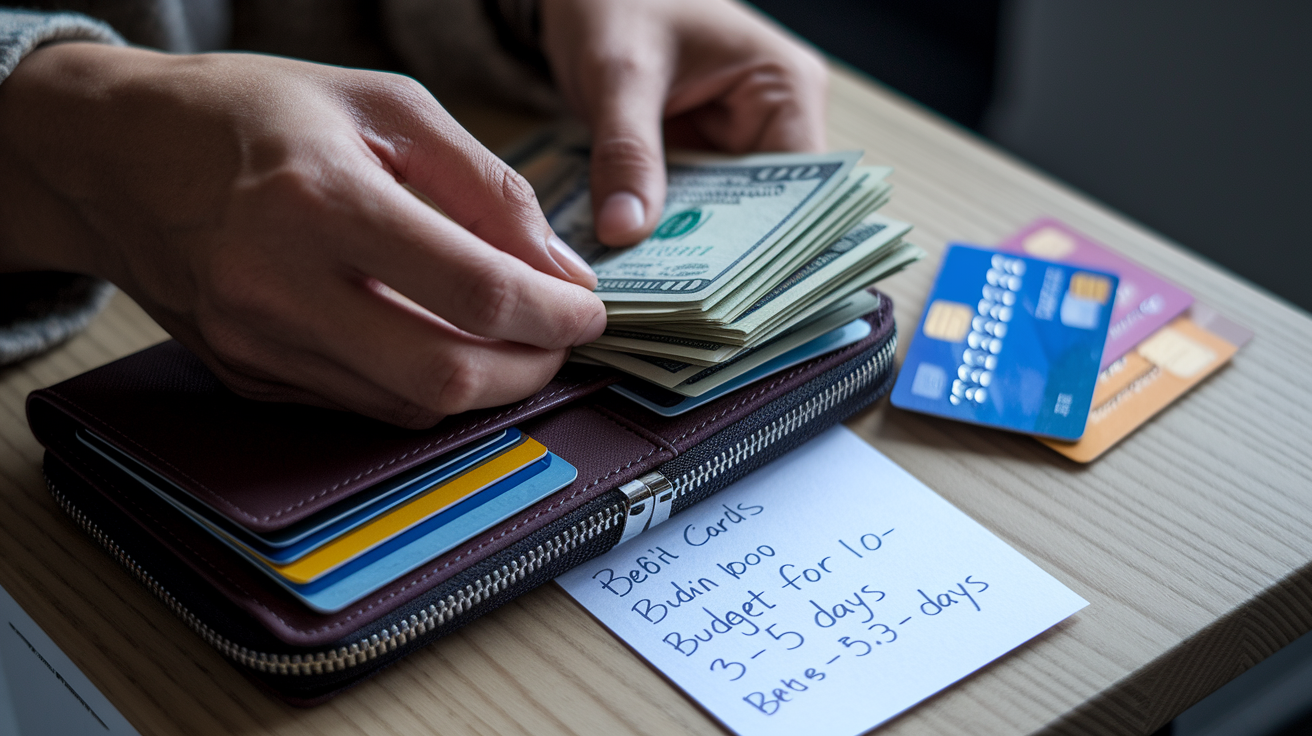
Power outages shut down ATMs, card readers, and bank systems during floods. Sometimes for days or weeks across entire regions. When that happens, the cash in your wallet becomes the only way to buy gas, food, water, or pay for emergency services that don’t take IOUs.
Pack enough cash to cover three to five days of basic expenses including fuel, meals, and emergency supplies for your household. Aim for $300 to $500 minimum if you can manage it, but even $100 in small bills beats having nothing when the power grid’s down. Break that cash into small denominations, mostly ones, fives, tens, and twenties. A gas station running on a generator can’t make change for a hundred dollar bill. Vending machines at shelters only take ones and fives. Add a roll of quarters for laundromats, pay phones (yes, they still exist in some areas), parking meters, and other coin operated essentials.
Keep credit cards, debit cards, and a checkbook as backups for when electronic payment systems come back online or when you reach areas outside the disaster zone where cards still work. Carry your car keys and house keys in the same secure pouch as your cash and cards so they don’t get separated during the rush to evacuate. If you have a safe deposit box key, bring that too, along with any account numbers or banking documentation that speeds up access to your funds if you need to visit a branch in an unfamiliar city.
Special Evacuation Supplies for Babies and Young Children
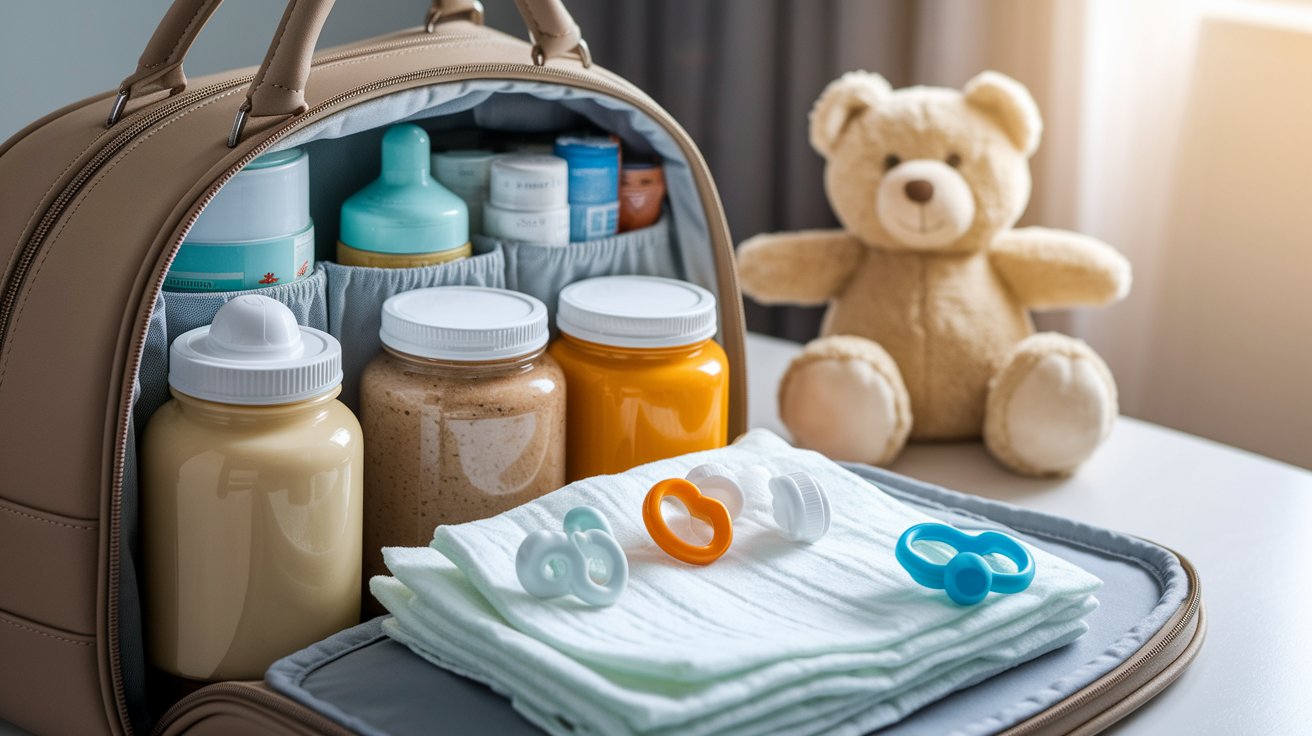
Baby supplies vanish from store shelves within hours of evacuation orders. Emergency shelters almost never stock formula, diapers, or infant specific items. You’re on your own for keeping infants and toddlers fed, clean, and comfortable, so overpacking these essentials isn’t optional.
Formula or milk: 72 hour minimum supply, but pack five to seven days if you have room, in ready to feed bottles or powder with enough clean water for mixing
Bottles and nipples: At least four to six clean bottles with nipples and caps, plus bottle brush for cleaning
Baby food and snacks: Jars or pouches of baby food matched to your child’s current stage, plus age appropriate snacks like puffs, crackers, or fruit pouches
Diapers: Minimum 30 diapers, but closer to 50 if you have storage space, since diaper shortages at shelters are common
Wipes: Multiple packages for diaper changes and general cleanup when water isn’t available for bathing
Changing pad: Portable waterproof pad for diaper changes in cars, shelters, or other improvised locations
Baby medications: Infant pain reliever, fever reducer, gas drops, diaper rash cream, any prescription medications with dosing instructions
Comfort items: Pacifiers (bring extras), favorite stuffed animal or blanket, a few small toys to reduce stress and boredom
Age appropriate clothing: Seven days of onesies, sleepers, or toddler clothes, plus extra layers for temperature changes and spit up
Blankets: Receiving blankets for infants, comfort blankets for toddlers, and one warm blanket for sleeping
Infant formula becomes critical because babies can’t wait for supply trucks or emergency deliveries when they’re hungry. If you’re breastfeeding, you have one less worry, but pack backup formula anyway in case stress or dehydration impacts your milk supply. Comfort items like a familiar stuffed animal or pacifier make a real difference for small children in stressful evacuation environments where everything feels strange and scary. A calm child creates a calmer evacuation experience for everyone in your household.
Pet Evacuation Supplies and Carrier Preparation

Most emergency shelters allow pets if you have proper carriers, current vaccination records, and your own supplies. Leaving pets behind isn’t necessary and puts them in serious danger. Pets left in homes during floods frequently drown or get trapped without access to food or water for days.
Pet food: 72 hour minimum supply, but pack a full week of your pet’s regular food to avoid stomach issues from sudden diet changes
Bottled water for pets: Separate water supply for pets since they need clean drinking water just like humans
Food and water bowls: Portable collapsible bowls or lightweight dishes that don’t take up much space
Medications and medical records: Any prescription medications with dosing instructions, flea and tick prevention, copies of vaccination records showing rabies and other required vaccines
Current vaccination documentation: Official paperwork from your vet showing up to date vaccinations, which most shelters require for entry
Sturdy carriers or crates: One carrier per pet, large enough for them to stand and turn around, with your contact information attached to the outside
Leashes and harnesses: Sturdy leash for dogs, harness for secure control in crowded or chaotic environments, collar with current ID tags
Waste management supplies: Litter box and litter for cats, waste bags for dogs, pee pads for indoor accidents, paper towels for cleanup
Comfort items: Familiar bedding or blanket that smells like home, favorite toy to reduce stress
Recent photos of pets: Clear photos showing distinguishing marks in case you get separated and need to prove ownership or create lost pet flyers
Get your pets comfortable with their carriers before an actual evacuation happens, not during the emergency when they’re already stressed and you’re in a hurry. Let them explore the carrier with the door open, feed treats inside, practice short car trips so the carrier becomes a familiar safe space instead of a panic trigger. Check that your pet’s microchip information is current in the registry database and that ID tags on their collar have your current phone number. Even well secured pets can slip away during evacuation chaos, and those identification tools become your best chance of reunion.
Tools and Emergency Equipment for Flood Evacuation
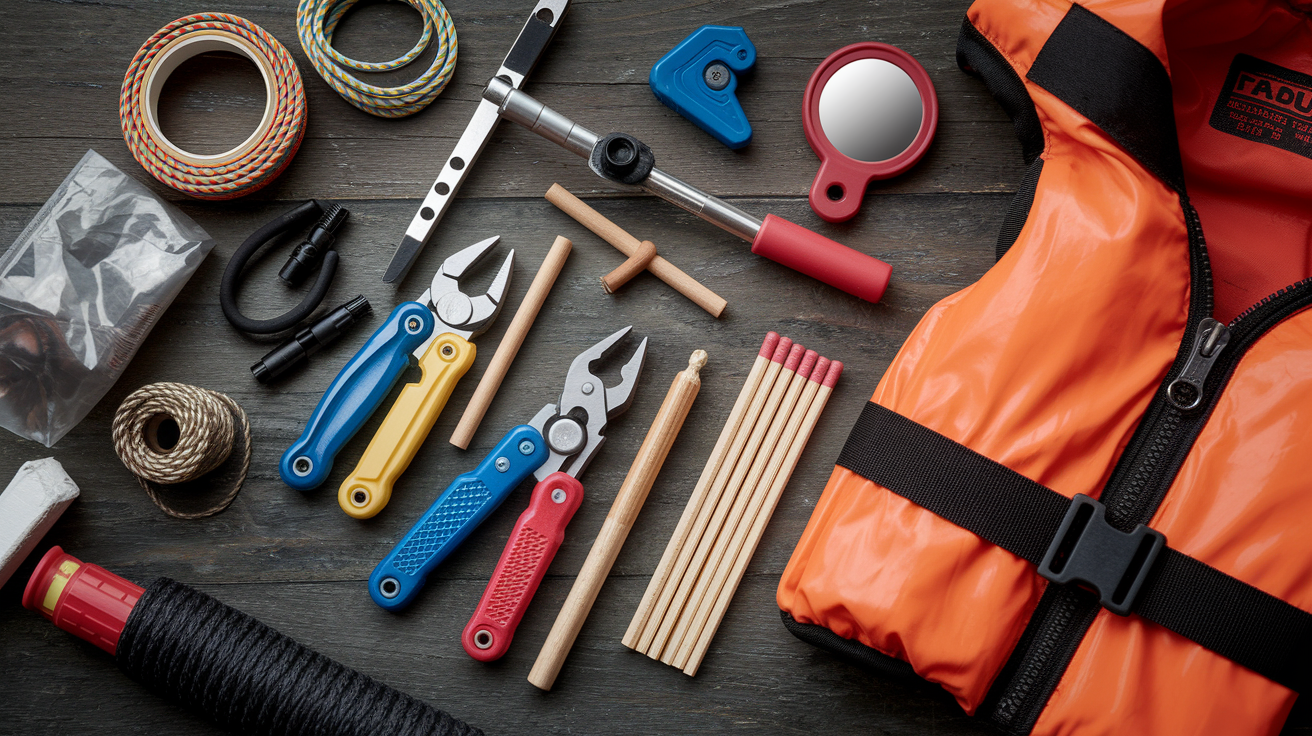
Tools solve unexpected problems during displacement when you can’t call for help or wait for someone else to handle basic repairs, signal for assistance, or navigate dangerous conditions. Floods create specific dangers that standard household supplies don’t address.
Six inches of swiftly moving water can knock an adult off their feet. Less than two feet of moving water can sweep away most vehicles. That makes water safety equipment critical during flood evacuations.
| Tool Category | Essential Items | Primary Use |
|---|---|---|
| Cutting/Repair Tools | Multi-tool or pocketknife, duct tape, zip ties, rope (50 feet minimum) | Emergency repairs, securing items, cutting through obstacles |
| Signaling Equipment | Emergency whistle (louder than shouting), signal mirror, waterproof matches or fire starter | Calling for help when trapped or separated from rescue teams |
| Water Safety | Life jackets or personal flotation devices for each family member, waterproof bags for critical supplies | Protection if caught in rising water or forced to cross flooded areas |
| Fire Starting | Waterproof matches, lighter, fire starter sticks | Starting fires for warmth, cooking, or signaling in emergency conditions |
| General Utility | Plastic sheeting (10×10 feet minimum), permanent marker, notepad and pen | Creating shelter, covering broken windows, leaving messages for rescue teams |
| Protective Gear | Work gloves, emergency blanket (reflective mylar), N95 masks for debris exposure | Hand protection during debris clearing, warmth retention, breathing protection |
A multi-tool combines pliers, screwdrivers, knife blade, and wire cutters in one compact package that handles most emergency repairs you’ll face in evacuation scenarios. The emergency whistle cuts through noise and travels farther than your voice when you’re trying to signal rescuers, especially if you’re trapped or injured and can’t shout for extended periods. Plastic sheeting serves multiple purposes including temporary roof patches, rain barriers, ground covers for sleeping areas, and visual signals to mark your location for helicopters or rescue teams.
Valuable Items and Irreplaceable Belongings During Evacuation

Valuables come last, after every life safety item from the previous sections is already packed and loaded in your vehicle. If you’re running short on time or space, leave these items behind without hesitation.
Family photos and heirlooms carry emotional weight that insurance money can’t replace, so if you have a few extra minutes before leaving, grab items that would devastate you to lose forever. Focus on small irreplaceable things like photo albums, baby books, handwritten letters, or jewelry with sentimental value rather than monetary worth. One photo album fits in a bag. Trying to load furniture wastes evacuation time you don’t have.
Digital data deserves attention before the evacuation happens, not during it. Set up automatic cloud backup for your computer files, photos, and important documents right now using services like Google Drive, iCloud, Dropbox, or an external hard drive you update monthly. When flooding threatens, you won’t need to grab your laptop or external drives because everything important already lives safely in the cloud where you can access it from any device after the disaster passes.
Small valuable items like jewelry, coin collections, or important family heirlooms should live in one pre designated container you can grab in ten seconds. A fireproof document box or a small labeled bag sitting in your closet works better than trying to remember which drawer holds your grandmother’s ring when you’re rushing out the door. This advance organization means you’re not making emotional decisions about valuables under time pressure when those decisions slow down your entire evacuation.
Organizing Your Evacuation Plan and Shelter Route
Leave when authorities recommend evacuation, not when they declare mandatory orders. Voluntary evacuation recommendations give you time to move safely on clear roads before traffic jams form and before rising water closes off escape routes. Mandatory evacuation orders come later, when conditions are more dangerous and when everyone else is trying to leave at the same moment.
Identify your flood evacuation zone and assigned shelter locations by checking your local emergency management website or calling your county’s emergency services non emergency number for zone maps and designated shelters
Map primary and alternate routes avoiding flood prone areas by studying topographic maps that show low lying roads, bridges that flood first, and higher ground paths that stay passable longer
Establish family meeting points if separated by choosing two locations, one near your home for minor emergencies and one outside your neighborhood for major disasters when your street becomes inaccessible
Program emergency contacts into phones with written backup list including local emergency services, out of town family relay contact, utility companies, insurance agent, and your designated evacuation shelter
Practice evacuation timing and kit loading by conducting a real time drill where you load everything into your vehicle to identify what you forgot and how long the process actually takes
Understand difference between Flood Warning and Flash Flood Warning because a Flash Flood Warning means get to higher ground on foot immediately while a Flood Warning means evacuate if advised
Route planning matters because not all roads out of a flood zone offer equal safety. Avoid routes that cross multiple streams, pass through valleys, or use low lying coastal roads that flood hours before your neighborhood does. Your alternate route should take you in a completely different direction using different roads and different bridges so one blocked path doesn’t trap you. Print physical maps of both routes because GPS fails when cell towers go down. A paper map in your glove box works when your phone doesn’t.
Before you leave, secure your home by moving outdoor furniture, grills, and trash cans inside or tying them down so they don’t become floating debris that damages other homes. Move essential items like important papers, electronics, and anything with sentimental value to the highest floor of your house because floodwater might reach your first floor but not your attic. Turn off utilities at the main switches if local authorities instruct you to do so, and unplug major appliances to avoid electrical damage when power comes back on while your house is still wet.
Maintaining and Updating Your Flood Evacuation Kit
Check your kit every six months, setting repeating calendar reminders in March and September so the reviews become automatic. During each check, test flashlight batteries by turning them on for a few minutes, verify that food hasn’t passed expiration dates, and make sure water bottles haven’t developed leaks or deteriorated seals that compromise the contents.
Prescription medications need updates whenever your dosage changes or when you get a refill, not just during the six month reviews. Each time you pick up medications from the pharmacy, swap the old supplies in your evacuation kit for the new prescription and use the older medication for your daily doses. This rotation keeps your evacuation supply fresh without wasting money on medications you throw away. Same strategy works for infant formula, which has short shelf lives and gets expensive to replace if you let it expire unused. Insurance documents require updates whenever you change providers, move to a new address, or purchase new policies. Your emergency contact list needs revisions when family members change phone numbers or move to different cities.
Family drills turn your evacuation kit from a forgotten box in the garage into something everyone can actually use during an emergency. Run a practice evacuation twice a year where everyone in the household participates in loading the kit into the vehicle within a ten minute time limit. Kids old enough to help should know where the kit lives and what their job is during the loading process, like grabbing their own backpack with clothes or carrying the pet carrier to the car. These drills reveal problems like kits that are too heavy for one person to lift, bags that don’t fit in your vehicle with all the passengers, or critical items you forgot to include. Expired medications lose effectiveness and can become dangerous, especially drugs like EpiPens or insulin that people depend on during life threatening situations. Dead batteries in flashlights or radios turn expensive equipment into useless weight when the power goes out and you discover the failure at the worst possible moment.
Final Words
Pack what to bring when evacuating from flood now, before water rises and decisions get harder.
Your 72-hour supplies, medical needs, documents, and communication tools should sit ready in waterproof containers near your exit. Include the special items your household actually needs, like baby formula, pet carriers, or mobility device batteries.
Check expiration dates twice a year. Run a practice drill so everyone knows where things are.
When authorities say leave, you’ll grab your kit and go instead of scrambling through closets while water climbs your street. That’s the whole point.
FAQ
What to pack when evacuating for a flood?
When evacuating for a flood, pack water (one gallon per person per day for three days), non-perishable food, prescription medications (seven-day supply), essential documents in waterproof containers, phone chargers, flashlights, cash in small bills, weather-appropriate clothing, and any baby or pet supplies your household needs.
What are the 10 essential survival kit items?
The 10 essential survival kit items include bottled water (one gallon per person per day for three days), non-perishable food, prescription medications, first aid kit, flashlight with extra batteries, portable phone charger, important documents in waterproof storage, emergency cash, weather-appropriate clothing, and a battery-powered radio for weather alerts.
What are the 5 P’s of evacuation?
The 5 P’s of evacuation are People (and pets), Prescriptions (medications and medical equipment), Papers (important documents), Personal needs (clothing, hygiene items, baby supplies), and Priceless items (irreplaceable belongings like family photos, but only if time permits after securing life-safety essentials first).
What should you take with you when evacuating?
When evacuating, take water and food for 72 hours, a seven-day supply of prescription medications, identification and insurance documents in waterproof storage, fully charged phone with chargers, cash in small bills, weather-appropriate clothing for one week, hygiene supplies, flashlights, batteries, and any special supplies for babies, children, or pets.
How much water do I need for flood evacuation?
For flood evacuation, you need one gallon of water per person per day for at least three days, meaning a family of four requires 12 gallons total. Store water in portable containers that can be quickly loaded into your vehicle when evacuation orders come.
Why do I need seven days of medication instead of three days?
You need seven days of medication instead of three days because evacuation displacement often lasts longer than expected, pharmacies in evacuation areas may be closed or damaged, and prescription refills can be difficult to obtain when you are away from your regular pharmacy and medical providers.
What documents are most critical during flood evacuation?
The most critical documents during flood evacuation are government-issued ID (driver’s license, passport), insurance policies (home, auto, flood), medical insurance cards, prescription lists, birth certificates, social security cards, bank account information, and property ownership papers, all stored in waterproof containers for protection.
Should I evacuate before a mandatory evacuation order?
You should evacuate during voluntary evacuation recommendations, before mandatory orders are issued. Leaving early avoids dangerous traffic congestion, flooded roads, and situations where emergency services become overwhelmed. Mandatory orders often come when conditions have already deteriorated significantly.
How do I keep my phone charged during evacuation?
Keep your phone charged during evacuation by bringing fully charged portable power banks, car chargers, and wall adapters. Pack multiple charging solutions since power outages disable outlets and you may need to charge devices in your vehicle or at shelters with limited charging stations.
What kind of food should I pack for flood evacuation?
Pack food for flood evacuation that requires no refrigeration, minimal preparation, and provides high calories. Good choices include canned goods, protein bars, dried fruits, peanut butter, crackers, and baby formula if needed. Include a manual can opener since electric openers will not work during power outages.
Do emergency shelters accept pets during floods?
Many emergency shelters accept pets during floods, but they require current vaccination records, sturdy carriers or crates, and documentation proving ownership. Pack a 72-hour supply of pet food, water, medications, leashes, and waste management supplies since shelters rarely provide pet supplies.
Why do I need cash if I have credit cards?
You need cash during flood evacuation because power outages disable ATMs and card readers, making electronic payments impossible. Pack small bills ($1, $5, $10, $20) and coins since stores and gas stations may not have change during emergencies.
How should I store important documents for evacuation?
Store important documents for evacuation in waterproof containers like sealed plastic bags, dry boxes, or document pouches. Keep physical copies in your evacuation kit and create digital backups stored in cloud services so you can access them from any location if originals are lost.
What clothing do I need for week-long evacuation?
For week-long evacuation, pack weather-appropriate clothing layers, waterproof outerwear like rain ponchos, sturdy waterproof boots, protective gloves, hats, and enough undergarments and socks for seven days. Use waterproof bags to keep clothing dry and roll items to save space in your evacuation bag.
When should I leave during a flood warning?
Leave immediately during a Flood Warning when authorities advise evacuation, as flooding is occurring or will occur soon. During a Flash Flood Warning, flooding is already happening and you must seek higher ground on foot immediately, as roads may already be impassable and dangerous.