

Most people wait too long to prep for flooding. They stock up when the storm’s already on the news and the store shelves are empty. By then, the really important stuff, like knowing where your water shutoff is or getting documents into waterproof bags, gets skipped. This checklist breaks down what to do now, what can wait a few weeks, and what needs to happen the second you hear flooding might be coming. You’ll save time, cut costs, and actually protect what matters instead of scrambling when it’s too late.
Your Essential Flood Preparation Checklist
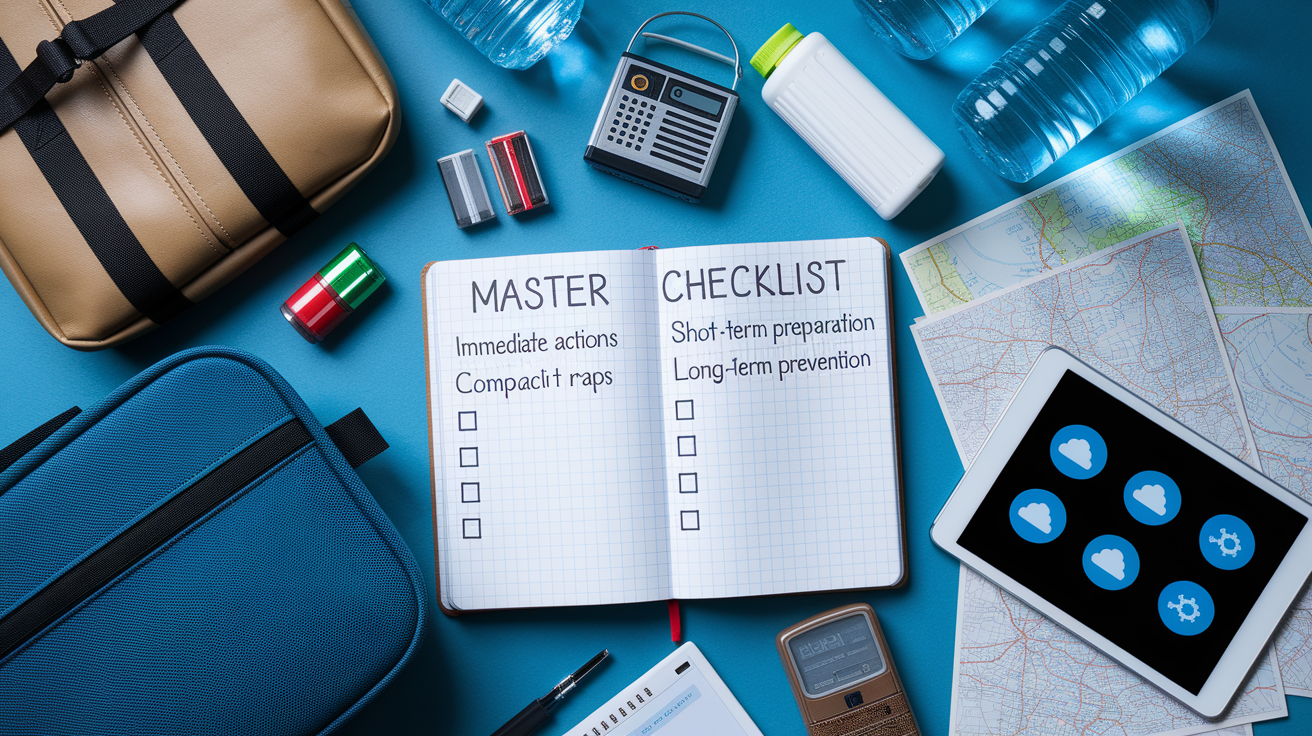
A good flood checklist turns confusion into clear next steps. This master list covers everything from emergency supplies to property protection, organized by how soon you need to do each task.
| Priority Level | Action Item | Timeline | Category |
|---|---|---|---|
| Immediate Actions | Register for local weather alerts and National Weather Service notifications | Today | Communication |
| Store one gallon of water per person per day for three days | This week | Emergency Supplies | |
| Stock non-perishable food for three days minimum | This week | Emergency Supplies | |
| Gather first aid supplies including bandages, antiseptic, and medications | This week | Emergency Supplies | |
| Buy battery-powered radio and extra batteries | This week | Communication | |
| Purchase flashlights and backup batteries | This week | Emergency Supplies | |
| Stock two week supply of prescription medications | This week | Medical | |
| Get portable chargers for phones and communication devices | This week | Communication | |
| Move critical documents to waterproof containers | This week | Document Protection | |
| Learn locations of gas, electric, and water shutoff valves | This week | Safety | |
| Short-Term Preparation | Take photos and videos of all household items for insurance inventory | Within 2 weeks | Documentation |
| Save digital copies of documents to cloud storage | Within 2 weeks | Document Protection | |
| Plan and practice two evacuation routes from your home | Within 2 weeks | Evacuation | |
| Identify family meeting points if separated during evacuation | Within 2 weeks | Communication | |
| Clear gutters and downspouts of leaves and debris | Within 2 weeks | Property Protection | |
| Elevate furniture to higher floors or upper levels | Before flood watch | Property Protection | |
| Move valuable items and electronics to elevated storage | Before flood watch | Property Protection | |
| Stock sandbags or purchase flood barriers | Within one month | Property Protection | |
| Review flood insurance policy coverage and limits | Within one month | Insurance | |
| Establish out-of-state emergency contact person | Within 2 weeks | Communication | |
| Create communication plan for all family members | Within 2 weeks | Communication | |
| Test sump pump if installed in basement | Monthly | Property Protection | |
| Anchor outdoor fuel tanks to foundation | Within one month | Safety | |
| Install plugs for sewer drains to prevent backflow | Within one month | Property Protection | |
| Stock sanitation supplies including soap, bleach, and towels | Within 2 weeks | Emergency Supplies | |
| Long-Term Prevention | Install check valves in building sewer traps | Before flood season | Property Protection |
| Seal foundation cracks and openings | Before flood season | Property Protection | |
| Install permanent flood vents in basement or crawl space | Before flood season | Property Protection | |
| Improve property drainage and grading away from foundation | Before flood season | Property Protection | |
| Purchase backup generator and fuel storage | Before flood season | Emergency Supplies | |
| Install window protection barriers for basement windows | Before flood season | Property Protection | |
| Add weatherproof door seals to exterior doors | Before flood season | Property Protection | |
| Elevate heating system, water heater, and electric panel above potential flood levels | Before flood season | Property Protection | |
| Purchase flood insurance if not currently covered | At least 30 days before flood season | Insurance | |
| Research local shelter locations and evacuation centers | Before flood season | Evacuation |
Work through this checklist during calm weather, not when a storm’s already heading your way. Check items off as you finish them. Print a copy for your fridge or save it to your phone. Some tasks take minutes. Finding your utility shutoffs, for instance. Others need planning and professional help, like installing check valves or fixing your drainage. Items marked “before flood watch” have to happen the moment you hear flooding might be coming, so you’d better know what they are now.
Early planning cuts both costs and stress. Businesses that prepare ahead can save 20% to 90% on replacement expenses for equipment and inventory. If you’ve got flood insurance through the National Flood Insurance Program, you can get up to $1,000 back for supplies you used to prevent damage. Sandbags, lumber, tarps. Keep the receipts. This reimbursement works whether flooding actually hits or not, as long as you bought the supplies and used them to protect your place during a flood event.
Protecting Important Documents and Valuables

Losing documents after a disaster creates problems that drag on for weeks or months. When you’re filing insurance claims, proving who you are, or trying to access your bank accounts, missing paperwork stalls everything.
Here’s what needs protection:
Flood insurance policy and homeowner’s insurance policy. Birth certificates and Social Security cards for everyone in your family. Passports and driver’s licenses. Medical records and vaccination records. Bank account details and credit card numbers. Property deeds and mortgage documents. Wills, trusts, and power of attorney paperwork. Tax returns from the past three years. Marriage certificates and divorce decrees.
For physical protection, get waterproof containers with tight sealing lids. Heavy duty zip bags work if that’s what you’ve got, but hard sided waterproof document boxes or fireproof safes do better. Store these on upper floors or high shelves. Never in basements or ground floor closets. If you’re evacuating, grab the whole container and go.
Digital backups matter as much as physical protection. Scan or photograph every critical document and save them to cloud storage. Google Drive, Dropbox, iCloud, whatever you use. Email copies to yourself as another backup. Before flooding threatens, photograph every room in your house. Inside closets and cabinets too. Get serial numbers on appliances like your water heater, furnace, refrigerator, and television. Video walkthroughs work just as well. This becomes your home inventory for insurance claims, proving what you owned and what condition it was in before the flood. Store these images in a waterproof safe or upload them to a secure online spot you can access from anywhere.
Property Protection and Water Damage Prevention

Some flood protection happens fast, right before water shows up. Other steps take time and need to be done well before flood season starts.
Temporary measures work when you’ve got a few hours of warning. Permanent improvements protect you year after year and often cut your insurance costs.
| Protection Method | Purpose | Installation Timing |
|---|---|---|
| Sandbags | Create temporary barriers around doors and low points | When flood watch is issued |
| Check valves | Prevent sewer water from backing up into building | Before flood season, requires plumber |
| Sump pump | Remove water that enters basement or crawl space | Before flood season, professional installation |
| Foundation sealing | Block water entry through cracks and gaps | Before flood season, any time for repairs |
| Gutter and downspout systems | Direct roof water away from foundation | Clear monthly, extend downspouts anytime |
| Flood barriers | Stop water at doorways and garage openings | Install when flood watch issued |
| Drainage improvements | Keep water flowing away from house | Before flood season, professional grading |
| Furniture elevation | Keep belongings dry during minor flooding | When flood watch issued or as storage solution |
| Appliance protection | Prevent damage to water heaters, washers, and HVAC units | Before flood season for permanent elevation |
| Outdoor equipment securing | Prevent fuel tanks and chemicals from floating and leaking | Before flood season, anchor permanently |
When you’ve got warning time, move stuff to upper floors. Electronics go first. Televisions, computers, gaming systems, stereo equipment. Then furniture you can actually carry, like lamps, side tables, dining chairs, and small dressers. Important papers and photographs head upstairs even if you think you’ve already protected them. Outdoor items count too. Grills, lawn equipment, patio furniture can all float away or get wrecked. Bring them into the garage or strap them down heavy. For appliances you can’t move, like water heaters and washing machines, consider permanent elevation on concrete blocks if you’re in a high risk area. Fuel tanks have to be anchored to your foundation or a concrete pad. A floating propane tank or heating oil tank gets really dangerous when it ruptures or rips away from gas lines.
Clear your gutters every month during rainy seasons and before any storm they’re predicting. Clogged gutters overflow and dump thousands of gallons right next to your foundation, which makes basement flooding way worse. Extend downspouts at least six feet from your house so roof water flows away from the building. Take photos of your property showing where you stored items before flooding, and note which ones you elevated. This documentation helps insurance adjusters understand what you did to prevent damage and speeds up your claim.
Utility Shutoff Procedures and Safety Protocols

Turning off utilities prevents fires, explosions, and electrocution during and after flooding. You need to know when this matters and how to do it safely before an emergency forces you to figure it out in the dark.
Shut off utilities when evacuation looks necessary or when water’s actively entering your home. The main electrical panel usually sits in the basement, garage, or outside the house. Open the metal door and flip the main breaker at the top to the off position. If there’s standing water anywhere near the electrical panel, don’t touch it. Stay on dry wood and wear rubber soled shoes or boots plus rubber gloves for any electrical work. The gas shutoff valve typically sits on the pipe coming into your house near the gas meter. You’ll need an adjustable wrench. Turn the valve a quarter turn so it runs crosswise to the pipe instead of along it. Once you shut off gas, don’t turn it back on yourself. Only the gas company should restore service. The main water shutoff usually appears where the water line enters your house, often in the basement or crawl space. Turn the valve clockwise until it stops.
After flooding, wait for official clearance before you go back home. When you do return, don’t touch any electrical equipment or outlets unless you’re standing on dry wood while wearing rubber soled shoes or boots and rubber gloves. Don’t use any open flame for lighting. Not even candles or matches, because trapped gas can cause explosions in flooded buildings. Call your utility companies and ask for inspections before you restore power, gas, or water service. A professional needs to check for damaged lines, compromised connections, and safety problems you can’t see. This inspection isn’t optional. It prevents injuries and saves lives during the recovery period when most accidents happen.
Flood Insurance Coverage and Policy Verification

Standard homeowner policies don’t cover flood damage. None of them. You need separate coverage through the National Flood Insurance Program or a private flood insurance company.
NFIP policies come with a 30 day waiting period before coverage starts, so you can’t buy insurance when a hurricane’s already heading your way. Get coverage during calm weather, well before flood season begins.
Check these details in your flood insurance policy:
Building coverage limit and whether it matches your home’s replacement cost. Contents coverage limit for personal belongings inside the home. Deductible amount you’ll pay before insurance kicks in. Waiting period remaining if you recently bought the policy. Loss avoidance coverage and reimbursement limits for prevention supplies. Basement coverage limitations, since most policies restrict basement claims. Effective dates and renewal schedule to avoid coverage gaps.
The NFIP offers up to $1,000 in reimbursement for loss avoidance supplies like sandbags, lumber, tarps, plastic sheeting, and pumps that you buy and use to protect your property during a flood event. Keep all receipts for these purchases. This reimbursement applies whether your home actually floods or not, as long as you bought the supplies in response to a flood threat and used them to prevent damage.
Contact your insurance agent well before any flood warning to review your coverage and ask questions about what’s included. After flood damage happens, call your agent or broker right away. An adjuster gets assigned to inspect your property and document losses. The faster you make contact, the faster your claim moves forward. Don’t wait to see if the damage is “bad enough” to file. Report it immediately and let the adjuster make that call.
Evacuation Planning and Route Preparation

Evacuation decisions get harder when roads start flooding and time runs out. Plan your routes now, during good weather, so you know exactly where to go when officials issue warnings.
| Evacuation Element | Preparation Task | Timeline |
|---|---|---|
| Primary route | Identify main roads leading to higher ground or out of flood zone | Complete this month |
| Alternate route | Map second path using different roads in case primary route floods | Complete this month |
| Shelter locations | Research official evacuation centers and note addresses and phone numbers | Complete this month |
| Vehicle readiness | Check tires, brakes, battery, and emergency supplies in car | Before flood season |
| Fuel maintenance | Keep gas tank at least half full during flood season | Ongoing during risk periods |
| Meeting point | Choose specific location where separated family members will reunite | Complete this month |
Driving through floodwater kills people every year because drivers underestimate how little water it takes to disable a vehicle. Six inches of water reaches the bottom of most passenger cars, causing loss of control and possible stalling. One foot of water will float many vehicles, making steering impossible. Two feet of rushing water can carry away most vehicles including SUVs and pickups. The water doesn’t need to be deep to be deadly. It just needs to be moving. Flooding also hides washed out roads, missing bridges, and deep holes that total your car and trap you inside.
Execute your evacuation plan when local officials issue evacuation orders. Don’t wait to see how bad it gets. Don’t assume you’ll have more time later. Flash floods reach full peak in minutes, not hours. Leave early, using your planned routes, and don’t return home until officials say the area’s safe.
Family Communication Plan and Emergency Contacts

Phone networks fail during disasters. Text messages often get through when calls don’t. A clear communication plan keeps your family connected even when technology fails.
Set up these communication elements:
Designate an out of state contact person who everyone calls or texts to report their status and location. Create a phone tree showing who contacts whom if the family gets separated. Set text message as the primary contact method since texts use less bandwidth than calls. Choose two physical meeting locations, one near your home and one outside your neighborhood. Write down all emergency contacts on paper and keep copies in wallets, go bags, and cars. Register every family member for local emergency alert systems through your county or city website. Program the National Weather Service website into your phone’s bookmarks for weather updates. Test your communication plan twice a year to make sure everyone remembers the process.
Understanding flood warning terminology helps you know when to act. A Flood Watch means flooding’s possible in your area, so monitor weather radio or television for updates. A Flash Flood Watch indicates flash flooding is possible and you should prepare to move to higher ground quickly. A Flood Warning means flooding is occurring or will occur soon, and you may need to evacuate immediately. A Flash Flood Warning indicates a flash flood is happening right now. Seek higher ground on foot immediately. Don’t wait.
Monitor the National Weather Service website during flood events for weather updates and safety tips specific to your area. Local authorities also send updates through emergency alert systems, local news stations, and social media. Stay tuned to these sources throughout the emergency, not just at the beginning.
Special Considerations for Vulnerable Family Members

Children, elderly relatives, people with disabilities, and pets all need extra planning. Standard preparation assumes everyone can move quickly and handle stress, but that’s not reality for many families.
Add these items to your preparation checklist:
Infant formula, bottles, diapers, and baby wipes for at least one week. Mobility equipment including wheelchairs, walkers, and canes with backups if possible. Two week supply of prescription medications for anyone with chronic conditions. Battery backup or generator power for medical equipment like oxygen concentrators or CPAP machines. Pet carriers for each animal, large enough for the pet to stand and turn around. Veterinary records and current photos of pets in case you get separated. Comfort items for children like favorite stuffed animals, books, or games to reduce anxiety during evacuations. Extra eyeglasses, hearing aids, or other assistive devices. List of current medications with dosages for each family member. Medical alert bracelets or necklaces for anyone with serious health conditions.
Practice evacuation with everyone, including kids and elderly family members, so they know what to expect. Time how long it takes to get everyone ready and loaded into the car. Figure out who needs help and who can help others. If someone uses a wheelchair or has mobility limitations, test your evacuation routes to make sure they’re accessible. Call ahead to emergency shelters to verify they can accommodate medical equipment, service animals, or specific accessibility needs.
Keep updated medical information for every family member in your waterproof document container. Include doctor names, medication lists, allergies, and emergency contact numbers for healthcare providers. During chaotic evacuations, this information can prevent dangerous medication errors or delays in treatment.
Understanding Your Flood Risk Assessment

Not all properties face the same flood risk. Your specific location, elevation, and landscape features determine how vulnerable your home is to flooding.
Flood zone designations matter because they directly affect insurance requirements and costs. High risk zones, labeled A or V on FEMA maps, sit in areas with a 1% or greater chance of flooding each year. That sounds small, but it’s actually a 26% chance over a typical 30 year mortgage. Moderate to low risk zones, labeled B, C, or X, have less frequent flooding but still face real danger during major storms.
| Risk Factor | Impact on Property | Assessment Method |
|---|---|---|
| Flood zone designation | Determines insurance requirements and premium costs | Check FEMA flood maps online for your address |
| Property elevation | Higher homes flood less frequently and less severely | Review elevation certificate or hire surveyor |
| Landscape grading | Slope away from house reduces risk, slope toward house increases it | Visual inspection during heavy rain |
| Proximity to water | Distance from rivers, streams, and coast affects flood timing and severity | Measure distance on maps and note water types |
| Drainage infrastructure | Storm drains and retention ponds reduce flooding when properly maintained | Contact local public works department |
Flash floods bring unique dangers regardless of your flood zone. These floods can reach heights of 10 to 20 feet and carry deadly debris like cars, trees, and building materials. They reach full peak in a matter of minutes with little to no warning. Six inches of swift moving water can knock people off their feet. Even areas not traditionally considered flood zones can experience flash flooding during extreme rainfall because the water has nowhere to go fast enough.
Check FEMA flood maps at the FEMA Map Service Center website by entering your address. Your local planning or building department can also provide flood zone information and historical flood data for your area. If your home sits in a high risk zone, talk to local authorities about elevation requirements for new construction and whether elevating your existing home makes sense. Some communities offer grants or low interest loans for flood mitigation improvements, especially for properties that flood repeatedly.
Post Flood Recovery and Damage Assessment

Coming home after a flood feels overwhelming. The mess is worse than you imagined, and it’s hard to know where to start. Follow these steps in order to stay safe and document everything properly.
Wait for official clearance from local authorities before you return to your property. Roads may look safe but have hidden washouts. Buildings can have structural damage that’s not visible from outside. Power lines might be down and still energized. Once you get the all clear, approach carefully and follow these safety and recovery steps:
Don’t touch electrical equipment unless you’re standing on dry wood while wearing rubber soled shoes or boots and rubber gloves. Look for structural damage like cracks in the foundation, sagging ceilings, or tilted walls before entering. Open windows and doors to ventilate the building and release trapped gas or moisture. Take photos and videos of all damage before you clean or move anything for insurance documentation. Throw out all fresh food and previously opened medicines that contacted floodwater. Bacteria contamination makes them unsafe. Don’t drink tap water until local authorities confirm it’s safe. Boil all water for drinking and food preparation vigorously for 10 minutes. Wear protective equipment including rubber boots, gloves, and masks when cleaning up flood debris. Watch for animals like snakes or rodents that may have entered your home during flooding. Check for gas leaks by smell. If you detect gas, leave immediately and call the gas company from outside. Document every damaged item with photos showing the item and the visible damage.
Flooded basements need special handling. Drain the water slowly, removing about one third of the water per day. Pumping out a basement too fast causes the surrounding soil pressure to crack or collapse your foundation walls. This gradual drainage takes patience, but it prevents structural damage that costs way more than the flood damage itself.
Professional inspection becomes necessary when you see structural cracks, smell gas, or have any doubt about electrical safety. Call licensed contractors for electrical, plumbing, and structural assessments before you begin major cleanup or repairs. Your insurance company may also require professional estimates for certain types of damage before approving claims. You can remove mildew on dry wood with a solution of 4 to 6 teaspoons trisodium phosphate, one cup liquid chlorine bleach, and one gallon water. Apply it, scrub, and rinse thoroughly.
Backup Power and Generator Preparation
Power outages last for days during major floods. Without electricity, you lose lights, refrigeration, communication charging, and climate control.
Backup power options range from simple battery powered devices to whole house generators. Choose based on your budget and needs, but prioritize safety over convenience.
Here are the key backup power preparation and safety considerations:
Portable generators run on gasoline or propane and power essential items through extension cords. Whole house generators connect to your electrical panel and switch on automatically during outages. Fuel storage requires approved containers kept in well ventilated outdoor areas away from ignition sources. Generator placement must be at least 20 feet from buildings to prevent carbon monoxide poisoning. Carbon monoxide detectors inside your home provide warning if exhaust enters living spaces. Battery powered lights including LED lanterns and flashlights offer safe lighting without fire risk. Portable chargers and power banks keep phones and communication devices working for hours or days.
Generator safety can’t be compromised. Running a generator indoors or in a garage, even with the door open, creates deadly carbon monoxide levels within minutes. The gas is odorless and kills quickly. Place generators outside, downwind from windows and doors, at least 20 feet from your house. Never refuel a hot generator. Let it cool for at least 10 minutes to prevent fuel ignition. Store gasoline in approved containers, never more than a few weeks’ supply, in outdoor sheds or detached garages.
Avoid open flame lighting in flooded buildings. Gas leaks happen during floods when pipes break or connections loosen. A candle, match, or lighter can trigger an explosion. Stick with battery powered flashlights and LED lanterns even though they feel less bright. They’re safe around gas leaks and won’t cause fires if they tip over.
Financial Preparation and Cash Reserves
ATMs stop working when power goes out. Credit card machines go offline. Banks close during disasters. You need physical cash on hand to buy supplies, pay for gas, or handle unexpected expenses during emergencies.
Build your financial emergency preparedness with these steps:
Keep at least $500 in small bills at home in a waterproof container. Twenties, tens, fives, and ones. Store cash in multiple locations like your go bag, car emergency kit, and home safe. Carry backup credit cards from different banks in case one network goes down. Make copies of important financial documents including bank account numbers and credit card contacts. Save receipts for all flood prevention supplies you purchase for potential NFIP reimbursement. Keep a written record of insurance policy numbers and agent contact information separate from the policies themselves.
Advance preparation saves substantial money during flood recovery. Businesses that prepare ahead save 20% to 90% on replacement costs for stock and movable equipment. Homeowners see similar savings when they protect belongings before flooding instead of replacing everything afterward. A $200 investment in sandbags, plastic sheeting, and storage bins can save thousands in furniture replacement and cleanup costs.
The National Flood Insurance Program reimburses policyholders up to $1,000 for loss avoidance supplies purchased and used to prevent flood damage. Eligible supplies include sandbags, lumber for boarding up openings, tarps, plastic sheeting, plywood, pumps, and similar materials used to protect your property. Save every receipt and take photos showing how you used the supplies. File for reimbursement through your insurance agent after the flood event, whether your home actually flooded or not. The reimbursement covers the prevention effort, recognizing that protecting your property reduces overall claim costs.
Final Words
Your flood preparation checklist works best when you start checking off items today, not when water is rising.
Store those waterproof containers now. Fill your emergency kit this week. Walk through your evacuation route on a calm Saturday morning.
The time you spend now saves panic later, and it can save real money through prevention and insurance reimbursements.
Keep this checklist where you can find it fast, printed on the fridge or saved to your phone. When the forecast changes, you’ll already know what to grab and where to go. That’s how families stay safe.
FAQ
What to buy to prepare for a flood?
To prepare for a flood, buy non-perishable food for three days, one gallon of water per person per day, a battery-powered radio, flashlights, first aid supplies, medications, waterproof containers for documents, and portable phone chargers.
What are the 5 P’s of preparedness?
The 5 P’s of preparedness are People (yourself, family, pets), Prescriptions (medications and medical equipment), Papers (important documents and insurance policies), Personal needs (clothing, cash, supplies), and Priceless items (irreplaceable valuables and photographs).
What are 5 ways to prepare for a flood?
Five ways to prepare for a flood include creating an emergency supply kit with food and water, protecting important documents in waterproof containers, identifying evacuation routes, installing flood prevention measures like check valves, and registering for weather alerts from local authorities.
What are the 10 essential survival kit items?
The 10 essential survival kit items are one gallon of water per person per day, non-perishable food for three days, battery-powered or hand-crank radio, flashlights with extra batteries, first aid supplies, medications, whistle, dust masks, waterproof containers, and portable phone chargers.
When should you start preparing your flood emergency supplies?
Start preparing your flood emergency supplies well before flood season or warnings arrive, ideally during non-emergency periods when stores are fully stocked and you can make thoughtful decisions without stress or time pressure affecting your choices.
How much water should you store for flood emergencies?
Store at least one gallon of water per person per day for three days minimum for drinking and food preparation, plus fill bathtubs and sinks with clean water before flooding starts in case regular supplies become contaminated.
Can you get reimbursed for flood preparation supplies?
National Flood Insurance Program policyholders can receive reimbursement up to $1,000 for loss avoidance supplies including sandbags, lumber, and tarps, which makes advance preparation more affordable and encourages proactive flood protection measures.
What documents should go in waterproof containers?
Put birth certificates, passports, flood insurance policies, medical records, financial documents, property deeds, and identification cards in waterproof containers, then store them in elevated areas that will likely remain dry during flooding.
How long does medication supply need to last in an emergency kit?
Keep at least a seven-day supply of all prescription medications in your emergency kit, stored in waterproof containers with clear labels showing dosage instructions and prescribing doctor information for each family member.
Should you turn off utilities before a flood?
Turn off all utilities at main switches if evacuation appears necessary to prevent electrical fires, gas leaks, and explosions, but only if you can do so safely while standing on dry surfaces wearing proper protective equipment.
When is it too dangerous to drive through floodwater?
Six inches of water can cause loss of control and stalling in most passenger cars, one foot of water will float many vehicles, and two feet of rushing water can carry away most vehicles including SUVs and pickup trucks.
What is the difference between a flood watch and flood warning?
A flood watch means flooding is possible and you should prepare to move, while a flood warning means flooding is occurring or will occur soon and you should take immediate action to reach higher ground.
How do you protect furniture from flood damage?
Elevate furniture and valuable items to higher floors or upper shelves that will likely remain dry, and for items that cannot be moved, take photographs for insurance documentation before flooding begins.
What backup power options work during floods?
Battery-powered devices, portable phone chargers, and outdoor generators placed away from buildings provide backup power during floods, but never use generators indoors due to deadly carbon monoxide risks or open flames due to gas leak dangers.
How much cash should you keep for flood emergencies?
Keep enough cash in small bills to cover several days of basic needs since ATMs and banking systems often fail during disasters, and store it in a waterproof container in an easily accessible location.