

Most people don’t think their balcony can flood until water’s already rushing into their living room. But balconies flood all the time, especially when drains get blocked or the design basically invites water straight through your door. If your balcony floor sits higher than your interior floor, or if that concrete railing has no gaps for overflow, you’ve got a setup that channels rainwater right where you don’t want it. This guide walks you through how balcony flooding actually happens, what makes your space vulnerable, and the practical steps you can take right now to prevent water damage before the next storm hits.
Can Your Balcony Flood? Risk Factors Explained

Yes, your balcony can flood. And when it does, you’re looking at water rushing into your apartment before you even realize what’s happening.
Two things make this happen. First, the drain gets blocked or just can’t handle the volume. Second, the balcony itself was built in a way that basically invites water straight through your door. Here’s the thing most people don’t realize: that concrete below your railing? If it sits higher than your interior floor, you’ve got a direct pathway waiting to channel water right into your living room.
When drains block or max out, trapped water doesn’t just sit there politely. It rises fast and finds the easiest route inside, which is usually around your sliding door. And those small floor drains you barely notice? They weren’t sized for driving rain. Water gets trapped with nowhere to go except your carpet.
Quick things to check if you want to know whether your balcony’s a flood risk:
- Drain size and what’s blocking it. Anything under 2 inches can’t move water fast enough. Add some leaves and you’re done.
- Whether the floor actually slopes toward the drain. Flat surfaces just pool water.
- Railing design. Solid concrete with no gaps? That’s a trap.
- Which floor you’re on. Upper floors take direct hits, lower floors get overflow from everyone above.
- When the building went up. Anything from the 80s through early 2000s probably has undersized drains and design problems.
Water gets in two ways once flooding starts. Direct entry is exactly what it sounds like. Water piles up higher than your door threshold and pours over like a dam breaking. Then there’s structural penetration, where water works through compromised seals around door frames, cracks in concrete, gaps where materials meet. Both happen at once during serious flooding. Surface water rushes the door opening while trapped water inside hollow railing cavities finds every crack in the building.
Trapped water builds when drainage capacity gets exceeded. This happens in minutes, not hours. During driving rain, water hits the surface faster than even good drains can handle it. Throw in a blockage and accumulation goes exponential. Here’s what matters: minor pooling in low spots after rain is normal and mostly harmless. Active flooding means water is entering or about to enter your space. That requires immediate action.
Primary Causes of Balcony Water Damage

Some causes you can prevent, some you can’t. The preventable stuff comes from drainage failures and neglect. The weather stuff involves rain volume that overwhelms even well maintained systems.
Drainage failures are the most common preventable cause. Undersized drains create bottlenecks even when totally clear. A drain built for light rain collapses during storms. Complete blockages from leaves, dirt, trash, random stuff left outside stop flow entirely. Heavy rain starts and within minutes you can watch water depth increase when a blocked drain prevents any drainage. Partial restrictions are less dramatic but still problematic during extended rain. A drain that handles light rain fine becomes overwhelmed when half blocked and facing sustained downpour. Leaves pile up every fall, forming mats across drain openings that block flow while looking clear from above.
Weather overwhelms systems through sheer force. Rainfall intensity exceeding design capacity happens when storms drop water faster than infrastructure was built for. A system designed for typical regional rainfall fails when extreme weather becomes frequent. Wind driven rain forces water horizontally under covered areas and directly against building faces with enough pressure to push moisture through normally adequate seals around doors and windows. Prolonged precipitation overwhelms functional systems through duration instead of intensity. Six hours of steady moderate rain deposits more total water than drainage can remove, causing gradual accumulation that eventually floods.
Maintenance failures let small issues escalate. Neglected drain cleaning means debris accumulates unnoticed until complete blockage, often during storms when immediate clearing is impossible. Deteriorated seals around drain fixtures let water bypass the drain entirely, flowing into the building through gaps that shouldn’t exist. Delayed repairs turn minor seal cracks and small blockages into major water intrusion pathways. Seasonal debris patterns create predictable risk periods. Fall leaves, spring pollen, winter ice all compromise drainage when maintenance schedules don’t account for these variations.
Structural Design Problems That Increase Flood Risk
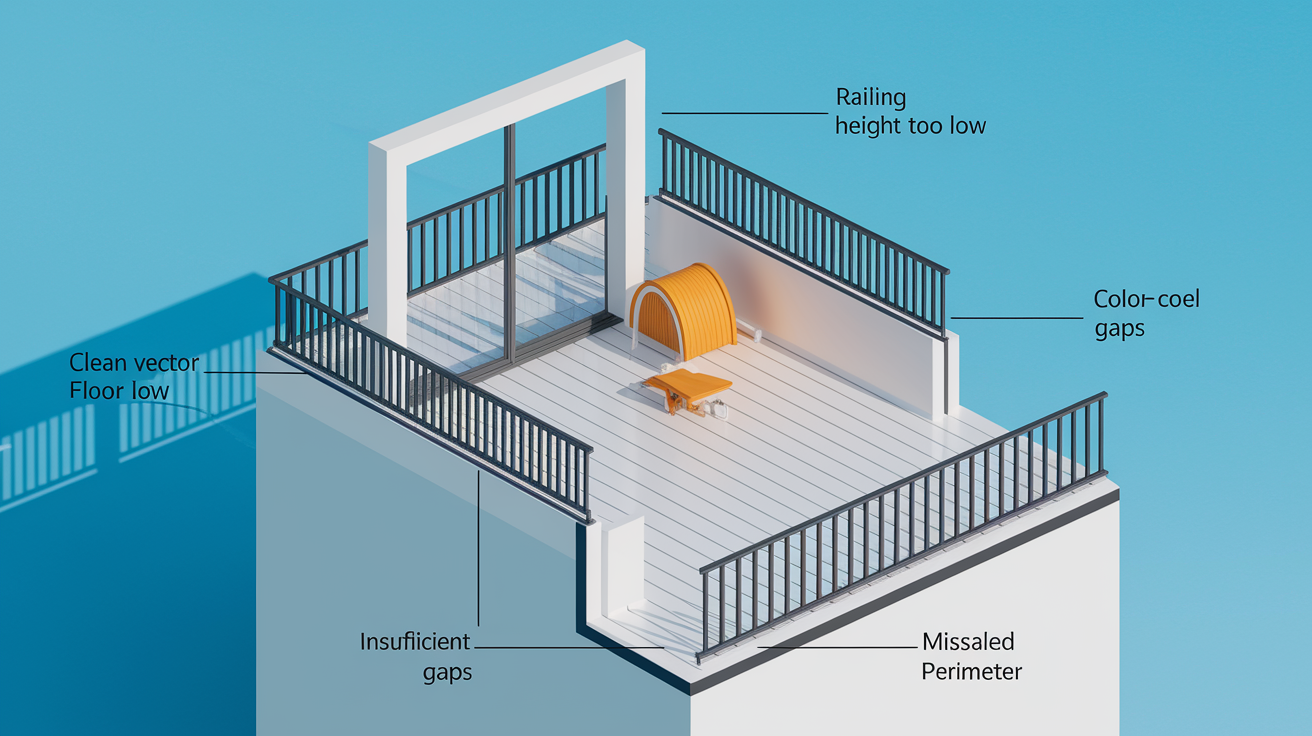
Construction choices made during building create permanent flood risk that persists regardless of maintenance. Design defects built into the structure determine whether your balcony has inherent vulnerability to flooding under conditions that properly designed balconies handle safely.
| Design Flaw | Flood Risk Created | Common in Buildings |
|---|---|---|
| Railing height above interior floor | Directs overflow inward instead of outward when water accumulates | Common in 1980s through 2000s construction |
| Insufficient floor differential | Allows direct water entry at doors when accumulation reaches threshold height | Prevalent in budget construction across all eras |
| Missing relief gaps | Traps water against building with no escape route except into units | Frequent in older buildings and sealed retrofits |
| Inadequate slope gradient | Prevents drainage flow toward drains, creates pooling zones | Found across all construction eras |
| Sealed perimeter without relief | Eliminates overflow escape when drains fail or reach capacity | Common in waterproofing retrofits that seal all openings |
Threshold problems at sliding doors create the most direct flooding pathway when there’s not enough height difference between balcony and interior floor. Properly designed balconies put the interior floor 4 to 6 inches higher than the balcony surface, creating a barrier that prevents entry until accumulation reaches extreme levels. Many balconies lack adequate height differential. Some have interior floors only 1 to 2 inches higher. Others actually have interior floors level with or below balcony height. When water accumulates to threshold height on these designs, it flows directly inside through the door opening and around seals. Gets worse when door threshold seals deteriorate with age, allowing water penetration at even lower accumulation levels.
Water trapped in hollow railing cavities finds entry points through construction gaps and deteriorated seals. Concrete railings often have hollow spaces below the top rail where water gets trapped when relief gaps don’t exist. This trapped water sits against the building envelope under pressure, finding every crack, gap, seal failure. Water becomes trapped within concrete below railing structure during bad weather, then slowly migrates through the building envelope over hours or days. Expansion joints without proper sealing become direct pathways. Cracks in concrete from settling or freeze thaw cycles allow moisture penetration. Missing weep holes that should let water escape from railing cavities mean trapped water has nowhere to go except through the wall into your living space.
Assessing Your Balcony’s Flooding Vulnerability and Warning Signs

Check things before flooding happens. Waiting until active flooding means you’re responding in crisis mode instead of preventing the crisis.
Self inspection steps you can do:
- Drain clearing test. Pour 2 gallons of water directly into the drain and watch how long it takes to disappear. Should be under 30 seconds if the drain’s clear and properly sized.
- Slope water test. Pour water on the balcony surface away from the drain and watch which way it flows. Should head toward the drain, not pool or flow toward the building.
- Threshold examination. Measure height difference between balcony surface and interior floor at the door. Minimum 4 inches provides adequate protection.
- Stain inspection. Look at door frames and adjacent walls for water staining, discoloration, paint damage indicating previous intrusion.
- Tile soundness check. Tap tiles with your knuckles listening for hollow sounds that indicate separated waterproofing membrane beneath.
- Crack inspection. Check tiles and grout lines for cracks, spalling, missing grout that allows water penetration to subsurface layers.
- Rain observation. Watch water behavior during actual rainfall to see where it pools, how fast it drains, whether wind drives it toward the door.
- Relief gap inspection. Check railing base for drainage openings or gaps that allow water escape when drains are overwhelmed.
Visible warning signs show active water intrusion and developing problems needing attention. Persistent water pooling in the same locations after every rain reveals inadequate slope. Water that sits more than a few minutes after rain stops indicates drainage problems. Efflorescence, those white mineral deposits appearing on concrete, proves water is moving through the concrete carrying dissolved minerals to the surface where they crystallize as water evaporates. Tile cracks or spalling show stress from moisture movement and freeze thaw cycles beneath the surface. Hollow sounding tiles when tapped indicate the waterproofing membrane has separated from the concrete substrate, allowing water infiltration into the gap. Staining patterns around door frames in brown, yellow, gray reveal the exact pathway water follows during intrusion. Deteriorated caulking appears cracked, separated from surfaces, missing entirely. Gaps at threshold transitions between balcony and interior floor indicate seal failure creating direct water entry routes.
These signs reveal specific underlying problems requiring targeted solutions. Hollow tiles indicate waterproofing membrane failure beneath the surface. The protective layer that should prevent water from reaching concrete has delaminated, allowing moisture to saturate the substrate and causing tiles to separate. Persistent pooling in specific locations shows inadequate slope. The balcony surface lacks the minimum 1 to 2% grade needed for proper drainage flow toward drain openings. Staining patterns around doors reveal both the penetration pathway and frequency. Heavy staining indicates repeated water intrusion over extended periods, light staining suggests occasional problems during severe weather. Efflorescence indicates moisture movement through concrete pores, proving that water penetrates the surface and migrates through the material instead of staying on top where it belongs.
Professional assessment becomes necessary when visible signs indicate structural issues beyond simple maintenance fixes. Engineering evaluation for suspected structural problems determines whether design defects require modification instead of just repair. Waterproofing integrity testing using moisture meters and thermal imaging reveals hidden membrane failures not visible from surface inspection. Drainage system capacity analysis calculates whether existing drains can handle design rainfall for your climate zone, or whether system upgrades are required. Absence of visible signs doesn’t guarantee adequate flood protection. Many serious defects remain hidden until catastrophic failure during extreme weather.
Factors That Determine Balcony Flood Severity

Floor level and position within the building dramatically affect flooding severity through cascading effects and direct exposure patterns. Upper unit drainage problems cascade to lower balconies creating compounded water volume. When an upper balcony drain fails, overflow from that balcony lands on the balcony below, adding to whatever rain that lower balcony receives directly. A single blocked drain on the 8th floor can cause flooding on the 7th, 6th, 5th floors as each level’s drainage capacity gets overwhelmed by combined volume. Corner units face wind driven rain from multiple directions simultaneously, receiving water from two building faces during storms with rotating winds. Top floor units receive maximum direct rainfall without any upper unit overflow contributing to their water volume, but face full weather exposure including strongest winds and most intense precipitation.
Building age and construction era affect flood vulnerability through evolving code standards and material degradation. Older buildings constructed under less stringent codes often lack adequate drainage capacity. Standards from the 1970s and 1980s specified smaller drains suitable for typical rainfall patterns of that era, insufficient for current weather extremes. Material degradation over decades compromises waterproofing and seals that were adequate when new but have deteriorated through exposure cycles. Buildings from specific eras, particularly 1980s through 1990s construction, are known for balcony design deficiencies including undersized drainage, inadequate waterproofing systems, missing relief gaps that weren’t recognized as necessary at the time. Construction quality varies significantly by era. Boom periods often saw rushed construction with inadequate attention to waterproofing details.
Regional climate factors determine both frequency and intensity of flooding based on annual precipitation patterns and seasonal extremes. Rainfall intensity zones where annual precipitation exceeds 40 inches stress drainage systems regularly, requiring more robust infrastructure than drier regions. Seasonal patterns like monsoon regions with extreme volume events during concentrated periods overwhelm drainage through sheer sustained flow over weeks or months. Freeze thaw cycles in cold climates accelerate concrete deterioration and seal failure. Water enters small cracks, freezes and expands, enlarges cracks, repeats the cycle each winter. Coastal areas face persistent humidity and salt air that accelerates corrosion of metal components and degradation of concrete and sealants. Building orientation affects rain exposure intensity. Weather facing sides receive significantly more wind driven rain than protected sides, creating unequal wear patterns and flood risk across identical balcony designs within the same building.
Immediate Prevention Steps for Apartment Residents

You’ve got some control over flood risk through diligent maintenance. Regular attention to controllable factors prevents many flooding events that would otherwise occur when neglect combines with vulnerable design.
Regular maintenance tasks that prevent balcony flooding:
- Monthly drain inspection and clearing of visible debris including leaves, dirt, anything that could block drainage
- Weekly removal of leaves and dirt during fall season when debris generation peaks
- Quarterly furniture and storage elevation review ensuring items don’t block drainage paths or prevent water flow toward drains
- Twice yearly door seal inspection checking for gaps, cracks, deterioration in threshold seals and weatherstripping
- Pre storm season drainage function testing using the bucket method to verify drains can handle high volume flow
- Weather resistant storage practices for balcony items using waterproof containers or removing water sensitive materials entirely
- Continuous photographic documentation of balcony condition establishing baseline for any future damage claims or dispute resolution
Protective measures for belongings reduce damage severity when flooding occurs despite prevention. Elevating furniture on blocks or risers keeps items at least 4 to 6 inches above the balcony surface, protecting them from minor accumulation and reducing damage during severe events. Using waterproof covers for items that must remain outside provides protection from direct rain exposure and wind driven moisture. Avoid storage of water sensitive materials on balconies entirely. Paper documents, electronics, fabric items, unsealed wood furniture all sustain irreversible damage from even brief water exposure.
Proactive planning means you can respond effectively when flooding begins instead of scrambling to figure out what to do. Know drain location and access so you can clear blockages quickly without searching. Keep basic water removal tools accessible including a wet vacuum, mop and bucket, old towels designated for emergency use. Have emergency contact information for building management readily available in your phone contacts and posted inside a cabinet so family members can find it during emergency. Understanding your balcony’s specific vulnerabilities through regular inspection lets you recognize warning signs early and take action before minor problems become major flooding.
Building Level Drainage System Maintenance

Building management obligations for structural and system level maintenance prevent balcony flooding through proper upkeep of infrastructure that individual tenants can’t access or modify. Structural components and building wide systems require professional maintenance and repair authority that rests with property management or strata corporations.
Drainage system upgrades and repairs address capacity limitations and deteriorated components through targeted interventions. Drain sizing assessment and replacement with larger capacity units solves undersized drain problems. Replacing a 2 inch drain with a 4 inch drain doubles the water volume that can be removed per minute. Installation of additional drain locations improves coverage for large balconies where a single drain can’t adequately serve the entire surface area. Slope correction through overlay application or substrate modification creates proper drainage gradient when original construction has flat or reverse sloped areas that trap water. Relief gap creation in railing base concrete allows water escape before reaching interior spaces. Cutting controlled openings in the concrete below railings provides overflow paths that direct excess water outward and downward instead of into units.
Waterproofing maintenance preserves or restores the protective barrier that prevents moisture penetration into structural components and interior spaces. Membrane inspection for integrity identifies areas where the waterproofing layer has failed through age, UV exposure, physical damage. Sealant renewal around penetrations and transitions maintains watertight seals at vulnerable locations including drain connections, railing attachments, door threshold interfaces. Tile system evaluation for subsurface waterproofing failure uses moisture testing and exploratory removal to determine whether hollow sounding tiles indicate membrane delamination requiring replacement. Reapplication of proper waterproofing to slab before tile replacement ensures new tile installations have adequate protection. Waterproofing must be applied to the concrete slab before tile installation, not after.
Structural modifications improve water management through permanent design changes that address inherent vulnerabilities. Relief gap installation allows water escape before reaching interior spaces by creating controlled openings that direct overflow safely away from the building envelope. Threshold height adjustments using aluminum angles with integrated seals raise the barrier that water must overcome to enter interior spaces, buying time during flooding events for drainage systems to catch up. Awning installation provides weather protection reducing total water volume reaching balcony surfaces during rain events. Retractable awnings offer protection during storms while allowing full sun exposure during fair weather.
Insurance Coverage and Liability for Balcony Water Damage

Building insurance covering structural components operates separately from unit owner insurance covering interior contents and improvements, creating complexity in determining coverage for balcony flooding damage. Building or strata master policies typically cover the balcony slab, drainage systems embedded in the structure, building envelope components including exterior wall face and door frames. Unit owner policies cover interior contents including furniture, personal belongings, flooring within the unit boundary, plus any improvements or betterments the owner has made beyond original construction specifications. The line between building and unit coverage falls differently depending on your jurisdiction and specific policy language.
| Damage Type | Typically Covered By | Documentation Needed |
|---|---|---|
| Structural defects in original construction | Building/developer insurance if within warranty period, otherwise building insurance or shared owner cost | Engineering reports, original construction documents, defect timelines |
| Damage from tenant negligence or maintenance failure | Unit owner insurance, or owner personal liability if uninsured | Maintenance logs, incident reports, evidence of negligent actions or omissions |
| Building maintenance failure in common property systems | Building/strata insurance, or shared owner assessment if uninsured or below deductible | Maintenance records, work orders, documentation of reported problems and responses |
| Damage from extreme weather events | Shared responsibility depending on cause, building covers structural damage, unit owner covers contents | Weather reports, damage assessment documenting scope, photos showing damage extent |
Liability determination when upper unit problems cause lower unit flooding depends on whether negligence or unavoidable failure caused the situation. If an upper unit owner blocked their drain with stored items or failed to clear debris despite reasonable opportunity, negligence may assign liability to that owner. If a drain failed despite proper maintenance and the owner had no reasonable way to prevent the problem, the situation becomes an unavoidable building system failure with shared responsibility. Maintenance records prove due diligence. Documented regular cleaning and prompt problem reporting demonstrate reasonable care, while absence of any maintenance documentation suggests potential negligence. Subrogation rights between insurance carriers mean your insurance company may pursue recovery from another party’s insurance if that party was responsible for causing your damage.
Documentation practices support claims and establish facts when disputes arise about responsibility or damage extent. Photographic evidence of conditions before and after damage shows what existed prior to the flooding event, what damage occurred, helps establish cause. Maintenance request records with dates and responses prove you reported problems and gave building management opportunity to address them before damage occurred. Communication logs with building management create a timeline of awareness and action. Professional assessment reports from engineers or contractors provide expert opinions about causes, necessary repairs, whether negligence or design defects contributed to flooding.
Tenant and Landlord Responsibilities for Flood Prevention

Shared responsibility for balcony flood prevention requires cooperation between tenants or owners and building management, with clear boundaries defining who handles what. Neither party can fully prevent flooding alone. Tenants control day to day maintenance, while building management controls structural systems and major repairs.
Tenant obligations center on reasonable day to day care and prompt problem reporting. Maintaining drain clearance by removing debris and personal items prevents the most common cause of balcony flooding, blocked drains from accumulated leaves, dirt, stored items. Performing reasonable inspection and identifying problems means looking at your balcony occasionally and noticing obvious issues like pooling water, cracks, deteriorating seals. Promptly reporting discovered drainage issues or warning signs to management in writing creates an official record and gives management opportunity to address problems before flooding occurs. Exercise reasonable care to avoid actions that contribute to flooding risk. Don’t block drains with furniture, don’t pour materials down drains that could cause blockages, don’t damage seals or waterproofing through careless behavior. Allow access for maintenance and repairs when building management or contractors need to inspect or work on balcony systems. Keep documentation of all communications and maintenance activities including copies of work orders, emails, photographs.
Landlord and building management obligations cover structural systems and repairs beyond tenant capability or authority. Repairing structural defects in drainage systems and building envelope falls to management because tenants lack both expertise and legal authority to modify building structure. Maintaining building wide drainage infrastructure to code standards ensures systems remain safe and functional according to applicable regulations. Responding to reported problems within reasonable timeframes means addressing urgent flood risks immediately and scheduling non urgent repairs promptly. What constitutes reasonable depends on severity and safety implications. Performing periodic professional inspections of balcony systems catches developing problems before they cause damage or create safety hazards. Upgrading inadequate systems that pose flood risk becomes necessary when original construction no longer meets current needs, even if it met codes when built. Complying with applicable building codes and safety regulations represents a minimum standard. Local laws often specify maintenance obligations and response timeframes for certain problems.
Documentation of communication and maintenance requests protects both parties by establishing clear records of what was reported, when management was notified, what action was taken, what timeframe elapsed. Written requests with dates create verifiable records that oral conversations can’t provide. Photographic evidence of reported conditions shows exactly what the tenant observed and reported. Keeping copies of all correspondence means you have proof of communication if disputes arise later. Tracking response times and completed work documents whether management met their obligation to address problems promptly. Lease agreements or strata bylaws typically allocate specific flood related responsibilities between parties. Review your governing documents to understand what obligations apply in your specific situation.
Repair Solutions and Remediation Costs for Balcony Flooding
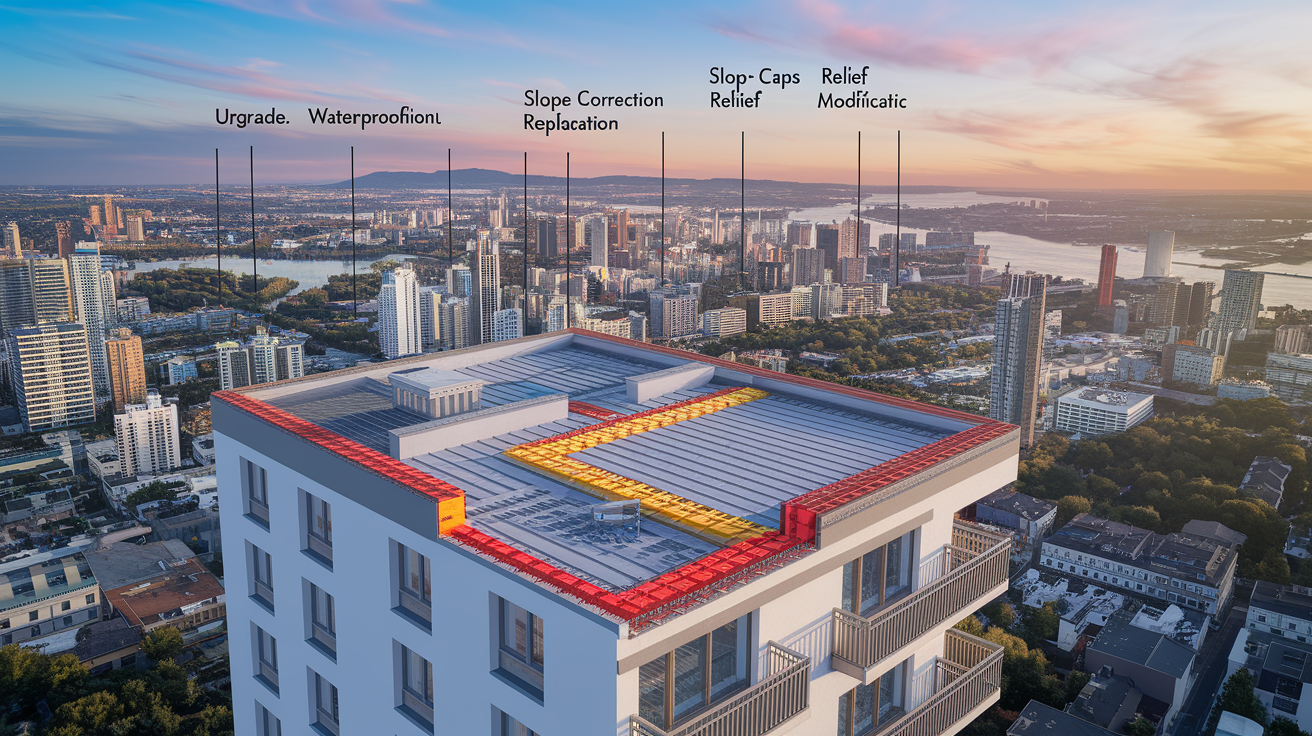
Match solutions to specific causes identified through proper assessment. This prevents both inadequate repairs that don’t solve the problem and expensive over treatment that addresses issues you don’t actually have. Engineering assessment or contractor evaluation should determine root cause before selecting repair approaches.
| Solution Type | Addresses Problem | Typical Cost Range | Complexity |
|---|---|---|---|
| Drain upgrade, replacement with larger capacity drains | Insufficient capacity, blockage prone design | $800 to $2,500 per drain | Moderate |
| Waterproofing replacement, removal of tiles, new membrane, reinstallation | Membrane failure, tile delamination | $5,000 to $15,000 per balcony | High |
| Slope correction, overlay or substrate modification | Inadequate drainage gradient | $3,000 to $12,000 per balcony | Moderate to high |
| Relief gap installation, cutting openings in railing base concrete | Trapped water, no overflow path | $2,000 to $5,000 per balcony | Moderate |
| Threshold modification, raising door sills with aluminum transitions | Insufficient door height differential | $500 to $1,500 per door | Low to moderate |
Minor repairs versus full remediation decisions depend on extent and cause of problems discovered during assessment. Targeted fixes like drain cleaning or seal replacement suffice when problems are limited and recent. A single deteriorated seal can be replaced without redoing the entire waterproofing system. Situations requiring comprehensive waterproofing renewal include widespread membrane failure indicated by multiple hollow sounding tiles across the balcony surface, visible deterioration of the waterproofing layer at exposed edges, moisture testing showing saturation of the substrate. Progression of water damage makes early intervention more cost effective. A small seal failure caught early costs hundreds to repair, while the same failure ignored until it causes extensive interior water damage costs thousands. Engineering assessment determines appropriate scope preventing both over treatment that wastes money and inadequate repairs that fail to solve the problem, leaving you vulnerable to repeated flooding.
The role of engineering assessment in determining appropriate solutions includes drainage capacity calculations that compare your drain size and number against design rainfall for your climate zone, waterproofing integrity testing using moisture meters and infrared imaging to map hidden membrane failures, structural evaluation for modification feasibility determining whether proposed changes can be made safely without compromising building integrity, cost benefit analysis comparing various repair approaches considering both immediate cost and long term durability, specification of work scope for contractor bidding so you receive comparable quotes based on identical repair parameters. A complete balcony waterproofing renewal typically costs $5,000 to $15,000 per balcony depending on size and complexity. Slope correction ranges from $3,000 to $8,000 for overlay methods that add a thin sloped layer over existing substrate, up to $8,000 to $15,000 for substrate modification that rebuilds the base structure to create proper gradient. Building wide projects benefit from economy of scale reducing per unit cost by 20 to 40% compared to individual balcony repairs.
Multi Unit Building Governance and Special Assessments
Shared ownership implications for structural repairs mean individual owners can’t act independently when balcony problems affect common property. Common property designation of balcony structures in most condominiums requires collective decision making through strata corporation or HOA governance processes. Individual owners can’t independently modify structural elements including drainage systems, waterproofing membranes, railing configurations even when problems exist on their specific balcony. Repair costs for building wide issues are shared among all owners regardless of whether individual units have experienced flooding. If engineering assessment determines the problem is systemic instead of isolated, all owners pay for the solution even if only some units have flooded so far.
Engineering assessments identify building wide problems and distinguish isolated failures from systemic design or construction defects. Professional evaluations determine whether flooding in one or several units results from isolated drain blockages or represents a symptom of undersized drainage throughout the building. Scope of work required for proper remediation gets defined through engineering specifications that detail what repairs will actually solve the problem versus temporary fixes. Prioritization becomes necessary when multiple building systems need attention and limited funds force choices. Engineering assessment helps governance prioritize flood prevention against other needs including roof repairs, elevator upgrades, parking structure work. Cost estimates form the basis for funding decisions, with detailed projections allowing owners to understand the financial impact before approving major projects.
Financing mechanisms for major balcony repairs depend on reserve fund status and project scope. Reserve fund utilization for planned major repairs happens when adequate funding exists from previous owner contributions specifically set aside for major system renewals. Adequate reserve funding prevents owner assessments by covering repair costs from accumulated savings. Special assessment process kicks in when reserve funds are insufficient for needed repairs, requiring owner votes and establishing payment schedules. Owners typically vote on whether to approve the special assessment, with 75% approval required in most jurisdictions for major expenditures. Loan financing options for large projects spread costs over time through mortgages secured against the building, allowing immediate repairs while owners pay off the loan through increased strata fees over 5 to 10 years. Owner voting thresholds vary by jurisdiction and governing documents but typically require 75% approval for major expenditures and special assessments exceeding a specific dollar threshold.
Timeline expectations from problem identification to repair completion span 12 to 24 months for major projects. Engineering assessment takes 2 to 4 months from initial contractor engagement through report delivery. Owner approval process consumes 3 to 6 months including information meetings, vote preparation, balloting, resolution of any disputes. Contractor selection and permitting requires 2 to 4 months for bid solicitation, evaluation, approval, obtaining necessary building permits. Actual repair completion varies by project scope. Individual balcony repairs might finish in weeks, while building wide waterproofing renewals affecting dozens of units can take 6 to 12 months.
Regional Climate Factors Affecting Balcony Flood Risk
Regional variation in flood risk factors means identical balcony designs face vastly different flooding probabilities depending on geographic location and local climate patterns. Local climate patterns determine both frequency and severity of flooding events. A balcony design that performs adequately in a dry climate fails repeatedly in high rainfall regions. Building codes often fail to account adequately for local conditions especially in older construction that used generic national standards instead of climate specific requirements.
High rainfall regions and storm prone areas face extreme weather that tests drainage capacity limits regularly. Hurricane and tropical storm zones experience wind driven rain that forces water horizontally into building envelopes with pressure that penetrates seals and weatherstripping designed only for vertical rainfall. Wind speeds exceeding 50 mph drive rain directly into balcony doors and through gaps that normally shed water effectively. Pacific Northwest and monsoon regions face prolonged seasonal rainfall overwhelming drainage capacity through duration instead of intensity. Six weeks of steady moderate rain deposits more total water than drainage systems were sized to handle. Coastal areas experience persistent humidity and salt air that accelerates material degradation including concrete surface deterioration, metal fastener corrosion, sealant breakdown from constant moisture exposure.
Cold climate challenges create distinct flood risk patterns different from warm wet regions. Ice dam formation on balconies happens when melting snow refreezes at drains, blocking drainage and trapping subsequent meltwater on the balcony surface. Freeze thaw cycle impacts cause concrete spalling where water enters small cracks, freezes and expands by 9%, then thaws and allows more water intrusion in the enlarged crack. Each cycle makes cracks bigger until significant structural damage occurs. Expansion and contraction cycles compromise sealant integrity as materials expand in summer heat and contract in winter cold, causing sealants to separate from the surfaces they’re supposed to seal. Spring snowmelt creates sudden high volume water events when accumulated snow from an entire winter melts over a few days, overwhelming drainage systems with meltwater flow rates exceeding any rainstorm.
Building design should account for local climate through appropriate drainage capacity sizing using local rainfall intensity data instead of generic national standards, material selection for durability in specific climate conditions including freeze resistant concrete in cold regions and corrosion resistant fasteners in coastal areas, weatherproofing measures matched to dominant weather patterns. Older construction often used generic designs without climate specific adaptation, leaving buildings vulnerable to local weather patterns that weren’t considered during design. Seasonal maintenance needs vary by climate zone. Cold climates need pre winter drainage clearing and spring meltwater capacity checks, while wet regions need pre monsoon system verification and mid season blockage removal.
Emergency Response When Balcony Flooding Occurs
Personal safety takes precedence over saving belongings when balcony flooding begins entering interior spaces. Electrical hazards from water entry require immediate attention. Water contacting outlets, light fixtures, electrical panels creates shock and fire risks that can injure or kill. Structural concerns warrant evacuation in severe cases where rapid water accumulation suggests major building system failure that could indicate broader structural problems.
Emergency response actions in priority order:
- Safety assessment. Check for electrical hazards including water near outlets or fixtures, structural concerns like bulging walls or ceiling damage before proceeding into affected areas.
- Water entry blocking. Place towels or temporary barriers at door thresholds to slow interior flooding and buy time for drainage or removal.
- Drain clearing. Carefully remove visible blockages if safely accessible, using hands instead of sharp tools that could damage drain components.
- Water removal. Extract standing water from interior spaces first using wet vacuum, mop, pump to minimize damage to flooring and furnishings.
- Electrical precautions. Shut off power to affected areas if water is near outlets, light fixtures, has entered wall cavities where wiring runs.
- Damage documentation. Photograph and video all affected areas with timestamps before beginning cleanup to preserve evidence for insurance claims.
- Management notification. Contact building management immediately with detailed description of situation, actions taken, current status.
Damage documentation for insurance purposes requires capturing evidence before cleanup alters conditions. Photograph water levels on the balcony before removal showing how much accumulation occurred. Capture entry points and pathways into interior spaces showing exactly where and how water penetrated the building envelope. Document affected belongings and materials before moving or discarding anything, photographing damage from multiple angles. Take video walk throughs showing extent of damage throughout affected areas, narrating what you’re seeing to create audio record. Note date and time stamps on all documentation either using camera time stamps or by including a visible clock or dated newspaper in photos. Preserve physical evidence where practical such as damaged items that demonstrate flood severity, though safety and mold prevention take priority over evidence preservation.
Call emergency services including fire department for rapid water extraction capacity when interior flooding exceeds your ability to remove water with household equipment, typically when more than 1 inch of standing water covers floor areas. Contact building emergency contacts for after hours urgent situations when flooding occurs outside normal business hours and requires immediate building management response. Engage professional water extraction services for significant interior flooding to prevent mold development and structural damage. Mold begins growing within 24 to 48 hours of water exposure, making time sensitive professional drying essential. Building maintenance handles normal business hours non emergency flooding where situation is contained and not actively worsening.
Final Words
Your apartment balcony flood risk depends on drainage capacity, structural design, and how well you maintain those critical systems.
Clear those drains monthly. Check your door seals. Know the warning signs before water reaches your living room.
Most balcony flooding comes down to three things: blocked drains, poor slope, or water trapped with nowhere to go. You can control the first one completely. You can spot the other two early if you know what to look for.
Document what you see. Report problems in writing. Keep your emergency contacts ready and your phone charged.
When the next storm comes, you’ll know exactly what to watch and what to do.
FAQ
How to prevent a balcony from flooding?
You can prevent a balcony from flooding by clearing drains monthly to remove debris, testing drainage flow before storm season, keeping furniture from blocking water paths, and inspecting door seals twice yearly for gaps or deterioration.
How do I know if my balcony is safe?
Your balcony is safe when drains flow freely during water tests, tiles sound solid when tapped, no water stains appear around doors, water slopes toward drains after rain, and threshold height sits 4-6 inches above balcony floor.
Who is responsible for apartment flooding?
Responsibility for apartment flooding depends on the cause. Building management handles structural defects and drainage system failures. Tenants cover damage from neglected drain clearing or maintenance failures. Design defects may involve developer liability.
How to divert water from a balcony?
Water diverts from a balcony through properly sloped floors directing flow toward drains, relief gaps in railing base allowing overflow escape, adequate drain capacity removing water quickly, and elevated door thresholds preventing interior entry.
What causes balcony drains to clog?
Balcony drains clog from accumulated leaves and debris, dirt buildup during rainy seasons, personal items blocking drainage paths, winter ice formation in cold climates, and settled material restricting water flow capacity.
When should I call a professional for balcony flooding?
Call a professional when you notice hollow-sounding tiles indicating membrane failure, persistent pooling despite drain clearing, water stains around doors, cracks in concrete or tiles, slow drainage suggesting structural slope problems, or active flooding entering your unit.
What are signs of balcony waterproofing failure?
Signs of balcony waterproofing failure include hollow sounds when tapping tiles, white mineral deposits on concrete surfaces, cracks in tiles or grout, persistent dampness after rain, water stains on interior walls near doors, and tile lifting or spalling.
How much does balcony flood repair cost?
Balcony flood repair costs range from $500-1,500 for threshold modifications, $2,000-5,000 for relief gap installation, $3,000-12,000 for slope correction, and $5,000-15,000 for complete waterproofing replacement depending on balcony size and damage extent.
Can upper floor balconies flood lower units?
Upper floor balconies can flood lower units when drainage systems fail and overflow cascades downward. This creates compounded water volume on lower balconies, multiplying flood risk and potentially affecting multiple units vertically.
What should renters do about balcony flooding?
Renters should clear drains monthly, report drainage problems to landlords in writing immediately, document balcony condition with dated photos, elevate furniture on blocks, test drainage before storms, and keep emergency contact information accessible.
How often should balcony drains be cleaned?
Balcony drains should be cleaned monthly during normal conditions, weekly during fall when leaves accumulate, before major storms or rainy seasons, and immediately after noticing slow drainage or standing water that persists beyond rainfall.
Does homeowners insurance cover balcony flooding?
Homeowners insurance typically covers interior contents and improvements from balcony flooding. Building insurance covers structural components and drainage systems. Coverage depends on whether damage results from maintenance failure, design defects, or extreme weather events.