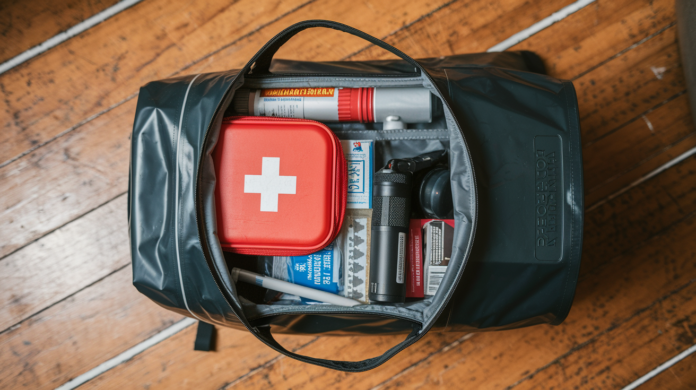

When floodwater reaches your front door, you’ll have maybe ten minutes to grab what matters and leave. Most families waste half that time running around looking for their phone charger, medications, and important papers scattered across three rooms. A packed go bag eliminates that chaos. It turns panic into action because everything you need to survive the first 72 hours is already together, waterproof, and ready to grab. This checklist covers exactly what to pack, how to store it so it stays dry, and where to keep your bag so you can reach it in under two minutes, even in the dark.
Essential Items for Your Flood Evacuation Bag
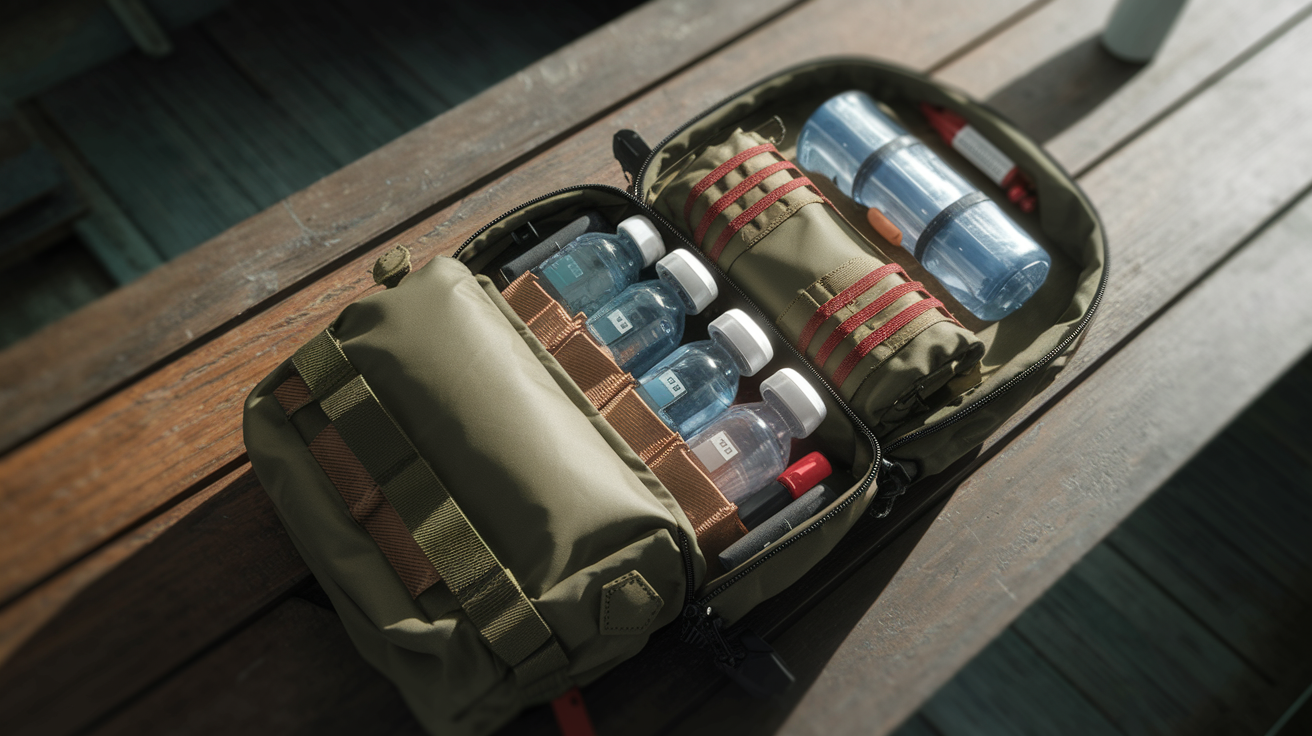
FEMA recommends emergency kits that can sustain families for at least 72 hours. Flooding can cut you off from emergency services, grocery stores, pharmacies, and medical care for days or weeks. Unlike other disasters where you might shelter in place, floods often force families to evacuate immediately. Sometimes you’ve got just minutes to grab supplies and leave. When water rises fast, the supplies in your go bag become your only resources.
Waterproof storage matters more for flood kits than any other disaster preparation. Regular backpacks or duffel bags won’t protect your supplies when you’re wading through knee-deep water or your bag gets tossed in the back of a rescue boat. Store everything in waterproof containers or bags. Keep the entire kit somewhere you can reach in under two minutes, even in the dark.
Water and Food
- Bottled water (1 gallon per person minimum)
- Water purification tablets
- Protein bars and granola bars
- Canned tuna, chicken, or other meats
- Peanut butter
- Manual can opener
Documents and Cash
- Driver’s license and passport copies
- Birth certificates
- Insurance policies
- Property deeds
- Medical records
- Small bills and coins ($200+ recommended)
First Aid and Medications
- Seven day supply of prescription medications
- Bandages and antiseptic wipes
- Pain relievers
- Hand sanitizer
- Feminine hygiene products
- Prescription glasses or contacts
Tools and Equipment
- Multi-tool or pocketknife
- Duct tape
- Waterproof matches
- Flashlight with extra batteries
- Whistle
- Work gloves
Clothing and Protection
- Waterproof boots
- Rain poncho
- Change of clothes in waterproof bag
- Emergency blanket
- Sleeping bag
- Sturdy closed-toe shoes
Communication Devices
- Battery-powered or hand-crank radio
- NOAA weather radio
- Fully charged portable phone charger
- Extra batteries (multiple sizes)
- Written list of emergency contacts
Water and Food Supplies for Your Go Bag
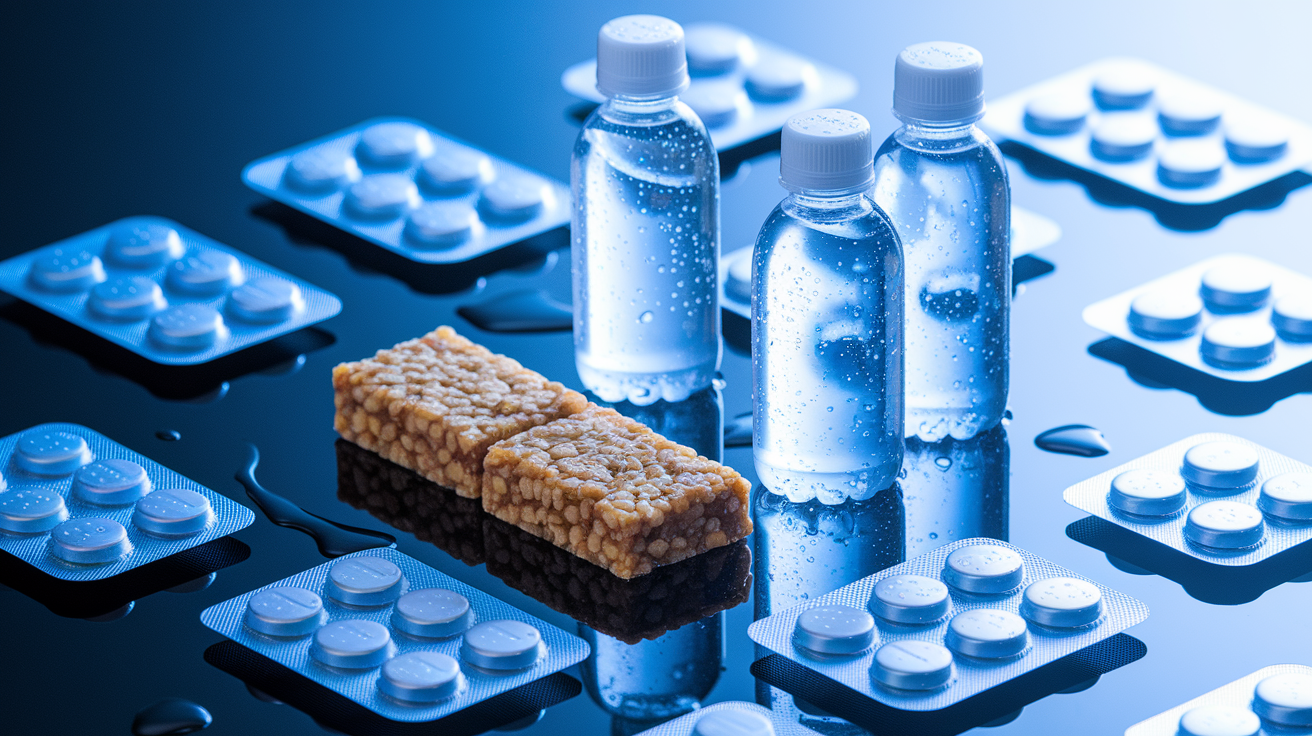
Store a minimum of one gallon of water per person per day, but for a go bag you need to balance weight with necessity. Three gallons per person creates a realistic carry weight for most adults while providing three days of drinking water. Use food-grade plastic containers like clean one-liter and two-liter club soda bottles, which seal properly and resist cracking.
Don’t use empty milk, fruit juice, or soda containers. The lids don’t seal well and bacteria grows from residue that’s nearly impossible to remove completely. Regular tap water stored in proper containers needs replacement every six months. If you’re using commercially bottled water without an expiration date, replace it at least once per year.
Non-perishable food that requires no cooking works best. Power outages eliminate stoves and microwaves, and you might end up in a shelter or car without cooking equipment. Pack canned and dried fruit, granola bars, energy bars, peanut butter, low-salt crackers, canned meats like tuna, chicken, spam, salmon, and Vienna sausage. Most canned foods stay safe for at least 18 months. Low-acid canned foods like meat products last at least two years. Dry products like crackers and dried fruit should be used within six months because they lose texture and nutrition faster.
Choose low-sodium options when possible. Salty foods increase thirst, and you’re trying to conserve your limited water supply.
Include water purification tablets as backup in case you run out of stored water and need to treat questionable water sources. A manual can opener is non-negotiable. Electric can openers are useless without power, and assuming you’ll remember to grab one during a frantic evacuation is a mistake people make once.
Critical Documents and Financial Resources to Pack

Documents become irreplaceable during floods because government offices, banks, and insurance companies may be closed for weeks while they deal with their own flood damage and staff evacuations. Replacing a driver’s license sounds simple until the DMV is underwater and operating on emergency protocols with two-month wait times.
| Document Type | Why You Need It | Copies Needed |
|---|---|---|
| Driver’s license, passport, state ID | Proves identity for shelter check-in, insurance claims, and temporary housing applications | 2 copies plus original |
| Insurance policies (home, flood, auto) | Required to file claims and prove coverage amounts | 2 copies plus policy numbers |
| Medical records and prescriptions | Allows doctors to continue treatment if your regular provider is inaccessible | 2 copies of recent records |
| Property deed or lease | Proves home ownership or residence for disaster assistance applications | 2 copies |
| Bank account information | Enables emergency fund access and direct deposit setup for assistance payments | Account numbers and routing numbers for all accounts |
| Emergency contacts list | Provides phone numbers if your phone dies and you can’t access stored contacts | Laminated paper copy plus digital backup |
| Evacuation maps and shelter locations | Shows routes to safety when GPS fails or cell service is down | 1 paper map per family vehicle |
| Family photos | Helps identify children if separated and provides proof of family relationships | Recent photos of each family member |
Pack small bills and coins because ATMs won’t work during power outages and stores that remain open often can’t process credit cards or make change for large bills. Two hundred dollars in mixed bills (mostly fives, tens, and twenties) plus twenty dollars in quarters handles most immediate needs like gas, food, and shelter deposits.
Store all documents in double-sealed plastic bags or waterproof document pouches, the kind designed for kayaking or sailing. A single zip-top bag will leak eventually. Two bags, one inside the other, provide redundant protection. Keep digital backups on a USB drive stored in the same waterproof pouch, and upload copies to cloud storage so you can access them from any device once you reach safety and regain internet access.
First Aid and Medical Essentials for Flood Safety
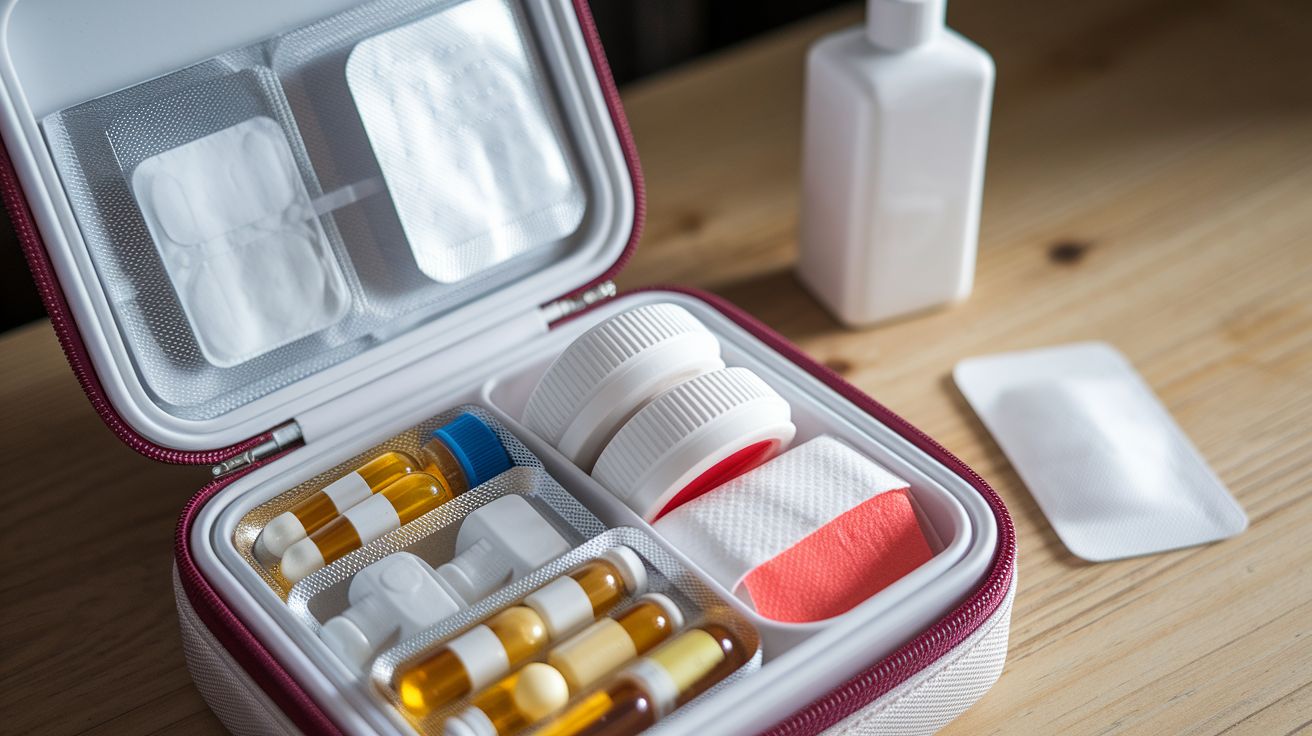
Include a seven day supply of prescription medications in waterproof pill bottles with clear labels showing dosage instructions. Seven days covers the initial evacuation period plus delays in reaching pharmacies that might be closed, damaged, or overwhelmed. Keep all medications in one dedicated waterproof bag so you can grab them in seconds. Refill prescriptions before you run low instead of waiting until the last pill, especially during flood season.
Basic first aid supplies treat injuries during evacuation like cuts from debris, burns from emergency cooking, and sprains from navigating damaged terrain. Pack bandages in multiple sizes, antiseptic wipes, antibiotic ointment, pain relievers like ibuprofen or acetaminophen, adhesive tape, gauze pads, and tweezers for removing splinters or debris. Include a small tube of antibiotic ointment specifically because floodwater contamination turns minor cuts into serious infections quickly.
Personal hygiene items prevent illness in emergency shelters where you’re living in close quarters with hundreds of stressed people and limited sanitation facilities. Hand sanitizer becomes critical when clean water access is limited and you can’t wash your hands properly before eating. Soap, wet wipes, toothbrush, toothpaste, deodorant, and feminine hygiene products maintain basic cleanliness and dignity during extended evacuations when showers are rare and laundry facilities are nonexistent.
Special medical needs require planning beyond the standard kit. Pack extra batteries for hearing aids, wheelchair power supplies, portable oxygen equipment, diabetic testing supplies with extra lancets and test strips, and any adaptive devices needed for independence. Replacement equipment becomes impossible to obtain during widespread flooding because medical supply companies can’t deliver and durable medical equipment providers evacuate just like everyone else.
Communication and Lighting Equipment for Emergency Situations
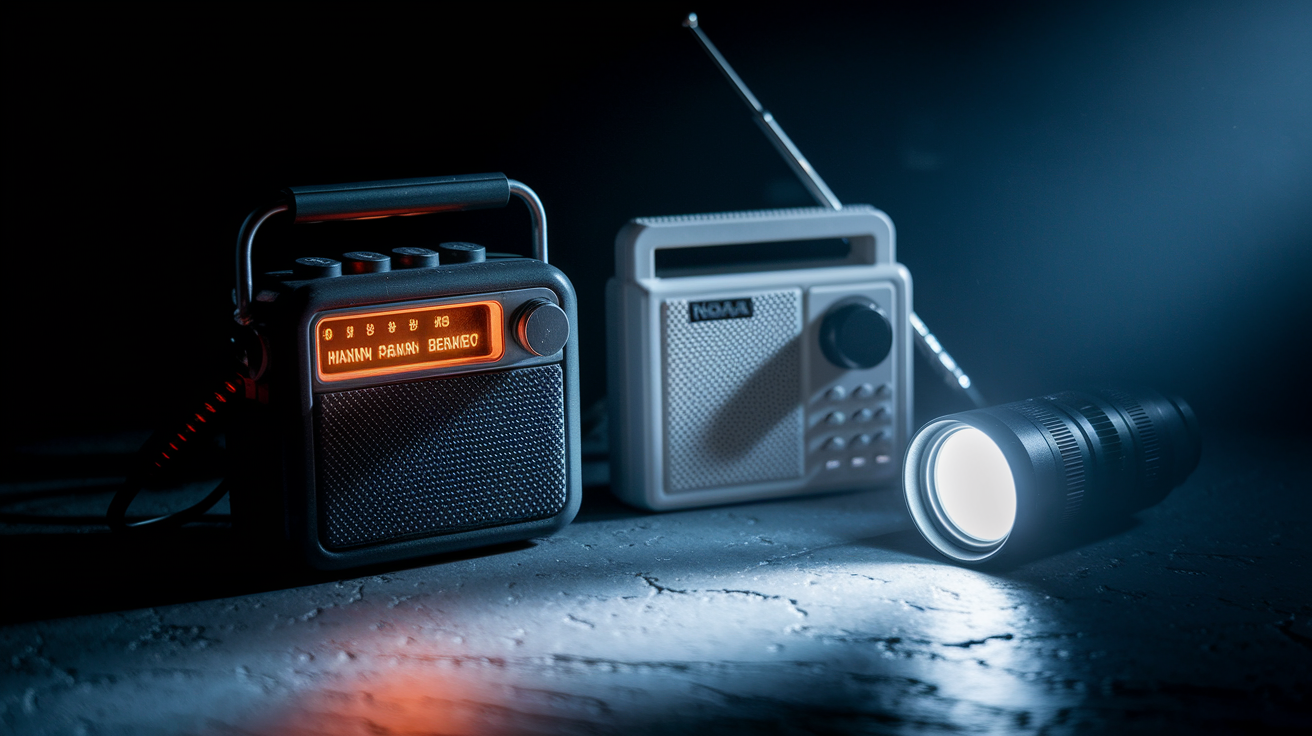
Communication devices keep you informed and connected when electricity and cell towers fail, which happens in most serious floods. Power lines go down. Cell towers lose backup generator fuel. Internet infrastructure floods. You might spend days with no reliable way to get information about road closures, rescue operations, shelter locations, or when it’s safe to return home. Battery-powered or hand-crank radios receive emergency broadcasts even when everything else fails, and NOAA weather radios provide real-time updates about flood conditions, river levels, and evacuation orders from the National Weather Service.
Lighting matters for nighttime evacuation and shelter situations because navigating floodwaters in darkness is dangerous and often deadly. You can’t see submerged obstacles, washed-out road sections, or contaminated water spreading across familiar streets. Pack at least two flashlights per person so you have backup when one fails or gets lost during a chaotic evacuation.
Battery-powered or hand-crank radio. Receives AM/FM emergency broadcasts. Hand-crank models work indefinitely without batteries. Keep it in your go bag, not plugged in somewhere you might forget.
NOAA weather radio with SAME technology. Alerts you to flood watches and warnings for your specific county. Battery-powered models with tone alerts wake you if flooding starts at night.
Portable phone charger with multiple full charges. A 20,000 mAh power bank charges most phones four to five times. Your phone becomes useless when the battery dies, cutting off your contact with emergency services and family.
LED flashlight with extra batteries. Pack two flashlights minimum plus a full set of replacement batteries stored separately. LED bulbs last longer and drain batteries slower than traditional bulbs.
Whistle. Signals rescuers if you’re trapped and can’t yell loud enough to be heard over rushing water or helicopter noise. A whistle carries farther than your voice and doesn’t make you hoarse after repeated use.
Protective Clothing and Shelter Items for Flood Conditions
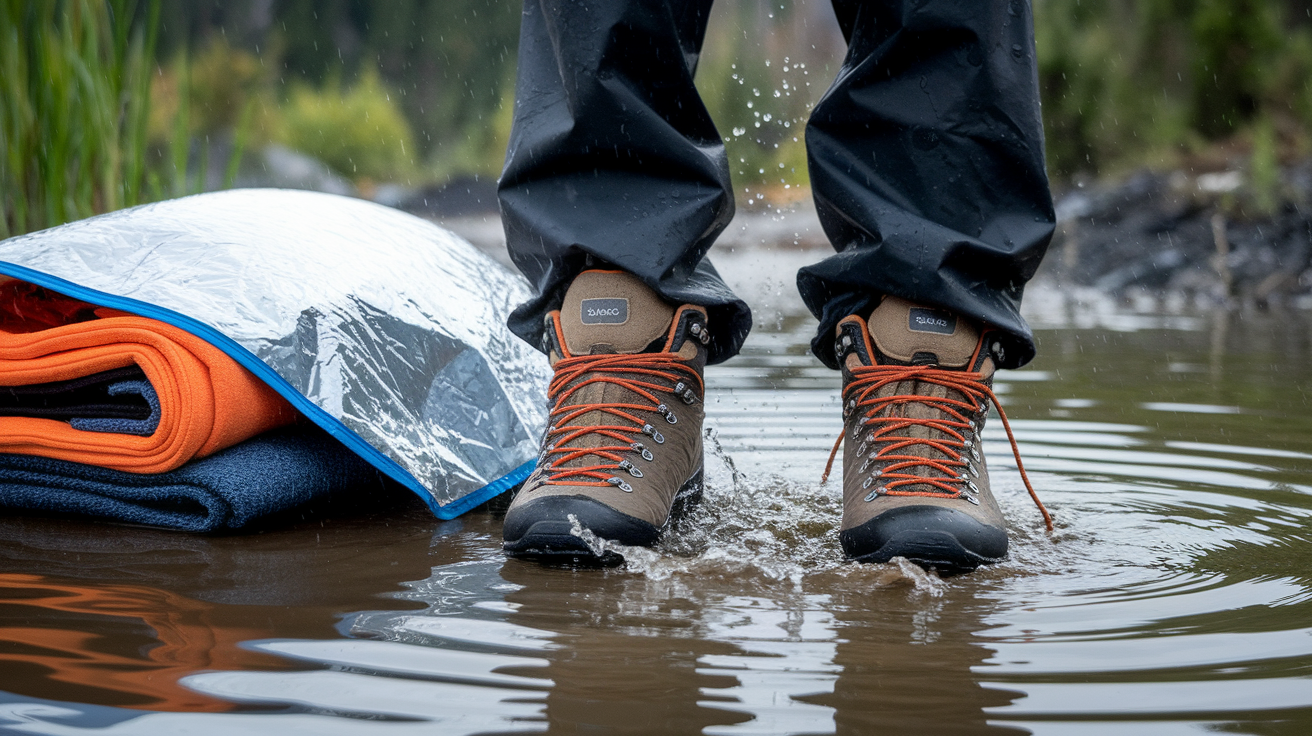
Waterproof and insulated clothing protects against hypothermia even in warm climates because staying wet for hours drops your body temperature dangerously. Six inches of moving floodwater can knock you off your feet, soaking you completely in contaminated water mixed with sewage, chemicals, and debris. Once you’re wet, wind chill accelerates heat loss. You can develop hypothermia in 60 degree weather if you can’t get dry and warm.
Sturdy waterproof boots protect your feet from contaminated water, hidden debris, sharp metal, broken glass, and submerged hazards you can’t see under murky floodwater. Regular sneakers or sandals soak through in seconds and provide zero protection from puncture wounds or chemical exposure. Leather work boots with waterproof treatment and thick soles keep your feet dry and protected during wading, walking through damaged areas, and spending hours in wet shelters with concrete floors.
Pack thick socks made from synthetic materials or wool. Cotton socks stay wet, cause blisters, and never dry in humid post-flood conditions.
Emergency shelter items include sleeping bags rated for nighttime temperatures in your region, emergency blankets that reflect body heat, rain ponchos that cover you and your backpack, and extra clothing layers. Pack complete outfit changes in separate waterproof bags, one set per person, including underwear, socks, long pants, long-sleeved shirt, and a warm layer like a fleece or synthetic jacket.
Avoid cotton clothing that holds moisture and takes forever to dry. Choose synthetic materials like polyester or nylon that dry quickly and retain some warmth when wet. Merino wool works well too if you can afford it.
Tools and Multi-Purpose Equipment for Your Flood Kit
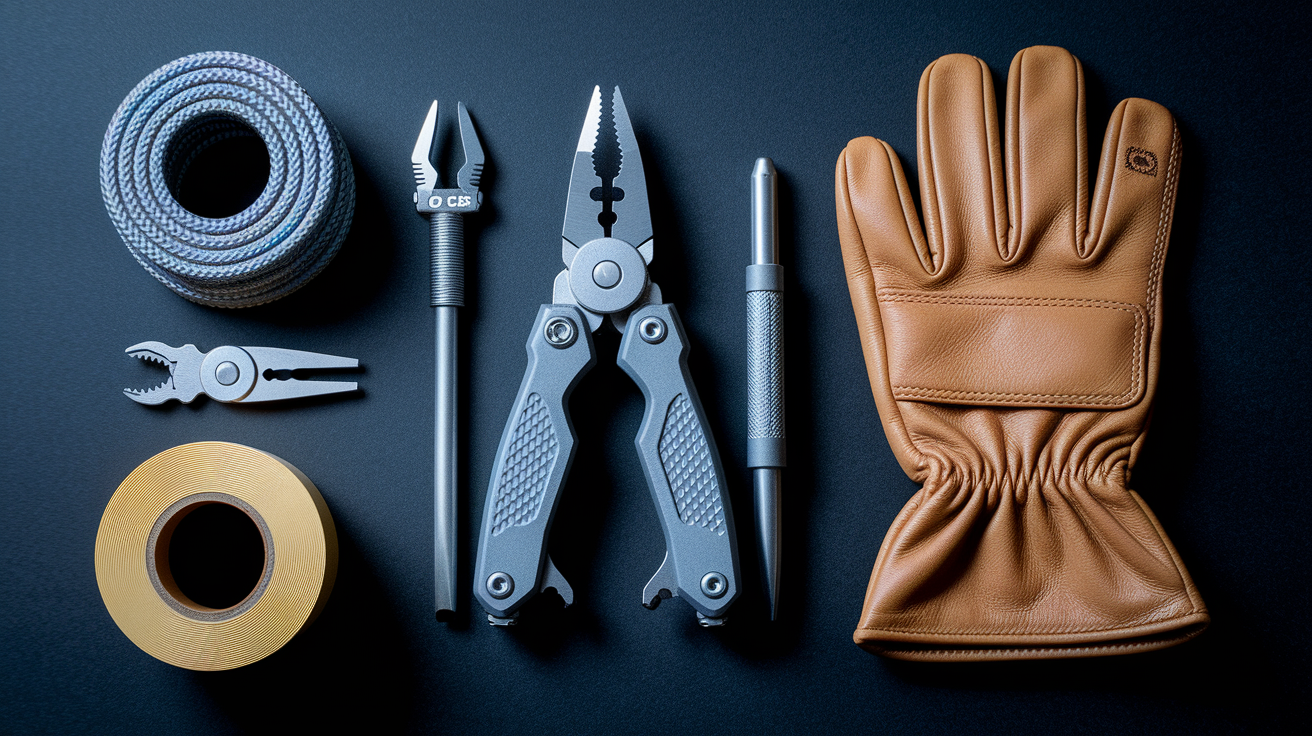
Multi-purpose tools reduce bag weight while maximizing capability, especially when you’re evacuating on foot or carrying supplies long distances to reach high ground. A five pound toolbox won’t make the cut when you’re trying to move fast, but a well-chosen multi-tool handles dozens of tasks.
Multi-tool or Swiss Army knife. Cuts rope, opens packages, tightens loose screws on equipment, and handles small repairs without carrying a full toolbox. Get one with pliers, knife blade, screwdrivers, and scissors.
Duct tape. Repairs torn clothing, patches holes in tarps, seals waterproof bags that leak, creates bandages in first aid emergencies, marks evacuation routes, and fixes broken equipment temporarily. A partial roll saves space.
Rope (50 feet of paracord). Secures tarps for emergency shelter, creates clotheslines for drying wet items, ties down loose supplies, and functions as emergency rescue line if someone falls. Paracord is lightweight and incredibly strong.
Work gloves. Protects hands from cuts, splinters, chemical exposure, and sharp debris when moving damaged furniture, clearing obstacles, or setting up emergency shelter. Leather or heavy-duty synthetic gloves with grip texture work best.
Waterproof matches or lighter. Starts emergency fires for warmth, boiling water, or signaling rescuers. Store matches in waterproof container and pack a backup lighter in separate location.
Whistle. Signals for help when trapped or separated, cuts through noise of rushing water and rescue equipment, and requires no batteries or maintenance. Attach to your go bag strap for instant access.
Plastic sheeting or compact tarp (10×10 feet). Creates emergency rain shelter, ground cover for sleeping, privacy screen in shared shelters, and waterproof covering for supplies or damaged roof sections.
Select tools that function when wet or submerged because you won’t have time to dry equipment carefully during evacuation. Stainless steel tools resist rust better than regular steel. Test your multi-tool’s ability to open and close when wet before packing it away and forgetting about it for six months.
Special Needs Supplies for Babies, Pets, and Medical Conditions

Standard go bags must be customized for family members with special needs because their supplies can mean the difference between manageable stress and life-threatening crisis. Forgetting baby formula or critical medical equipment during evacuation creates emergencies that emergency services might not be able to solve when they’re overwhelmed with rescue operations.
Infant and Baby Supplies
Pack a seven day supply of formula in sealed, waterproof containers because wet formula is unusable and replacement might be impossible during widespread flooding. Include bottles (at least three), nipples, and bottle brush for cleaning when clean water becomes available. Disposable bottle liners work well because they reduce cleaning requirements.
Add diapers (calculate 8 to 10 per day for infants), wipes, diaper cream, baby food or pouches appropriate for your child’s age, and any medications your pediatrician prescribes. Include comfort items like a favorite blanket or small toy because familiar objects reduce stress for babies who sense their parents’ anxiety during evacuation. Store all formula and baby food in doubled waterproof bags with the expiration dates visible so you remember to rotate supplies before they spoil.
Pet Emergency Supplies
Pack a seven day supply of pet food in waterproof containers, portable water bowls, and one gallon of water per pet per day if space allows. Include a pet carrier or crate because many emergency shelters refuse to accept loose pets, and frightened animals bolt during evacuations if not secured.
Add a leash, collar with ID tags, current vaccination records in waterproof sleeve, any medications your pet takes, and recent photos showing you with your pet in case you get separated and need to prove ownership. List your pet’s medical conditions, medications, and your veterinarian’s contact information on a laminated card stored in the carrier. Include a small supply of treats to calm anxious pets during transport and shelter stays.
Mobility and Medical Equipment
Pack extra batteries for wheelchairs, scooters, hearing aids, and any battery-powered medical devices you depend on for mobility or communication. A seven day supply covers the initial evacuation period when battery suppliers are closed and deliveries are impossible. Include backup oxygen canisters if you use oxygen therapy, diabetic testing supplies with extra lancets and test strips, and any adaptive devices needed for eating, dressing, or personal care.
Replacement equipment becomes impossible to obtain during widespread flooding because medical supply companies evacuate their warehouses and delivery drivers can’t reach flooded areas. Include a written list of all medical equipment with model numbers and supplier contact information in case you need to request replacements from disaster relief organizations.
Waterproof Storage and Go Bag Container Selection

Waterproof storage is non-negotiable for flood kits, unlike other disaster types where water resistance is optional. Earthquake kits can function in regular backpacks. Wildfire kits just need fire-resistant storage location. Flood kits fail completely if water reaches the contents. Your supplies become trash when water soaks through regular fabric bags, ruining food, medications, documents, and electronics in minutes.
Container options range from wheeled coolers to backpacks, each with pros and cons based on how you’ll evacuate. Family coolers with wheels work well for vehicle evacuations where you drive to safety, offering large capacity and easy rolling across parking lots, but they’re terrible for on-foot evacuations across rough terrain or up stairs.
Heavy-duty plastic storage containers like Rubbermaid or Sterilite bins with gasket-sealed lids provide excellent water protection and stack efficiently in garages or closets, but lack portability if you need to walk distances. Waterproof duffel bags or backpacks designed for kayaking and sailing offer the best balance for most families because they’re portable, truly waterproof (not just water-resistant), and comfortable to carry for extended periods. Get bags with padded straps and hip belts if you might need to walk more than a few blocks.
Organization strategies include using smaller waterproof bags within your main container to categorize supplies and create layers of water protection. Store documents and electronics in gallon-size zip-top bags inside waterproof document pouches. Pack medications in waterproof pill bottles inside a larger waterproof stuff sack. Use different colored dry bags for different categories so you can locate items quickly without unpacking everything.
This layered approach means that even if your outer container fails, your critical items have backup protection against water damage.
Storage Location and Accessibility Planning for Rapid Evacuation

Store your emergency kit in a waterproof bag or container near an exit route, above ground level, in a location every family member knows. Basements are the worst possible storage location for flood kits because they flood first, trapping your supplies underwater exactly when you need them. Upstairs closets near exterior doors work better than garages that might flood before you evacuate. Attached garages offer faster access than detached garages if you’re doing a rapid vehicle evacuation, but don’t store kits in spaces that flood frequently during heavy rain.
Three evacuation timeframe scenarios determine what you can realistically grab and how your kit should be organized. One day notice floods like slowly rising rivers give you time to load vehicles carefully, grab everything from your checklist, and pack additional comfort items beyond the basic kit. Couple hours notice situations like tropical storm flooding give you time to grab your pre-packed go bag, verify contents quickly, and load family members before roads become impassable.
Five minutes notice flash floods give you time to grab one bag per person and run, which is why your kit needs to be complete, accessible, and ready to go without thinking. Flash flood situations happen with terrifying speed in areas near streams, in low-lying areas, and during sudden severe thunderstorms that drop inches of rain in under an hour.
The difference between shelter-in-place supplies and true go bags affects what you pack and where you store it. Shelter-in-place kits contain larger quantities of water, food, and supplies designed to keep you safe at home for days or weeks when you can’t leave. Go bags prioritize portability and essential survival items you can carry. Some items serve dual purposes like first aid supplies, batteries, and tools.
Pack a three day water supply in your shelter-in-place kit but only one day supply in your go bag to reduce carry weight. Store these kits in separate locations because grabbing the wrong one during evacuation wastes time and leaves you without critical supplies. Keep shelter-in-place supplies in a closet and go bags near exits so you automatically grab the right kit.
Maintenance Schedule and Kit Updates for Flood Preparedness
Regular maintenance keeps flood go bags ready without becoming burdensome, and the consequences of expired supplies during actual emergencies can be severe. Families have discovered unusable water with strange tastes, medications expired by two years, and corroded batteries that leaked acid through supply bags, all because they packed once and never checked again until disaster struck.
| Item Category | Check Frequency | Replacement Timeline |
|---|---|---|
| Water (stored tap water) | Every 6 months | Replace every 6 months with fresh water |
| Food (canned goods, bars) | Every 6 months | Canned goods 18 to 24 months, dry goods 6 months |
| Medications (prescription and OTC) | Every 3 months | Before expiration date, maintain 7 day supply |
| Batteries | Every 6 months | Replace annually or when corroded |
| Documents (ID, insurance, records) | Every 6 months | When information changes or documents update |
| Clothing and seasonal items | Twice per year (spring and fall) | When kids outgrow sizes or seasons change |
Conduct family drills where everyone practices grabbing their go bags, loading vehicles, and evacuating to predetermined meeting locations. Rotate perishable food items into regular household use before expiration to minimize waste, then replace them immediately instead of waiting until your next scheduled check. Set calendar reminders on your phone for maintenance checks tied to specific dates like when you change smoke detector batteries or do spring cleaning.
Document kit contents with a laminated checklist kept inside each bag so family members can quickly verify completeness before evacuation instead of wondering what’s missing while floodwater rises outside.
Family Emergency Planning and Go Bag Coordination
Individual go bags should exist for each family member with age-appropriate supplies and responsibilities because separation during floods happens more often than families expect. Kids get picked up from school by neighbors during rapid-onset flooding. Parents get stuck at workplaces across town when roads flood. If family members are separated when disaster strikes, each person needs their own survival supplies, emergency contacts, and basic plan for reunification.
Establish emergency contact protocols including an out-of-region coordinator who relays information when local communications fail. Choose someone who lives at least 100 miles away, outside your flood zone, who can receive calls from scattered family members and pass messages when direct communication fails. Local phone networks become overloaded during disasters when everyone tries to call loved ones simultaneously, but long-distance calls to other regions often go through normally. Give everyone this contact person’s phone number in written form, not just stored in phones that might die or get damaged.
Evacuation route planning needs primary and alternate routes to higher ground from home, workplaces, and schools because flooding blocks roads quickly and your first choice might become impassable. Drive your evacuation routes during non-emergency times so you know exactly where they lead, how long they take, and where alternate routes branch off if needed. Mark them on paper maps stored in each go bag because GPS fails when cell service goes down and phone batteries die. Identify multiple potential shelter locations including friends or family outside the flood zone, hotels on higher ground, and official emergency shelters as last resort.
Practice drills where families physically retrieve and open their go bags during practice to identify missing items or access problems before real emergencies occur. Assign each family member responsibility for grabbing specific bags or helping specific people (adults help elderly relatives, older kids help younger siblings). Time yourselves to verify you can get everyone and everything to vehicles in under five minutes for flash flood scenarios.
Ninety percent of Americans lack prepared emergency bags, which means most people are making critical decisions during the panic and chaos of actual flooding rather than following practiced plans that keep them safe.
Final Words
Your flood go bag checklist is only as good as the action you take right now.
Pick one category today. Water containers. Documents in zip bags. Flashlight with batteries. Get that done before dinner.
Then tomorrow, add three more items. By the end of the week, you’ll have a working kit while most neighbors still have good intentions and empty backpacks.
Store it where you can grab it in the dark. Tell everyone in your house where it lives. Check it twice a year so expired food and dead batteries don’t become your emergency.
Floods don’t wait for perfect preparation. But a mostly ready bag beats no bag every single time.
FAQ
Q: What are 10 items in an emergency kit for flood?
A: A flood emergency kit should include one gallon of water per person per day, non-perishable food for three days, battery-powered radio, flashlight with extra batteries, first aid supplies, prescription medications, important documents in waterproof bags, cash in small bills, complete change of clothes, and portable phone charger.
Q: What are 10 items in an emergency go bag?
A: An emergency go bag should contain water, ready-to-eat food, first aid kit, flashlight, extra batteries, copies of identification and insurance papers, prescription medications, clean clothing, sturdy shoes, and portable phone charger. Store everything in a waterproof backpack or container near your exit.
Q: Who is eligible for free survival kits?
A: Eligibility for free survival kits varies by location and typically includes low-income households, seniors, people with disabilities, and families in high-risk flood zones. Contact your local emergency management office, Red Cross chapter, or FEMA community preparedness programs to check available assistance in your area.
Q: What should I take for 15 minutes to evacuate?
A: For a 15-minute evacuation, grab your pre-packed go bag, medications, phone and charger, wallet with ID and cash, important documents, keys, and pet supplies if applicable. Wear sturdy shoes and keep one hand free. Don’t waste time searching for non-essential items when floodwater is rising.
Q: How much water should I store in my flood go bag?
A: Store a minimum of one gallon of water per person per day for at least five days in your flood go bag. Use food-grade plastic containers like clean soda bottles. Replace stored tap water every six months to keep it fresh and safe to drink.
Q: What foods last longest in a flood emergency kit?
A: Low-acid canned foods like meat, beans, and vegetables last at least two years in a flood kit. Other long-lasting options include canned fruit (18 months), peanut butter, granola bars, and energy bars. Include a manual can opener since power may be out for days.
Q: Why can’t I use milk jugs to store emergency water?
A: Milk jugs are unsuitable for water storage because their lids don’t seal properly and bacteria grows from milk residue that’s impossible to fully remove. Instead, use clean soda bottles or food-grade water containers that seal tightly and resist bacterial growth for safe long-term storage.
Q: What documents do I need in a waterproof bag for floods?
A: Pack copies of identification (driver’s license, passport, birth certificates), insurance policies, medical records, property deeds, bank account information, emergency contacts, and family photos in waterproof bags. Include evacuation maps and keep digital backups on USB drives as redundant protection when government offices close.
Q: How much cash should I pack for flood evacuation?
A: Pack small bills and coins totaling at least several hundred dollars for a flood evacuation since ATMs may not work during power outages. Small denominations help when stores have limited change or when you need to purchase supplies from individuals during emergencies.
Q: How many days of medication should I pack for floods?
A: Pack a seven-day supply of all prescription medications in waterproof containers for flood evacuation. Keep medications current and store them in one accessible place so you can grab them quickly. Refill prescriptions before they run out so you always have enough for emergencies.
Q: What first aid supplies prevent infection in floodwater?
A: Pack antiseptic wipes, antibiotic ointment, bandages, and hand sanitizer to prevent infections from contaminated floodwater. Include soap and wet wipes since clean water access becomes limited during floods. Floodwater carries bacteria and sewage that increase infection risks from even minor cuts.
Q: Why do I need a battery-powered radio during floods?
A: A battery-powered or hand-crank radio provides emergency updates when electricity and cell towers fail during floods. NOAA Weather Radio delivers real-time flood conditions and rescue operation information that can be life-saving when you’re isolated from emergency services for days or weeks.
Q: How long should my portable phone charger last?
A: Your portable phone charger should provide multiple full charges for your phone during flood evacuation. Keep it fully charged and check it monthly. Power may be out for days or weeks during floods, so pack backup batteries or a hand-crank charging option for extended outages.
Q: What type of flashlight works best in flood conditions?
A: Battery-powered LED flashlights with waterproof ratings work best in flood conditions. Pack extra batteries and consider a backup hand-crank flashlight that doesn’t require batteries. Avoid candles or fuel-powered lights since gas leaks and floodwater create fire and explosion hazards during evacuations.
Q: Why avoid cotton clothing in flood go bags?
A: Avoid cotton clothing in flood go bags because it stays wet, loses insulation value, and increases hypothermia risk. Pack synthetic materials that dry quickly and retain warmth when wet. Include complete outfit changes in waterproof bags since six inches of moving floodwater can knock people down.
Q: What boots protect against contaminated floodwater?
A: Sturdy waterproof boots with good tread protect against contaminated floodwater, hidden debris, and sharp objects submerged underwater. Boots should cover ankles and resist punctures. Floodwater contains sewage and chemicals, so proper footwear prevents infections and injuries during evacuation or cleanup.
Q: How warm should emergency blankets be for floods?
A: Emergency blankets and sleeping bags should be rated for temperatures at least 10 degrees below your area’s coldest expected temperature during flood season. Hypothermia occurs even in warmer climates when you’re soaked. Pack emergency space blankets as backup since they’re lightweight and retain body heat.
Q: What can I do with duct tape during flood evacuation?
A: Duct tape serves multiple flood emergency functions including sealing waterproof bags, emergency clothing repairs, creating temporary shelters with plastic sheeting, marking evacuation routes, and securing loose items. It works when wet and sticks to most surfaces, making it essential for quick repairs during evacuations.
Q: Why pack a whistle in my flood kit?
A: A whistle signals rescuers when you’re trapped or need help during floods without exhausting your voice. Sound travels farther than shouting, especially over rushing water and rescue equipment noise. Keep it attached to your go bag so it’s always within reach during evacuations.
Q: What tools should work when wet or submerged?
A: Multi-tools, waterproof matches, rope, and work gloves should all function when wet or submerged during flood emergencies. Choose stainless steel tools that resist rust and test waterproof matches before packing. Avoid tools with electronic components unless they’re specifically rated waterproof for flood conditions.
Q: How much pet food do I need in a flood go bag?
A: Pack a seven-day supply of pet food in waterproof containers for your flood go bag. Include bottled water for pets, since contaminated floodwater causes illness. Add vaccination records and recent photos in case you’re separated. Many emergency shelters won’t accept pets without proper carriers and documentation.
Q: What baby supplies are critical for flood evacuation?
A: Critical baby supplies for flood evacuation include a seven-day formula supply, bottles, diapers, wipes, baby food, medications, and comfort items. Pack everything in waterproof bags since wet diapers and formula become unusable. Replacement baby supplies may be impossible to obtain during widespread flooding.
Q: What medical equipment needs backup batteries for floods?
A: Wheelchairs, hearing aids, oxygen equipment, and other mobility or medical devices need backup batteries during floods when electricity may be out for weeks. Pack at least a seven-day battery supply in waterproof containers. Replacement medical equipment is impossible to obtain during widespread flooding and evacuations.
Q: Why use a wheeled cooler for flood kit storage?
A: Wheeled coolers work well for flood kits because they’re naturally waterproof, easy to move quickly during evacuation, and hold substantial supplies for families. They provide better water protection than backpacks while remaining portable. Choose options with sturdy wheels that handle rough terrain or debris-covered ground.
Q: Should I keep my flood go bag in the basement?
A: Never store your flood go bag in the basement because basements flood first and trap supplies underwater during rising water. Store bags near exits on upper floors or main level where all family members can access them quickly. Floods can rise in minutes during flash flood situations.
Q: How do I organize supplies inside a waterproof container?
A: Organize supplies inside waterproof containers by using smaller waterproof bags to categorize items like documents, electronics, medications, and food. This creates layers of water protection for critical items. Label each bag clearly so family members can quickly find supplies during high-stress evacuations without unpacking everything.
Q: What’s the difference between shelter-in-place and go bag supplies?
A: Shelter-in-place supplies stay at home for extended emergencies while go bags contain portable essentials for evacuation. Some items like water and food can serve both purposes if quickly transferable, but documents, medications, and clothing should stay dedicated to your evacuation bag for grab-and-go access during floods.
Q: How often should I replace water in my flood kit?
A: Replace stored tap water in your flood kit at least every six months to keep it fresh. If you use commercially bottled water without expiration dates, replace bottles at least once per year. Set calendar reminders so water stays safe to drink when you need it during emergencies.
Q: When should I update medications in my go bag?
A: Update medications in your go bag every time you refill prescriptions so you always maintain a current seven-day supply. Check medications monthly and replace any that are expired or within three months of expiration. Keep all medications in one accessible place for quick evacuation access.
Q: How do I remember to check my flood kit regularly?
A: Set calendar reminders every six months to check your flood kit for expired water, food, medications, and dead batteries. Schedule maintenance during daylight saving time changes as an easy-to-remember pattern. Rotate perishable items into regular household use to minimize waste while keeping supplies fresh.
Q: Why should each family member have their own go bag?
A: Each family member should have their own go bag with age-appropriate supplies and responsibilities so everyone has survival supplies if you’re separated during floods. Individual bags ensure children know their own supplies, adults can evacuate independently if needed, and the family isn’t dependent on a single bag.
Q: Who should be my out-of-region emergency contact?
A: Your out-of-region emergency contact should be a trusted family member or friend living at least 100 miles away who can relay information when local phone networks fail. Local communications often become overloaded during disasters, but long-distance calls may still work for coordinating separated family members.
Q: How often should I practice flood evacuation drills?
A: Practice flood evacuation drills at least twice per year with your family. Physically retrieve and open your go bags during practice to identify missing items or access problems before real emergencies occur. Time how long evacuation takes and adjust your plan based on what you discover.