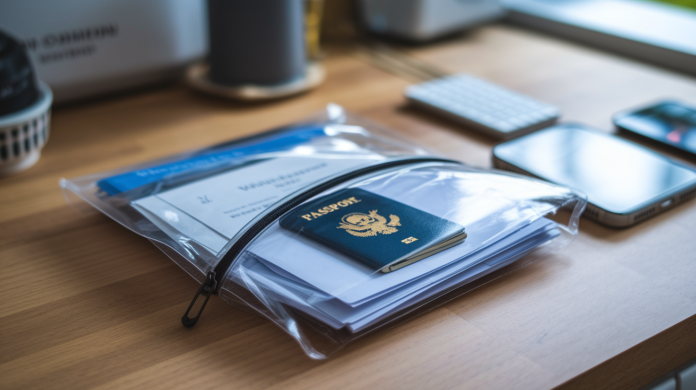

You know what gets forgotten when floods force you to leave in 15 minutes? The paperwork that proves you exist. Without the right documents, you’ll wait weeks for FEMA payments while your neighbor with organized files gets approved in days. Your insurance claim stalls because you can’t remember your policy number. The shelter won’t take your dog without proof of rabies shots. This checklist shows you exactly which papers to pack now, before disaster hits and it’s too late to dig through your filing cabinet.
Complete Document Checklist for Emergency Go Bags
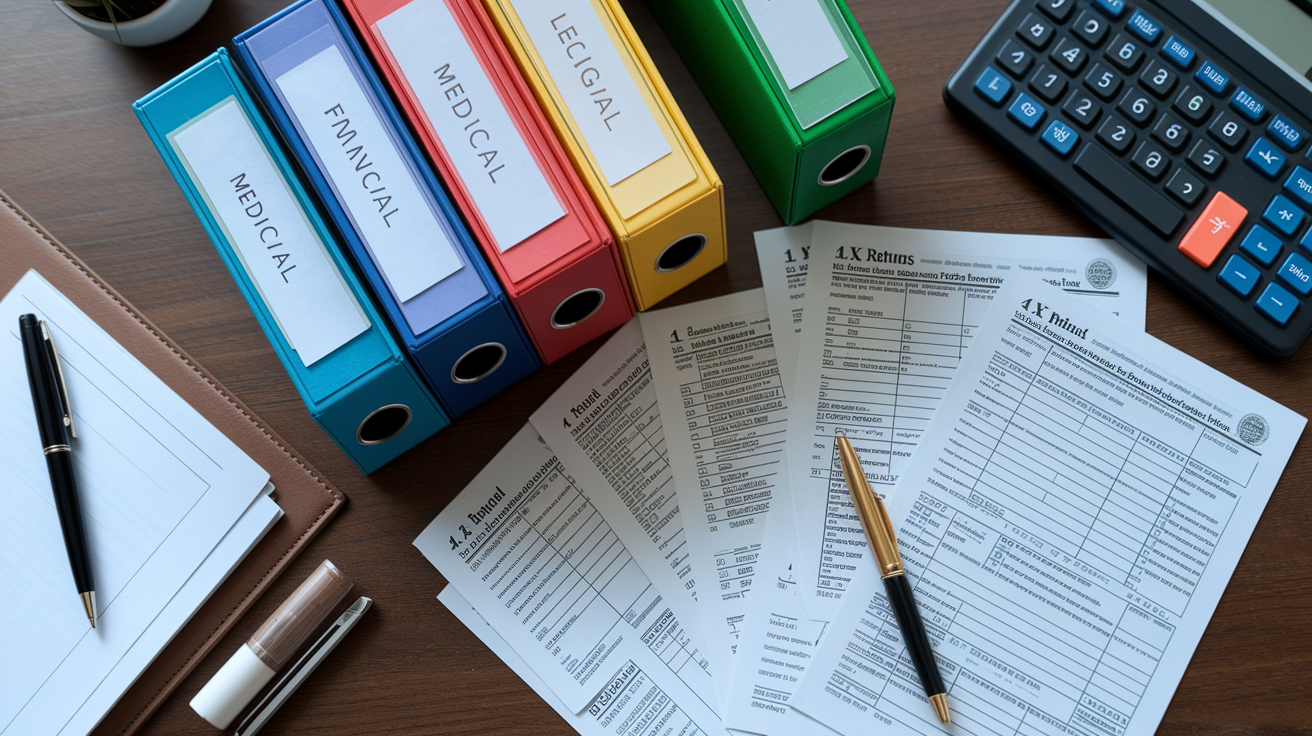
Having the right documents in your go bag means the difference between waiting weeks for disaster relief and getting help within days. FEMA needs proof of residence, income verification, and bank routing numbers for direct deposits. Your insurance company can’t process claims without policy numbers and property documentation. Tax returns verify your income level for aid programs, and recent pay stubs confirm employment status. These papers work together as a system that rebuilds your financial life after displacement.
| Document Category | Specific Items to Include |
|---|---|
| Identification and Vital Records | Passports, driver’s licenses, Social Security cards, birth certificates, marriage or divorce certificates, adoption papers, child custody agreements, green cards, military ID |
| Property Documents | Mortgage papers, property deed, rental lease agreement, property tax records, homeowners or renters insurance, flood insurance policies, home appraisals, photos of each room, valuable item lists with serial numbers |
| Vehicle Documents | Vehicle title if owned, loan or lease papers, VIN number, registration copy, auto insurance policy, vehicle tax receipts |
| Insurance Policies | Homeowners or renters insurance, flood insurance, auto insurance, health insurance cards, dental and vision insurance, life insurance policy copies, disability insurance, Medicare or Medicaid cards, VA benefits documentation |
| Banking and Investment Accounts | Bank routing numbers and account numbers for checking and savings accounts, debit card details, credit union information, investment account documentation, retirement account information (401k, IRA, pension) |
| Income and Employment Verification | Recent pay stubs from the last two months, records of government benefits, alimony or child support documentation, federal and state tax returns from previous year, self-employment income records |
| Financial Obligations and Utilities | Credit card account numbers and customer service phone numbers, student loan documentation, utility bills proving residence, alimony or child support payment records, automatic payment list (gym memberships, subscriptions) |
| Cash and Payment Cards | Small denomination cash in $1, $5, $10, and $20 bills ($200-500 recommended for 72-hour needs), backup credit or debit cards, prepaid cards |
When the power goes out, ATMs stop working and stores can’t process credit cards. You need cash in small bills because nobody can make change during disasters. Pack enough for three days of basic needs like food, water, gas, and temporary shelter. Vehicle titles and VIN numbers let you prove ownership when your car’s damaged or you need replacement registration. Utility bills and lease agreements show you lived at the disaster-affected address, which qualifies you for location-specific aid programs.
Write down your credit card account numbers and the customer service phone numbers on a separate sheet of paper. Not near the actual cards. If your wallet gets lost or stolen during evacuation, you can call immediately to freeze accounts and request replacements. Keep this list in a different section of your go bag so both items aren’t lost together.
Medical Records and Health Documentation to Pack
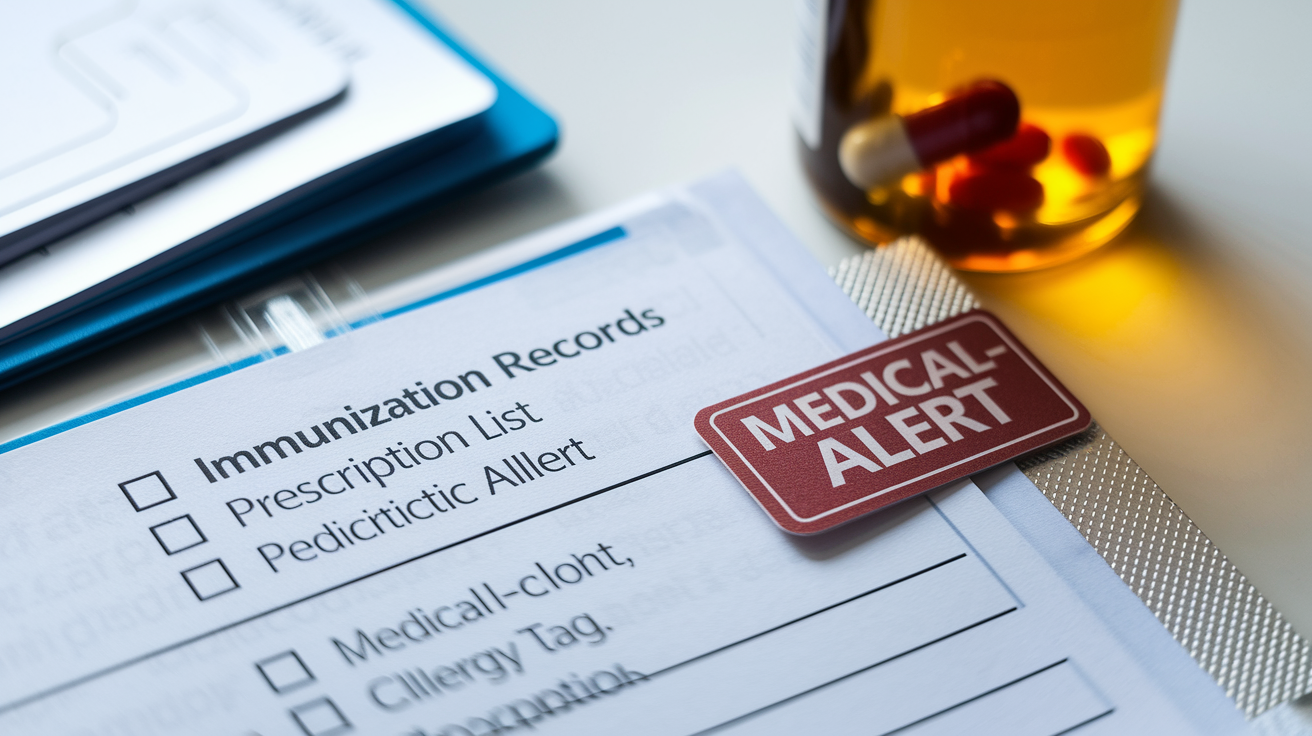
Medical documentation keeps you alive when you’re displaced from your regular doctors and pharmacies. If you take daily medications and can’t remember the exact dosage, a new doctor in an evacuation shelter can’t safely prescribe refills. Chronic conditions require continuity of care. Emergency rooms need your medication allergy information before administering treatment.
Missing immunization records means your kids can’t enroll in new schools if you relocate after a disaster. Health insurance cards enable treatment at unfamiliar hospitals and clinics without paying full uninsured rates upfront.
-
Doctor contact information with names, addresses, and phone numbers for all family members’ physicians including specialists
-
Prescription list for every family member showing medication names, dosages, frequency, and pharmacy contact details
-
Medication allergy list and other allergies like food or environmental triggers that require medical attention
-
Immunization records with dates and types for all household members, especially children
-
Health insurance cards including medical, dental, and vision coverage, plus Medicare, Medicaid, or VA benefits cards
-
Disability documentation and special medical equipment lists for family members with specific needs
-
Chronic condition management plans like diabetes protocols, asthma action plans, or seizure response instructions
-
Blood type information for each family member in case emergency transfusions become necessary
Create a medical flash drive that contains blood type, complete allergy lists, and detailed medical history for each family member. Mark this drive with a red cross symbol using permanent marker or a label. Do not password protect this specific drive. Emergency responders need immediate access if you’re unconscious or incapacitated. When paramedics find someone unresponsive, they check for medical alert information. A clearly marked flash drive gives them the details that prevent dangerous medication interactions and allergic reactions during treatment.
Emergency Contacts List and Family Communication Documents

Your phone gets dropped in floodwater, the battery dies after three days without power, or you grab your go bag but leave your phone on the kitchen counter. Written contact lists work when your digital life fails. During Hurricane Katrina, families spent weeks trying to reconnect because nobody remembered phone numbers stored in lost devices.
List every critical contact on paper. Immediate family members with their cell and work numbers, your doctors, your insurance agent with claim phone numbers, your employer and supervisor, your children’s schools, your utility companies, and your landlord or mortgage company. Add at least two out of state contacts who live far from your disaster zone. When local cell towers go down, long distance calls sometimes still connect. Your sister in another state becomes the communication hub where everyone checks in, and she relays messages between scattered family members.
Include your auto mechanic, your regular pharmacy with the exact location and phone number, your veterinarian if you have pets, and your closest neighbors. Write down the non-emergency number for your local police department and the main number for your municipality offices. Add account numbers next to utility companies so you can report outages or request service transfers if you relocate temporarily.
Format your list so you can read it fast under stress. Use large, clear handwriting or print it in at least 14-point font. Organize it by category, not alphabetically, because you think in categories during emergencies. Put family first, then medical, then financial, then services and utilities. Every family member should know where the go bag is stored so anyone can grab it during evacuations.
Estate Planning and Legal Go Bag Documents

Legal documents protect your family when you can’t speak for yourself. If you’re injured during a disaster and hospitalized, medical power of attorney papers tell doctors who makes healthcare decisions on your behalf. Without these documents, family members may battle in court over your treatment while you’re unconscious.
Wills and trust copies establish what happens to your property and who cares for your minor children if something happens to you. Living wills specify your end of life care preferences so families don’t face impossible decisions without guidance. Legal power of attorney documents authorize trusted individuals to handle your finances, sign documents, and manage your affairs when you’re incapacitated or unreachable. Keep copies of all these estate planning papers in your go bag so they’re accessible during extended displacements.
Custody agreements and guardianship designations matter critically for families with minor children. If disaster separates you from your kids temporarily, these papers prove who has legal authority to make decisions for them. Divorce decrees clarify custody arrangements and prevent disputes during chaotic evacuations. Adoption papers and court orders establish legal relationships that might be questioned when families flee across state lines. Some disasters trigger custody challenges when non-custodial parents claim emergencies override normal agreements.
Life insurance policy copies belong in your go bag with the policy numbers, beneficiary information, and the insurance company’s claim phone number clearly marked. If something happens to you during or after a disaster, your family needs this information to file claims and access financial support quickly.
Pet Records and Animal Documentation

Emergency shelters turn away pets without current rabies vaccination certificates. Many evacuation centers require proof of rabies shots dated within the last year before they allow animals inside. Hotels that waive no pet policies during disasters still ask to see vaccination records to protect other guests and their animals.
Pack copies of all veterinary records showing your pet’s vaccination history. Rabies, distemper, and any other shots your area requires. Include your veterinarian’s contact information with clinic hours and emergency after hours numbers. Write down your pet’s microchip number and the registration company’s phone number. If your pet gets loose during evacuation chaos, the microchip only works if shelters can contact the registration database to find your information.
Proof of ownership matters more than people expect. Some jurisdictions require licenses for dogs, and those license papers prove the animal belongs to you. Recent photos of your pets from multiple angles help identify them if they’re found by strangers or turned in to shelters. Medication lists showing prescriptions, dosages, and the prescribing veterinarian’s information let you get refills if you’re displaced for weeks. Special diet requirements and food allergy information prevents well meaning shelter volunteers from feeding your pet something dangerous.
Waterproof Container and Document Protection Methods
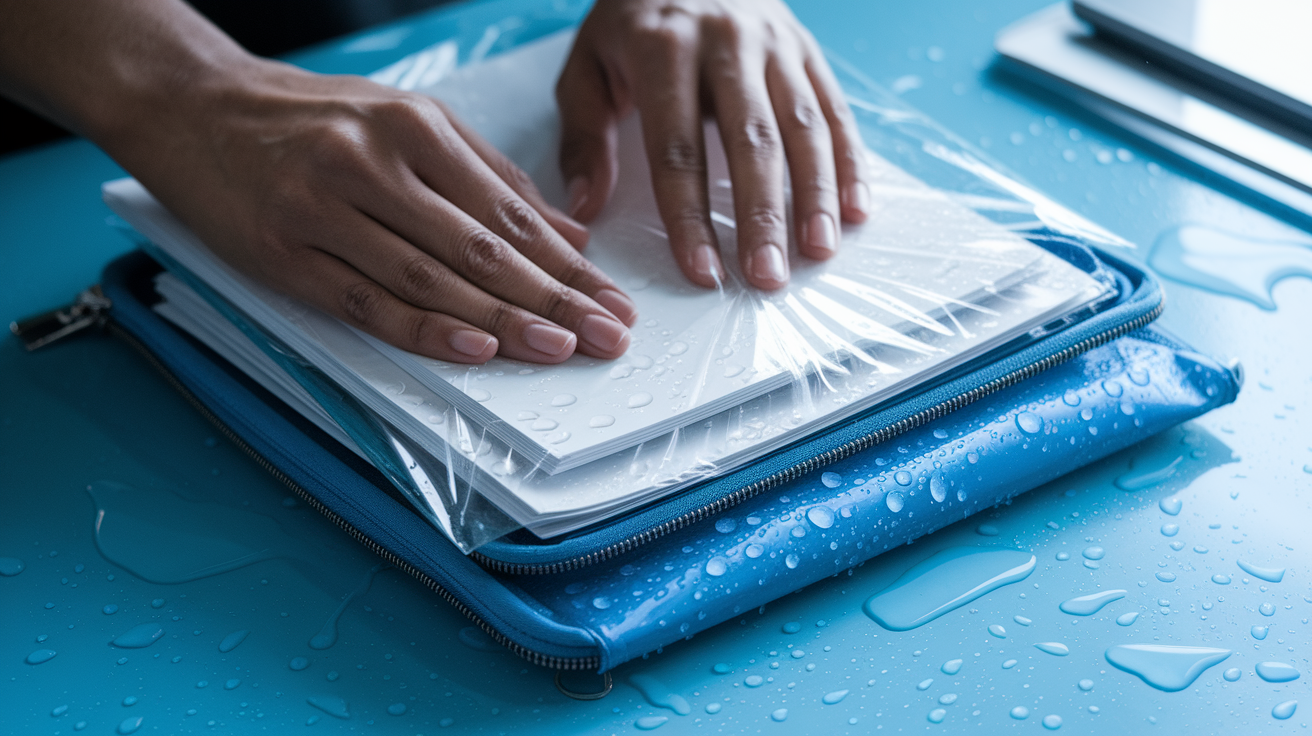
Floodwater destroys paper in minutes. Humidity ruins documents during storms even when they don’t get directly wet. Your carefully assembled go bag becomes useless if water damage turns critical papers into illegible pulp.
Heavy duty ziplock freezer bags in gallon and two gallon sizes create watertight seals around document sets. Waterproof document pouches sold for boating and camping provide reliable protection for important papers. Laminating critical single page documents like insurance cards and identification makes them water resistant. Small fireproof and waterproof document bags designed for home safes fit inside go bags. Vacuum sealed storage bags remove air and create waterproof barriers around paper stacks. Hard sided waterproof cases like those used for cameras protect documents from crushing and water. Elevated storage locations at least three feet off the floor keep go bags above typical flood levels in homes.
Use multiple protection layers instead of trusting one method. Put documents in ziplock bags first, then place those bags inside a waterproof pouch, then store that pouch in a fireproof container. Keep the whole container on a high shelf or upper floor closet where rising water has to flood your entire first floor before reaching it. Basements and ground floor closets flood first, so never store go bags in the most convenient locations near your main entry.
Check your waterproof containers every year during your document update review. Ziplock bags develop tiny holes and lose their seals over time. Waterproof pouches crack and degrade. Replace any protective materials that show wear, brittleness, or damage.
Digital Copies and Cloud Backup for Emergency Documents

Physical documents burn, flood, or get left behind. Digital copies on a password protected USB drive or external hard drive give you a second chance when your paper originals are destroyed. Take photos or scans of every document in your go bag and save them to an encrypted flash drive that you keep with the physical papers.
Cloud storage services like Google Drive, Dropbox, or iCloud let you access documents from any device with internet access. Upload scanned copies of all your important papers to a secure cloud account with strong password protection. When you evacuate and realize you forgot critical documents, you can log in from a borrowed phone or public library computer and retrieve what you need. Update your cloud storage immediately when documents change so your backup matches current reality.
Password protect your financial and legal document files using encryption software or the built in security features in cloud storage platforms. Set a strong password you’ll remember under stress. Not something you need to look up to access. Write the password in a separate secure location known to trusted family members in case something happens to you.
The medical flash drive is different. Create a separate USB drive marked clearly with a red cross that contains only medical information. Blood types, allergies, medication lists, chronic conditions, and emergency medical contacts. Do not password protect this drive. When emergency responders find you unconscious, they need immediate access to your medical history. A locked drive is useless when you can’t provide the password. Mark it clearly and keep it in an outer pocket of your go bag where it’s visible and accessible to paramedics.
Originals Versus Copies: What Actually Goes in Your Go Bag
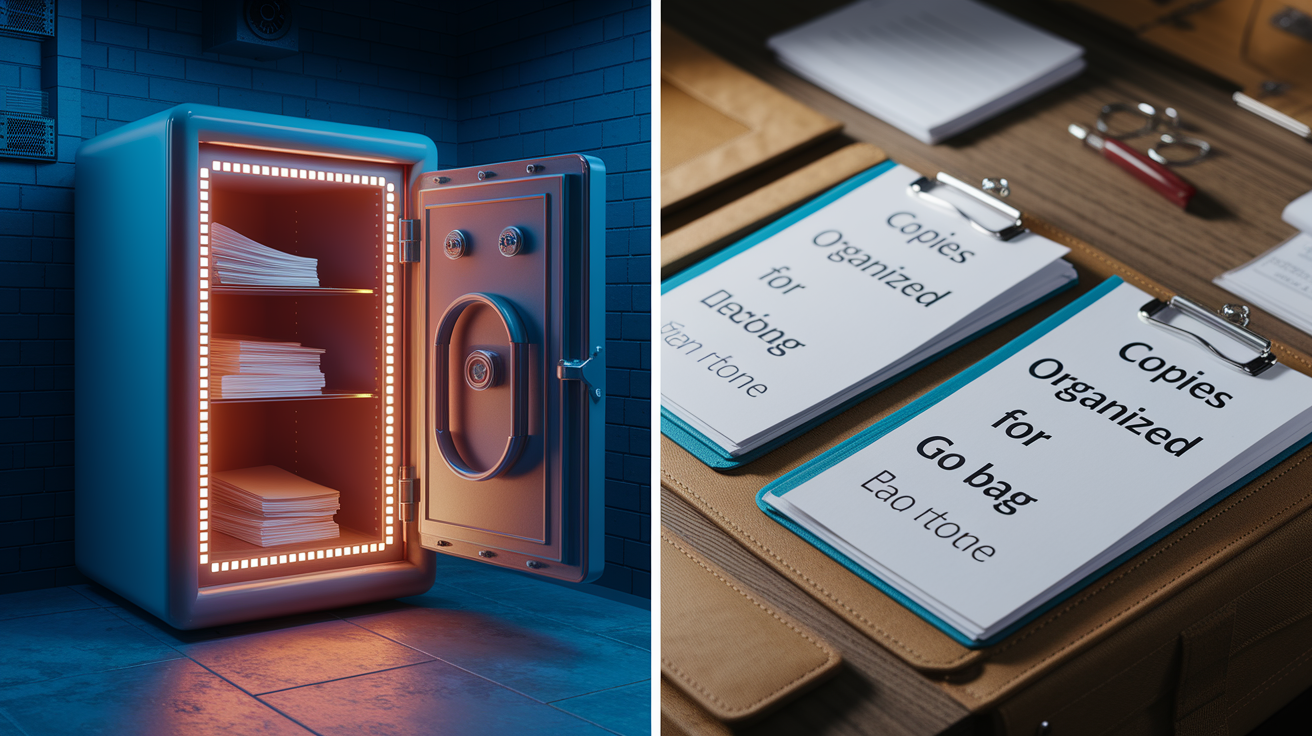
Most documents work fine as copies for emergency purposes. FEMA accepts photocopies of identification and financial records for disaster relief applications. Insurance companies process claims from scanned policy documents. Hospitals treat patients using photographed insurance cards on your phone.
| Document Type | Go Bag (Copy or Original) | Home Safe Storage |
|---|---|---|
| Identification (Driver’s License, State ID) | Copy | Original carried daily in wallet |
| Financial Records (Bank Statements, Tax Returns) | Copy | Originals in fireproof home safe or safe deposit box |
| Medical Records and Insurance Cards | Copy | Originals carried in wallet or home file |
| Property Documents (Deed, Mortgage) | Copy | Originals in safe deposit box or fireproof safe |
| Legal Papers (Will, Power of Attorney) | Copy | Originals with attorney and in safe deposit box |
Passports are the exception. If you live near an international border or might evacuate across state lines or internationally, pack your actual passport in the go bag. An evacuation from San Diego might mean crossing into Mexico. Florida residents sometimes flee hurricanes by driving to other countries. Passport copies don’t let you cross borders, and there’s no time to retrieve originals from safe deposit boxes when evacuation orders come.
Keep truly irreplaceable items like original birth certificates from the 1940s, handwritten wills, or historical family documents in bank safe deposit boxes. Not home safes. Your house can burn completely. Safe deposit boxes in bank vaults survive almost everything. Tell multiple family members which bank holds the safe deposit box, where you keep the key, and who has authorized access. Written instructions in your go bag should list the safe deposit box location and contents.
Household Inventory and Proof of Ownership Documents

Your insurance company won’t reimburse you for the $2,000 laptop destroyed in a flood if you can’t prove you owned it. After disasters, homeowners struggle to remember everything they lost. Three weeks later, you suddenly recall the expensive tools in your garage or the jewelry in your bedroom, but your insurance claim is already settled.
Walk through your home with your phone and record video of every room. Opening closets and drawers. Narrate what you’re showing. “This is my living room with the leather couch we bought in 2021 for $1,800 and the 65 inch Samsung TV.” Pan slowly so the video captures model numbers and serial numbers on electronics and appliances. Photograph valuable items individually with something in the frame that shows scale and detail. Upload this video and photos to cloud storage and keep copies on a flash drive in your go bag.
Save receipts for major purchases in digital format. When you buy furniture, appliances, electronics, jewelry, or tools worth more than $300, scan the receipt and add it to your insurance documentation folder. Appraisals for high value items like antique furniture, artwork, collectibles, and expensive jewelry establish worth that insurance companies accept without argument. A $5,000 engagement ring needs an appraisal document to justify that claim amount.
Update your household inventory annually and immediately after major purchases. Set a calendar reminder for the same weekend every year to walk through with your phone and record changes. When you buy new furniture or replace appliances, photograph them the day they’re delivered and update your digital files. Insurance claims based on current documentation process faster with fewer disputes than claims supported by five year old inventories that don’t match what was actually in your home.
School Records and Children’s Documentation

Schools require immunization records before they enroll new students. If your family evacuates and doesn’t return for months, your children need to continue their education wherever you relocate temporarily. Without proof of vaccinations, they sit in the school office instead of attending class while you scramble to contact doctors in your flooded hometown for records that might be destroyed.
Pack current report cards and transcripts showing your children’s grade levels and academic progress. New schools use these to place kids in appropriate classes and identify subjects where they might need extra support. IEP documents and 504 plan paperwork for children with special educational needs ensures they receive legally required accommodations and services immediately. Not after weeks of evaluation in a new district.
Emergency contact forms and medical authorization papers let schools handle urgent situations when you’re unreachable or if custody arrangements are complicated. Custody agreements and divorce decrees clarify which parent has authority to make educational decisions or pick up children from school. When families scatter during evacuations, schools encounter non-custodial parents attempting pickups using the emergency as justification. Documentation prevents dangerous custody situations.
Continuing education during displacement helps children maintain normalcy and routine during traumatic events. The faster they enroll in temporary schools, the less academic ground they lose. Some families evacuate for what they think is three days and end up displaced for months. Those children need smooth educational transitions to protect their futures.
Professional Licenses and Membership Documentation
You evacuate for what you think is three days, and three months later you’re still displaced because your home is uninhabitable. You need to work to pay for temporary housing and living expenses. Your employer can’t verify your professional credentials because their office was destroyed too.
Medical licenses, legal bar admissions, teaching credentials, and trade licenses like electrician or plumbing certifications take weeks to verify and replace through normal channels. Copies in your go bag let you prove qualifications to temporary employers in your evacuation location. Continuing education certificates show your credentials are current. Union membership cards access benefits and job placement assistance through union halls in other cities.
Security clearance documentation matters for workers in defense, government, or sensitive industries. If you need to work remotely or transfer temporarily to another facility, clearance verification prevents weeks of delayed employment. Employer contact information including your supervisor’s cell phone and the HR department’s direct line enables you to maintain employment status and coordinate remote work during displacement.
Quick return to work means income continues flowing despite displacement. Financial recovery after disasters depends on steady income to cover temporary housing, replace belongings, and rebuild damaged property. Professional documentation removes bureaucratic barriers and lets you start earning again within days instead of months.
Document Organization and Quick Access Storage Systems
When evacuation orders come, you have minutes. Not hours. Frantically pawing through unsorted papers wastes time you need for loading your car and getting your family to safety.
Color coded folders by category work well. Blue for financial, red for medical, green for legal, yellow for identification. Labeled gallon ziplock bags with permanent marker showing contents at a glance. Single page index sheet listing all documents and their locations in the organization system. Separate sections for each family member containing their personal documents together. Laminated quick reference card with critical account numbers, phone numbers, and policy numbers. Alphabetical tabs within categories for households with extensive documentation. Waterproof document wallet with clear pockets showing contents without opening. Simple three ring binder with sheet protectors holding documents flat and visible.
Keep it simple enough that any family member can find documents under stress. Your teenage daughter should be able to locate the insurance policies if you send her to grab the go bag while you help your elderly parent evacuate. Complex filing systems that make sense when you’re calm become impossible to navigate during panic.
Annual reviews during your document update day are perfect times to purge outdated papers that clutter your organization system. Remove expired insurance policies, old tax returns beyond the required retention period, and contact information for doctors you no longer see. Less clutter means faster access.
Regular Updates and Maintenance of Go Bag Documents
An expired insurance policy in your go bag delays claims until you prove you had coverage when the disaster occurred. Closed bank account numbers send your FEMA direct deposit into a void. Phone numbers for doctors who retired can’t provide your medical records to new providers.
Set an annual review date using a memorable trigger like the daylight saving time change in spring. Update documents immediately when you move to a new address. Not at the next annual review. Add new family members through birth, marriage, or adoption as soon as their documentation exists. Replace expired insurance policies the day renewals arrive, not when you remember months later. Change contact information when you switch doctors, employers, banks, or service providers. Remove deceased family members’ documents and update beneficiaries and emergency contacts after deaths.
Major life changes trigger document updates right away. When you refinance your mortgage, swap the old papers for new ones that day. When your daughter gets married, add her marriage certificate and update her name on contact lists. Don’t wait for the scheduled annual review when you change jobs and get new health insurance through a different company.
Setting phone calendar reminders for your annual review date ensures you don’t forget. Block two hours on that date every year to sit down with your go bag, go through every document, and update anything that changed. Replace worn waterproof containers, check that flash drives still work, verify that cloud storage accounts are active, and confirm that everyone in your household knows where the go bag is stored and how documents are organized.
Final Words
You now have a complete picture of what documents to keep in go bag storage.
Start with identification, vital records, and financial papers that unlock disaster assistance and insurance claims. Add medical information and prescriptions that keep your family healthy during displacement.
Protect everything in waterproof containers stored above floor level, with digital backups in the cloud.
Mark your calendar right now for an annual review. Update copies when you move, change jobs, or welcome new family members.
When flooding threatens, you’ll grab that bag and leave with everything you need to rebuild faster and with less stress.
FAQ
What important documents should be in a go bag?
Important documents in a go bag should include identification (passports, driver’s licenses), vital records (birth and marriage certificates), insurance policies, bank account numbers, property deeds, medical records with prescriptions, and emergency contacts. Store copies in waterproof containers with small bills cash for when electronic payments fail.
What to stockpile for 72 hours?
To stockpile for 72 hours, include three days of water (one gallon per person daily), non-perishable food, medications, flashlights, batteries, first aid supplies, and copies of critical documents in waterproof bags. Add cash in small bills since power outages disable ATMs and card readers during disasters.
What are 10 items in an emergency go bag?
An emergency go bag should contain water, non-perishable food, flashlight, battery radio, first aid kit, medications, copies of identification and insurance documents, phone charger, cash in small bills, and clothing for three days. Store documents in waterproof containers to protect from flood damage.
What documents should you save in a disaster?
Documents to save in a disaster include identification (driver’s license, passport), insurance policies (home, flood, auto), bank account details, medical records, prescriptions, property deeds, tax returns, and emergency contacts. Keep copies in waterproof bags stored high above floor level and back up digitally.
Why do I need bank account numbers in my go bag?
Bank account numbers in your go bag enable FEMA to process direct deposit payments for disaster relief assistance. Include routing numbers for checking and savings accounts, as relief applications require this information to send funds when you’re displaced from home.
Should I pack original documents or copies in my go bag?
Pack copies of most documents in your go bag while keeping originals in fireproof home safes or safe deposit boxes. Exceptions include passports for international evacuations and irreplaceable items. Copies serve emergency purposes while protecting originals from loss or damage.
How do I protect documents from water damage in floods?
Protect documents from water damage by storing them in waterproof bags inside fireproof containers, placed high above floor level. Use multiple protection layers like ziplock bags combined with waterproof boxes. Laminate frequently used items and check protective materials annually for wear.
What medical records go in an emergency evacuation kit?
Medical records for an evacuation kit include prescription lists with dosages, doctor contact information, health insurance cards, immunization records, medication allergies, disability papers, and special medical equipment documentation. Create a non-password-protected medical flash drive marked with a red cross for emergency responders.
Why keep a written emergency contacts list when I have my phone?
Keep a written emergency contacts list because phones get lost, damaged by water, or run out of battery during disasters. Include family members, doctors, insurance agents, employers, and out-of-state contacts who can serve as communication hubs when local networks fail.
What pet documents do emergency shelters require?
Emergency shelters require proof of rabies vaccination, ownership documentation, veterinary contact information, and current health records for pets. Include microchip numbers and recent photos to help locate lost animals. Many temporary housing options also require pet documentation for approval.
How often should I update my go bag documents?
Update go bag documents annually and immediately after major life changes like moves, new family members, policy renewals, job changes, or closed accounts. Set calendar reminders for yearly reviews rather than waiting until outdated information creates problems during actual emergencies.
What financial documents does FEMA need for disaster assistance?
FEMA needs bank routing and account numbers for direct deposits, income verification through pay stubs or tax returns, and proof of residence like utility bills or lease agreements. Include recent pay stubs, tax returns from the previous year, and documentation of government benefits.
Should I include my children’s school records in emergency documents?
Include children’s school records because immunization records and transcripts are required for enrollment if you relocate. Pack IEP or 504 plans for special needs, current report cards, emergency contact forms, and custody agreements to ensure education continuity during displacement.
What’s the best way to organize documents in a go bag?
Organize documents using color-coded folders by category, labeled ziplock bags, and simple index sheets listing contents. Create family member-specific sections and laminated quick-reference cards with account numbers. Keep systems simple so any family member can locate documents under stress.
Do I need digital backups of emergency documents?
Digital backups provide access when physical documents are destroyed or inaccessible. Store password-protected copies on USB drives in your go bag and upload to secure cloud storage for access from any location. Exception: medical flash drives should stay unprotected for emergency responder access.