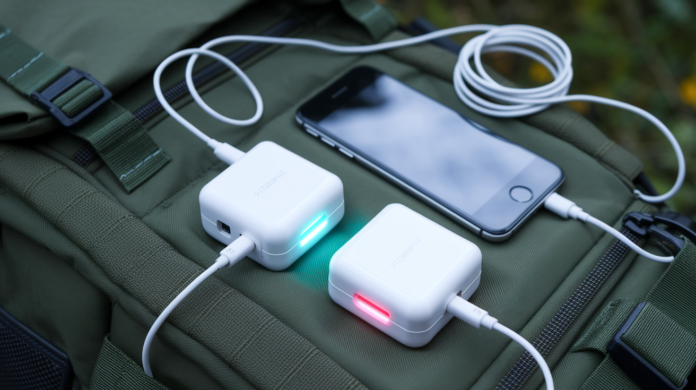

When the power grid goes down for three days, that dead phone in your hand becomes your biggest problem. You can’t call for help, check evacuation routes, or reach family members scattered across town. A quality portable charger bridges that gap between full battery and complete blackout, but only if you pick one that actually fits your emergency bag and delivers enough juice when seconds count. The best disaster ready power banks balance four things: enough capacity for multiple charges, light weight you’ll actually carry during evacuation, rugged build for storm conditions, and charging speed that works when brief power windows appear.
Best Chargers for Emergency Preparedness: Top Power Bank Recommendations
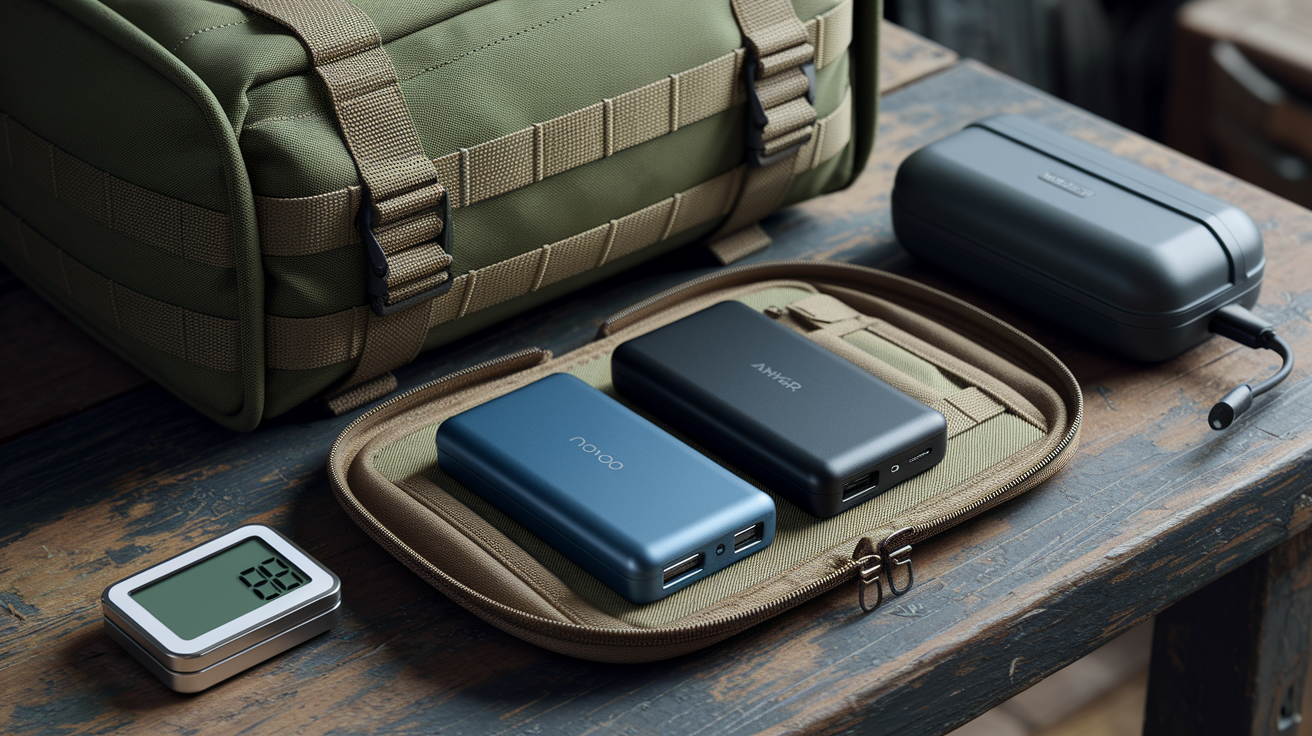
Your emergency bag charger needs to deliver 3 to 4 full phone charges minimum while staying under 16 ounces. Otherwise, you won’t actually carry it when you’re evacuating. The right power bank gives you capacity, durability, decent weight, and charging speed without turning your go bag into a brick.
For the 10,000mAh range, the NOVOO Explorer weighs 8 ounces and comes with IP67 waterproof protection that survived a 2 minute submersion test. You get a 7.5W USB-A port and 18W USB-C PD port, plus an LED light for double duty use. It’s priced around $25 to $30, which is way lower than most competitors. The Anker PowerCore 10000 weighs just 6.35 ounces (lightest 10,000mAh we tested), features a 12W PowerIQ USB-A port, charges an iPhone 3 to 4 times, and costs more at about $40 to $45. But you get Anker’s reputation and warranty support. Both stay light enough to toss in a jacket pocket without feeling the weight.
For higher capacity, the INIU Portable Charger delivers 20,000mAh at 12.8 ounces with two USB-A ports plus USB-C, includes a flashlight, and recharges in under 6 hours with an 18W charger. Dimensions run 5.3″ L x 2.8″ W x 1″ H at around $30 to $35. The Anker PowerCore II 20,000mAh delivers 5+ watt hours per ounce (highest energy density we tested), features two USB-A ports at 12W and 18W, uses all metal construction, isn’t waterproof, stays under 12 ounces, and costs about $50 to $55. Both give you enough power for multi day emergencies when the grid goes down.
These picks balance the stuff that actually matters: weight (6 to 13 ounces), capacity (10,000 to 20,000mAh for 3 to 5 full charges), durability (waterproof ratings for storm scenarios), and charging speed (12 to 18W ports for reasonable recharge times during brief power windows). The 10,000mAh picks work for lightweight evacuation bags where every ounce counts. The 20,000mAh options suit family emergency kits or 72 hour bags where capacity beats portability.
Capacity and Charging Specifications for Emergency Power Banks
The 10,000 to 20,000mAh range hits the sweet spot for emergency bags. You get enough power for multi day disasters without going over the practical 16 ounce weight limit. Smaller 7,000mAh options weigh around 6 ounces, nearly identical to quality 10,000mAh packs, making them poor value when you need every watt hour during extended outages. The hard 16 ounce ceiling means you’ll actually carry the power bank when evacuating instead of leaving it behind because your bag feels too heavy.
Real world charging from iPhone 15 Pro testing shows what different capacities deliver when your phone dies during a disaster. A 5,000mAh pack recharged the phone 0.8 times (zero to 80 percent). A 10,000mAh unit provides 2 to 3 full charges. A 20,000mAh bank delivers 4 to 5 complete recharges. The premium 25,000mAh UGREEN 145W recharged an iPhone 15 Pro 5.5 times from zero. That’s enough for nearly a week of emergency communication if you ration screen time and disable background apps. For 72 hour emergency kits, aim for minimum 10,000mAh since most modern smartphone batteries sit near 5,000mAh and need similar capacity for a full recharge plus reserve power.
Using 5V/2A USB-A ports instead of fast charge USB-C extracts more of the rated capacity from lithium ion cells. Slower discharge rates yield more usable energy. Testing at 0.2C discharge rate for 10,000mAh packs and 0.1C rate for 20,000mAh units (constant 2A load) gets you the most from the battery before voltage drops below usable levels. Power banks use 18650 lithium ion batteries operating at 3.7V internal voltage with step up circuits to reach USB’s 5V specification. Devices need minimum 4.6V at the port to fully charge their internal batteries, so maintaining voltage stability matters more than charging speed when you’re rationing power during blackouts. Keeping both the power bank and your devices cool during charging extends lifespan and increases usable capacity since battery performance drops with heat.
USB-A ports give you more flexibility than USB-C for emergency use because they work with more cable types and older devices you’ll encounter in disaster scenarios. Think emergency radios, older family member phones, rechargeable flashlights, and two way radios that haven’t upgraded to USB-C. While USB-C dominates new devices, many critical emergency tools still charge via USB-A or come with USB-A cables only.
| Capacity (mAh) | Approximate iPhone Charges | Typical Weight | Best Use Case |
|---|---|---|---|
| 5,000 | 0.8 to 1 full charge | 3 to 5 ounces | Daily carry, short power outages |
| 10,000 | 2 to 3 full charges | 6 to 8 ounces | Evacuation bags, day trips, 24 to 48 hour emergencies |
| 20,000 | 4 to 5 full charges | 11 to 13 ounces | 72 hour kits, family emergencies, bug out bags |
| 25,000 | 5 to 6 full charges | 16 to 18 ounces | Extended outages, multi person families, base camp power |
TSA and FAA regulations allow power banks up to 100Wh or about 27,000mAh in cell capacity for air travel in carry on luggage. Critical for evacuation flights during wildfire or hurricane scenarios when you’re leaving with what fits overhead. Keep power banks in accessible pockets since some airlines require them visible during flight, not buried in overhead bins.
Family and Multi-Device Power Strategy for Emergency Preparedness
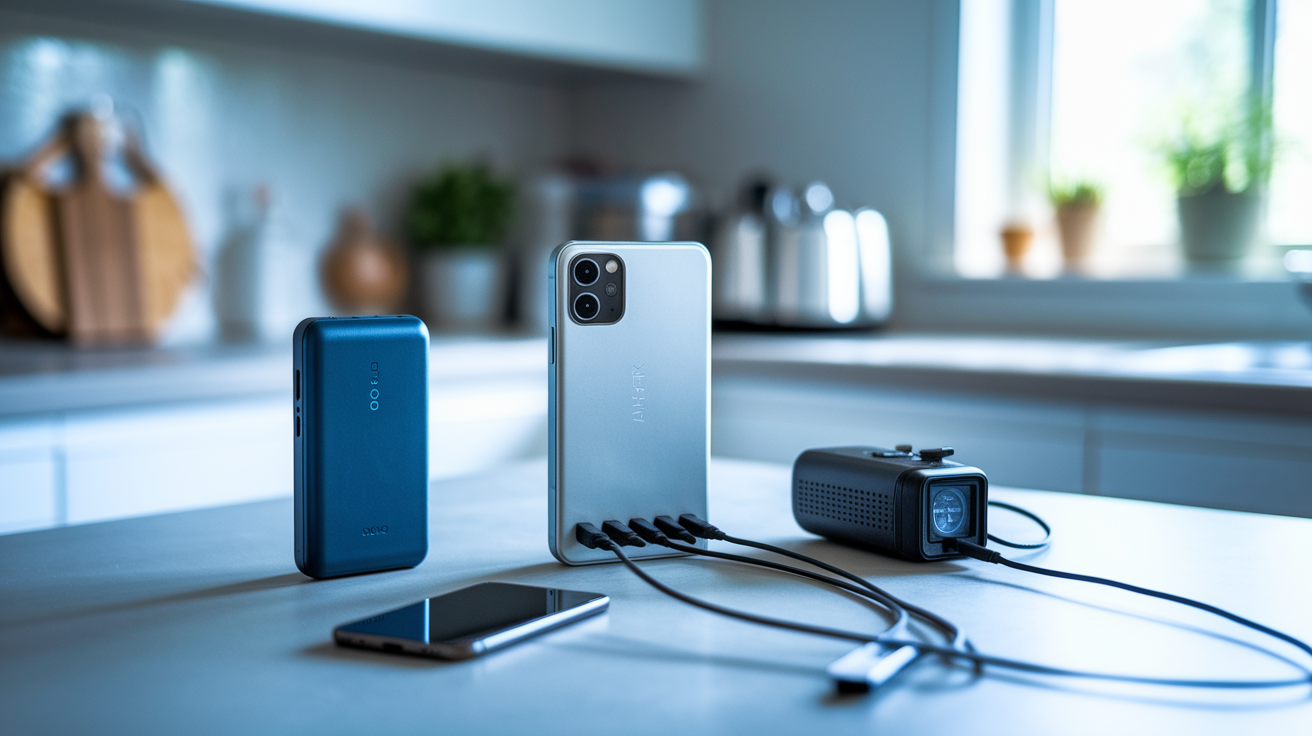
Carry two 10,000mAh packs instead of one 20,000mAh unit for redundancy. The weight penalty runs only 1 to 2 ounces but gives you flexibility across 4 different port types between two units instead of 2 to 3 ports on a single larger pack. All power banks use similar 18650 battery technology, so 20,000mAh equals six cells whether in one pack or split across two 10,000mAh units. The dual pack strategy prevents single point failure when battery performance matters most.
Two separate units provide 4 ports for simultaneous charging versus 2 to 3 ports on one larger pack. You can power a phone, emergency radio, and headlamp at the same time instead of choosing priorities. One model might offer better USB-A ports while the other includes USB-C PD. Grabbing two different brands like NOVOO Explorer and Anker PowerCore 10000 covers compatibility gaps without buying premium multi port stations.
Here’s why splitting capacity works better:
- One pack fails or gets damaged during evacuation. Water intrusion, drop damage, or circuit failure won’t eliminate all backup power when you split capacity across two units.
- Family needs to split up temporarily and each person needs charging capability. Search and rescue scenarios, medical emergencies, or separated evacuation routes require independent power sources.
- Different devices require simultaneous charging. Phone, weather radio, and flashlight all dead at once during extended outages.
- One pack runs completely dead while other maintains reserve power. Rotate discharge cycles so fresh capacity stays available for critical communication.
- Trading or sharing power with other survivors or family members. Community aid during disasters without giving away all charging capability.
Beyond phones, USB power banks charge rechargeable flashlights, headlamps, emergency weather radios, LED signal flares, arc lighters, GPS units, two way radios, and medical equipment like CPAP batteries or glucose monitors. A family of four during a 72 hour blackout needs power for 8 to 12 devices: 4 phones, 2 to 3 flashlights, 2 radios, GPS unit, tablet for kids, and backup battery for medical gear. Calculate total mAh requirements by adding device batteries. Four 5,000mAh phones (20,000mAh) plus three 2,000mAh flashlights (6,000mAh) plus two 3,000mAh radios (6,000mAh) equals 32,000mAh minimum, requiring two 20,000mAh power banks or four 10,000mAh units distributed across family members.
| Device Type | Typical Battery (mAh) | Charge Priority | Charge Time from 10,000mAh Bank |
|---|---|---|---|
| Smartphone | 4,000 to 5,000 | High (communication) | 2 to 3 hours for full charge |
| Weather Radio | 2,000 to 3,000 | High (alerts) | 1.5 to 2 hours for full charge |
| Flashlight | 1,500 to 2,500 | Medium (safety) | 1 to 1.5 hours for full charge |
| Two-way Radio | 2,500 to 4,000 | High (coordination) | 2 to 2.5 hours for full charge |
| GPS Unit | 1,000 to 2,000 | Medium (navigation) | 45 minutes to 1 hour |
| Tablet | 8,000 to 10,000 | Low (information/entertainment) | 4 to 5 hours for full charge |
Port management strategy matters when simultaneous charging splits total output wattage among ports. A 20,000mAh Anker PowerCore II features two USB-A ports at 12W and 18W. Using both ports simultaneously might deliver 15W total instead of 30W combined due to shared circuitry limits. Prioritize critical communication devices first (phone and radio), lighting second (flashlight and headlamp), convenience devices last (tablet and backup phone). Family power allocation plans should designate one adult as “power manager” who controls charging rotation, tracks remaining capacity, and decides when to ration versus fully charge based on forecast outage duration and rescue timeline.
Durability, Safety, and Long-Term Storage for Emergency Chargers
IP66 ratings mean dust tight and protected against heavy spray, while IP67 guarantees dust tight plus submersion to 1 meter for 30 minutes. Critical during flood evacuations or storm scenarios where gear gets soaked. Validated submersion testing involves dunking units for 2 minutes and checking for water intrusion and continued function afterward, not just trusting manufacturer claims. Waterproof protection becomes essential when evacuating during hurricanes, flash floods, or heavy rain when your bag crosses streams or sits in wet vehicles.
The NOVOO Explorer 10,000mAh passed IP67 submersion testing at 8 ounces with clean performance. The FosPower PowerActive 10,200mAh also carries IP67 rating and survived dunk tests but weighs too much for its capacity. Output voltage trailed off at the 2.5 hour discharge mark and never delivered full 4.7V at 2A despite the 2.1A port rating. The Techsmarter 20,000mAh offers IP66 rating at $66 with bright LED plus SOS mode, 18W USB-C and 15W Micro USB bidirectional ports, 12W and 18W USB-A outputs. But it weighs more and costs most per capacity among tested models. The Luxtude 20,000mAh waterproof alternative runs $46 (twenty dollars cheaper than Techsmarter), uses metal/rubber body construction, saves 0.5 ounces weight, but voltage only reached 4.6V under 2A load testing which sits right at the minimum threshold for fully charging device batteries. You can add a separate waterproof case to any power bank for the same cost and weight as buying a waterproof model. Pelican style cases or simple zip top bags work for non submersion protection.
| Model | Capacity | Waterproof Rating | Weight | Price |
|---|---|---|---|---|
| NOVOO Explorer | 10,000mAh | IP67 (submersion tested) | 8 oz | $25 to $30 |
| Techsmarter | 20,000mAh | IP66 (heavy spray) | 14+ oz | $66 |
| Luxtude | 20,000mAh | Waterproof (not rated) | 13.5 oz | $46 |
| FosPower PowerActive | 10,200mAh | IP67 (submersion tested) | 10+ oz | $35 to $40 |
Lithium ion batteries carry fire risk from overcharging, short circuits, or thermal runaway when cells overheat and cascade into failure. Power banks use step up circuits to regulate voltage from 3.7V internal battery voltage to 5V USB specification. Quality circuits prevent overcharge and monitor cell temperature to shut down before fire starts. Avoid unfamiliar brands that skip safety certifications to cut costs since emergency scenarios already involve enough risk without adding explosive batteries to your gear. Most reputable chargers include minimum 2 year warranties (Anker offers 1.5 years on some laptop models), which signals manufacturer confidence in safety engineering and long term reliability.
What good protection circuits actually do:
- Overcharge protection prevents battery damage by stopping current flow when cells reach 100% capacity
- Short circuit prevention cuts power immediately during wiring faults before heat buildup starts
- Temperature control shuts down charging if cells exceed safe operating temperature (typically 140°F/60°C)
- Over discharge protection preserves battery health by preventing discharge below minimum cell voltage (around 3.0V)
- Surge protection manages voltage spikes from inconsistent wall chargers or generator power
- UL or CE certification marks indicate third party safety testing verified protection circuits work as designed
Store lithium ion power banks at 70 to 80% charge rather than 100% for longevity, though emergency preparedness requires balancing battery health against immediate readiness. Temperature affects battery chemistry significantly. Ideal storage runs 50 to 77°F (10 to 25°C), avoiding freezing temperatures and heat above 86°F (30°C) which speed up capacity loss and increase fire risk. Keep packs cool during use and storage to get the most lifespan and maintain usable capacity since battery performance degrades faster in hot cars, attics, or direct sunlight. Lithium ion cells self discharge about 2 to 3% per month at room temperature, so a power bank stored at 80% charge drops to 50 to 60% after 6 to 12 months depending on temperature.
Test emergency power banks quarterly by discharging to 50%, then recharging to 80% to verify function before you need them during actual disasters. This catches failed cells, corroded ports, or broken charging circuits while you still have time to replace units. Rotate power banks every 3 to 5 years regardless of testing results since lithium ion cells degrade from age even without use. Internal resistance increases and capacity drops below rated specifications. Store power banks in temperature stable locations inside your home rather than garages or vehicles where seasonal temperature swings speed up degradation. Following the best way to organize your emergency preparedness supplies helps ensure proper storage conditions and reminds you when quarterly testing comes due.
Solar Charging and Hand Crank Power Bank Reality Check
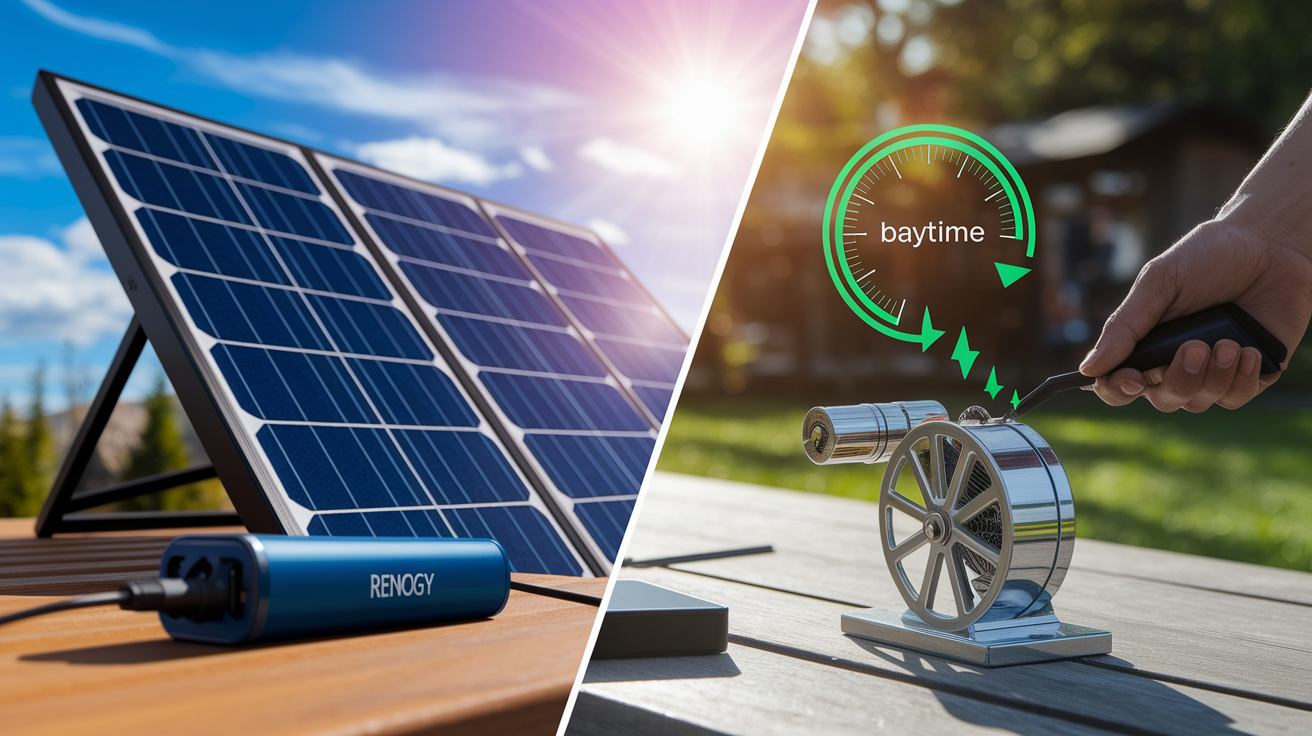
Built in solar panels create heat degradation problems because batteries sit directly against the panel, exposing lithium ion cells to temperatures that speed up capacity loss and increase failure risk. Separate solar chargers let you place the battery underneath the panel in shade or inside your bag while the panel sits in direct sun, managing thermal load properly.
The OUTXE Solar 10,000mAh includes a backup solar panel and bright light but weighs as much as 20,000mAh units, delivering lowest energy density in testing. The USB-A port couldn’t maintain 4.6V at 2A despite a 3A rating claim, falling short of the minimum voltage threshold devices need for full charging. Solar panel features on small power banks proved extremely inefficient and virtually useless due to tiny solar surface area (typically 2 to 3 square inches) and energy transfer losses through charging circuits. Actual charging rates from built in panels run around 50 to 100mA in direct sunlight, requiring 100 to 200 hours of perfect sun exposure to fully charge a 10,000mAh pack. Worthless for emergency scenarios.
The better approach uses separate solar panels like the Renogy 10W model that pairs with any standard power bank. Testing in 575 to 750W/m² irradiance conditions (typical bright sunlight) confirmed all tested power banks work with small standalone panels. A 10W panel delivers about 2A charging current in good conditions, fully recharging a 10,000mAh power bank in 6 to 8 hours of solid sun. Actually useful during extended grid down scenarios. Thermal management improves because you position the panel for sun while keeping the battery cool in shade, preventing heat damage that kills capacity over time.
Hand crank chargers serve as emergency backup only, not primary charging methods. Realistic output runs 5 to 10 watts with sustained cranking effort. Expect 30 to 60 minutes of hard cranking to add 10 to 15% charge to a smartphone battery. Exhausting yourself cranking for an hour to gain 30 minutes of phone time makes sense only when no other power source exists and you need to make one critical call.
Built In Cables and Packing Strategy for Emergency Kits
Built in cables get rid of separate cord packing, reduce cable failure points, and save space through retractable designs that hide cables within the charger body. The Jackery Bolt 10,050mAh features built in Lightning and Micro USB adapters with solid metal housing that delivered 7,156mAh in measured testing. Carry one charging cable instead of three. The Belkin BoostCharge Plus 10K includes built in USB-C and Lightning cables for 10,000mAh capacity, covering iPhone and Android users without separate cords. Retractable cable designs snap into recessed slots or coil around the charger edge, preventing tangled messes in emergency bags and protecting cable ends from damage.
Simple designs without built in cables require carrying one of the best USB-C cables for optimal performance, adding weight and creating another component to track during evacuations. The hybrid strategy works best: pack one built in cable unit (Jackery or Belkin) plus one traditional power bank (Anker or INIU), giving you cable free charging for one device while maintaining flexibility for others. Micro USB compatibility is becoming less relevant as that standard phases out. Prioritize USB-C and Lightning built in cables over Micro USB unless you carry older emergency devices that require it.
| Approach | Pros | Cons | Best For |
|---|---|---|---|
| Built in cables | No separate cords to lose, compact storage, faster deployment, one less failure point | Limited to specific cable types, can’t replace damaged cable, usually higher cost per mAh | Minimalist evacuation bags, car emergency kits, everyday carry where space matters |
| Separate cables | Universal compatibility, replaceable if damaged, usually better capacity to cost ratio, works with any device | Extra packing required, cables tangle or get lost, more components to organize and maintain | Family emergency kits, bug out bags with multiple devices, longer term preparedness where flexibility beats simplicity |
Place power banks in top access exterior pockets or front compartments of emergency bags for quick retrieval during power outages rather than burying them deep in protected interior locations. Weight distribution matters less with 6 to 13 ounce units since they won’t throw off bag balance like heavier gear. The typical phone like form factor (5.3″ L x 2.8″ W x 1″ H for 20,000mAh units) fits standard side pockets, water bottle pouches, and admin organizer sleeves without special accommodation.
Mounting accessories improve access and prevent loss during chaotic evacuations. Velcro straps secure power banks to MOLLE webbing loops on tactical bags or internal compression straps. Carabiner clips allow external attachment to bag loops or belt loops for immediate access, though external mounting exposes non waterproof models to weather damage. Mesh pouches group power banks with charging cables and wall adapters as complete charging kits. Dedicated electronics organizers with elastic loops hold power banks, cables, and adapters in labeled positions so family members grab the right gear fast.
Smart packing habits that actually help:
- Keep charging cables in same compartment or attached to power bank using rubber bands or cable wraps so you never separate battery from charging capability
- Use waterproof stuff sack for non waterproof models during storms since standard power banks die when soaked even if they handle light rain
- Label power banks with charge date for rotation tracking using permanent marker on case or masking tape tags noting last test date
- Store in temperature stable bag location away from hot spots like against laptops, near sleeping bag compression sacks, or exterior pockets exposed to sun
- Keep separate from sharp objects that could puncture housing like knives, multi tools, or metal tent stakes that might compromise battery protection
Cable management prevents the tangled mess you discover when reaching for charging gear in the dark. Coil cables loosely and secure with Velcro straps rather than tight wraps that stress internal wiring. Store cables in the same pouch as their power bank or use clear zip top bags so you see contents without opening. Following guidance from what to pack in your emergency evacuation bag helps integrate power bank placement within larger bag organization strategy. Electronics typically live in top or secondary compartments for quick access without unpacking critical survival gear.
Budget vs Premium Emergency Power Bank Value Analysis
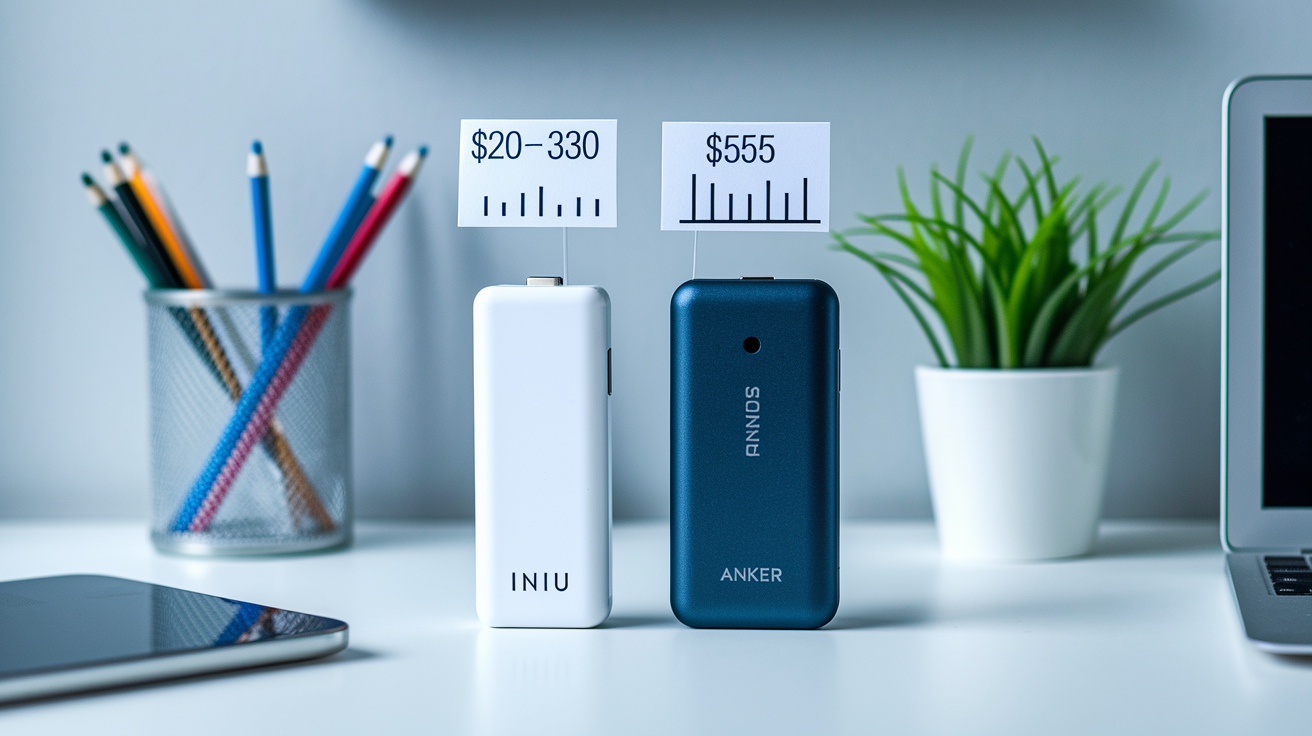
Price ranges run $20 to $40 for budget options and $40 to $65 for premium models. Cost differences come from brand reputation, warranty length, customer support quality, safety certification depth, and build materials rather than actual battery performance. Chinese OEM manufacturers produce reliable cells at a fraction of name brand costs, making budget picks viable for emergency preparedness where cutting edge fast charging tech matters less than dependable power delivery.
The INIU Pawsible P41L-E2 offers best budget performance, priced same as one month of 4K Netflix (about $20 to $30) while delivering clean power output that matched premium models in testing. Budget champions HX160Y6 and HX160Y7 represent Chinese OEM 20,000mAh packs sold under multiple brand names, advertised as 25,800mAh but actually 20,000mAh based on measured performance. They deliver highest amp hours per ounce ratio and lowest cost per amp hour while producing clean, stable power output matching Anker and other name brands. The NOVOO Explorer 10,000mAh costs meaningfully lower than competitors at $25 to $30, though it ships from Amazon only Chinese seller with limited customer support if problems develop. These budget picks work great for emergency bags where units might sit untouched for years, making premium pricing hard to justify when performance matches and warranty claims rarely happen.
Premium brands like Anker built reputation over the past decade for higher quality construction at budget friendly pricing compared to Apple and Belkin. Anker’s PowerCore 10000 commands premium pricing ($40 to $45) justified by warranty coverage, responsive customer support, and brand reliability established through millions of units sold. UGREEN and Belkin occupy similar premium territory with better warranty terms (2+ years standard), English language support teams, and established return processes through major retailers. Satechi, Apple, PowerAdd, and Einova push into luxury pricing ($50 to $80) where brand prestige and aesthetic design drive costs more than performance gains.
Calculate cost per mAh by dividing price by capacity: a $25 NOVOO 10,000mAh unit runs $0.0025 per mAh while a $45 Anker PowerCore 10000 costs $0.0045 per mAh. Budget options deliver nearly double the capacity per dollar. Prioritize budget picks when buying multiple units for family members or building redundant systems across vehicles and locations. Choose premium brands when warranty support matters (buying for elderly parents who need phone assistance), when gifting to non technical users who benefit from name recognition, or when reputation matters for insurance claims after disaster losses.
Where to Buy and Stock Emergency Power Banks
Amazon dominates power bank sales with widest selection, competitive pricing, and Prime member discounts that frequently drop premium models 20 to 30% below list price. The UGREEN 145W 25,000mAh retails $100 but regularly discounts to $75 for Prime members during sale events. Amazon’s easy return process matters when testing units before emergencies, though third party marketplace sellers complicate warranty claims. Buy from manufacturer storefronts (Anker Official, UGREEN Official) rather than random resellers listing identical products at suspiciously low prices.
Best Buy provides immediate availability and in store testing opportunities where you physically compare weights, check port layouts, and verify build quality before buying. Staff can demonstrate charging speeds and answer technical questions, though selection runs narrower than Amazon and prices tend higher without price matching requests. Outdoor retailers like REI and Cabela’s stock rugged and waterproof options suited for emergency preparedness, often bundling power banks with solar panels, emergency radios, and other disaster gear. REI’s return policy and member dividend program offset higher base prices if you already shop there for camping equipment.
Shopping strategy for stocking up:
- Compare prices across retailers before purchasing since 20 to 30% variance is common between Amazon, Best Buy, manufacturer direct sites, and outdoor retailers
- Watch for Prime Day and Black Friday sales on premium models when Anker, UGREEN, and Belkin units drop 30 to 50% off. Stock up during these events rather than paying full price.
- Buy during non emergency times to avoid price gouging and stock shortages that happen when hurricanes approach or wildfire evacuations start and retailers triple prices or sell out completely
- Verify seller reputation for warranty honor by checking reviews mentioning defect claims. Avoid third party marketplace sellers with few reviews or recent negative feedback about refusing returns.
- Keep receipts and warranty cards in emergency document folder with insurance policies and ID copies so you can file claims or get replacements after disasters when original packaging is gone
For families, buy 3 to 4 power banks for a 2 person household. Two primary units in emergency bags, one backup in vehicle kit, one spare at home base. Bulk buying during sales cuts costs significantly: four $25 INIU chargers run $100 total during normal pricing but drop to $60 to $70 during Black Friday. Community preparedness groups can negotiate bulk discounts directly with manufacturers for orders of 10+ units, reducing per unit costs another 15 to 20% and ensuring neighborhood readiness when disasters strike.
Register warranties immediately after purchase and store confirmation emails in dedicated emergency preparedness folder (digital and printed backup). Most manufacturers require proof of purchase for warranty claims, and original receipts fade or get lost during the 2 to 5 years between purchase and actual emergency use. Photograph receipts and upload to cloud storage as backup documentation for insurance claims if gear gets destroyed during disasters.
Final Words
Keep your portable phone charger for emergency bag at 70 to 80 percent charge and test it every three months.
Stick with two 10,000mAh packs for redundancy, or one solid 20,000mAh unit if you’re managing multiple devices.
Skip the built-in solar panels. They’re not worth the weight.
Buy from trusted brands. Register your warranty. Store them somewhere cool and accessible.
When the power goes out, you’ll have one less thing to worry about.
FAQ
How can I charge my phone during an emergency?
You can charge your phone during an emergency by using a pre-charged portable power bank stored in your emergency bag. Keep a 10,000-20,000mAh power bank at 70-80% charge and test it quarterly so it’s ready when the power goes out.
What happens if you put a portable charger in a checked bag?
Portable chargers are prohibited in checked bags due to lithium-ion battery fire risk. You must pack power banks in carry-on luggage only. TSA and FAA allow power banks up to 100Wh (approximately 27,000mAh) in carry-on bags during evacuations.
What is the best emergency portable power bank?
The best emergency portable power bank is the NOVOO Explorer 10,000mAh, which weighs 8 ounces, features IP67 waterproof protection validated in submersion tests, includes an LED light, and delivers 3-4 full iPhone charges through its 18W USB-C port.
Is there a difference between a power bank and a portable charger?
A power bank and portable charger are the same device. Both terms describe battery packs that store electrical energy to recharge phones and devices when wall power is unavailable. The terms are used interchangeably in emergency preparedness contexts.
How long does a 10,000mAh power bank last in storage?
A 10,000mAh power bank loses about 2-3% charge per month when stored at room temperature. Store your power bank at 70-80% charge in a cool location (50-77°F) and test it quarterly to ensure it’s ready for emergencies.
Should I buy one 20,000mAh or two 10,000mAh power banks?
You should buy two 10,000mAh power banks instead of one 20,000mAh unit for redundancy. Two smaller packs weigh only 1-2 ounces more but provide four ports total and backup if one fails during an evacuation.
Do solar power banks work for emergency charging?
Solar power banks with built-in panels are inefficient and expose batteries to heat damage. Instead, buy a regular power bank and add a separate 10W solar panel, which allows better thermal management and faster charging rates.
How many times can a 20,000mAh power bank charge a phone?
A 20,000mAh power bank can charge a modern smartphone 4-5 times from zero to full. Testing shows a 25,000mAh unit recharged an iPhone 15 Pro 5.5 times, providing enough backup power for a 72-hour emergency scenario.
Can I charge multiple devices at once with one power bank?
You can charge multiple devices simultaneously using dual-port power banks. Units with two USB-A ports and one USB-C port allow you to charge a phone, radio, and flashlight at the same time during power outages.
How often should I replace my emergency power bank?
You should replace your emergency power bank every 3-5 years, even with quarterly testing and proper storage. Lithium-ion batteries degrade over time and lose capacity through charge cycles, reducing reliability when you need backup power most.
What size power bank is best for a bug out bag?
The best size for a bug out bag is 10,000-20,000mAh, weighing under 16 ounces. This capacity provides 3-5 phone charges while staying light enough for portable emergency kits without adding excessive weight during evacuations.
Are waterproof power banks necessary for emergency kits?
Waterproof power banks with IP67 ratings are necessary for flood and hurricane preparedness. Submersion-tested models like the NOVOO Explorer protect against rain and water exposure. Alternatively, add a waterproof case to any standard power bank for similar protection.